Lewis Hamilton’s move into Ferrari’s inner workings is becoming almost as important to investors as his results on track, with Ferrari shares holding near record levels as Formula One heads toward a major 2026 rules reset that could re-rank the grid.
Ferrari RACE Near Record Ahead of 2026 F1 Reset
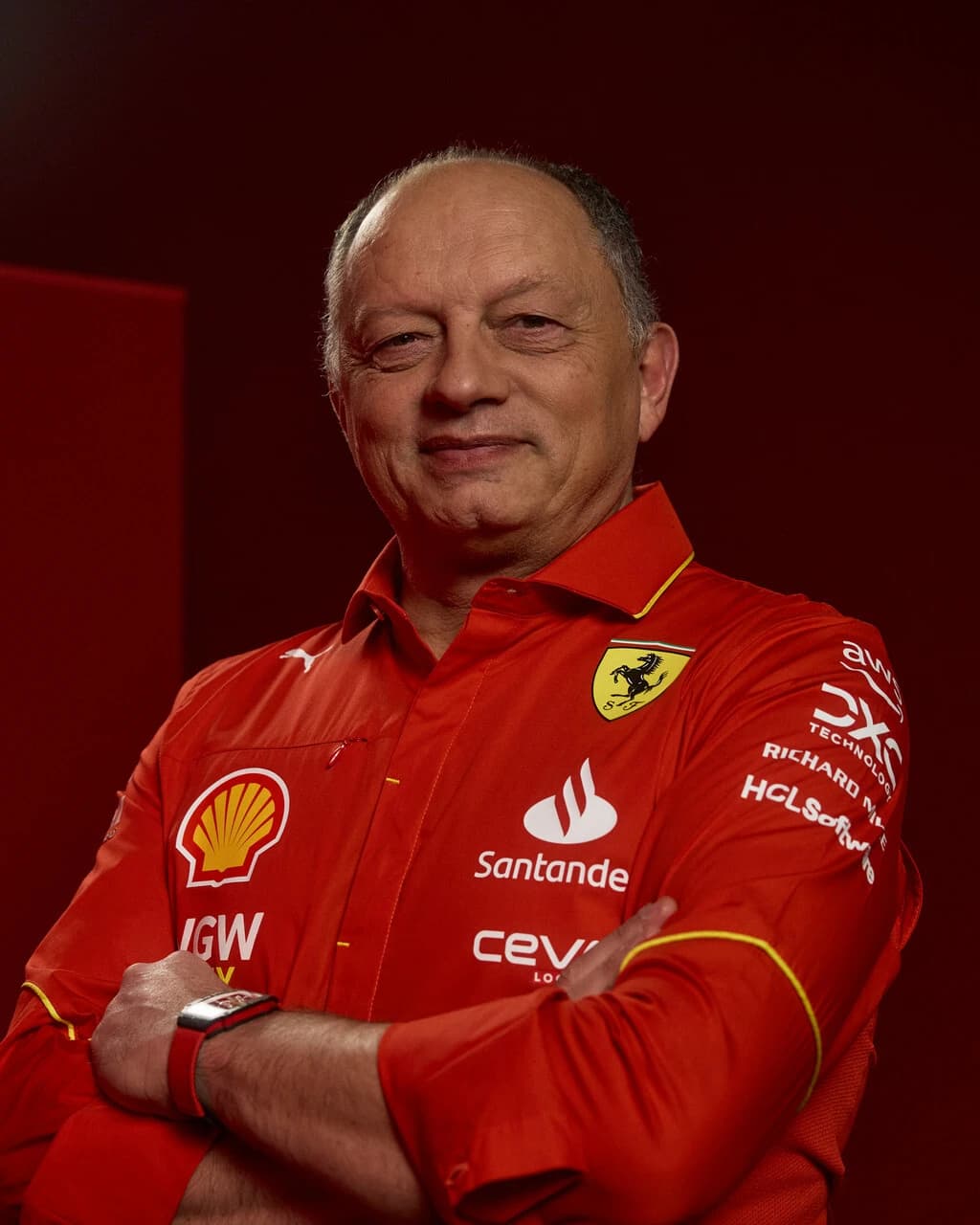
The investment case for Ferrari is increasingly tied to whether Hamilton can help the team turn brand power into sporting wins. That matters because Ferrari’s valuation depends not just on unit sales and margin-rich licensing, but on the global attention and pricing power that come with sustained F1 success. A competitive Hamilton-Ferrari pairing would reinforce the company’s luxury positioning, while a slow start under the new rules would raise questions about how much of the market is already pricing in a renaissance.
Ferrari’s U.S.-listed shares, which trade under the RACE ticker, closed at $409.46 on Aug. 13, down from an August 11 peak of $410.26 but still far above the 50-day moving average of $373.33 and the 200-day average of $361.79. The stock has recovered strongly from March lows near $311 and remains in an uptrend, though the relative strength index at 82.9 points to stretched momentum after a sharp run. That suggests investors are already paying for the story, leaving less room for disappointment if the Hamilton era takes time to bear fruit.
For Ferrari, the significance goes beyond one driver’s lap times. Hamilton’s role behind the scenes matters because Formula One has become an increasingly technology-intensive competition in which simulation, setup discipline and operational execution can matter as much as outright pace. Under the 2026 regulations, teams expect a meaningful reset in car architecture and energy management, which could reward organizations that adapt fastest. McLaren has already argued that driver skill will still matter despite greater software intervention, underscoring that the new era will not be won on engineering alone.
That is where Hamilton’s experience could matter most. Seven world titles give him an institutional memory of how championship teams are built, how they respond to technical shifts and how small strategic advantages compound over a season. For Ferrari, which has long struggled to convert resources and brand strength into sustained dominance, the attraction is not just star power but the possibility of importing a winning process.
The bullish case for investors is straightforward: if Hamilton helps sharpen Ferrari’s race operations and the 2026 car is competitive, the company could strengthen both its sporting halo and its commercial pricing power. The bearish case is that expectations have already run ahead of delivery. Ferrari’s stock is no longer cheap by technical or fundamental standards, and a post-rally pause would not be surprising if the team fails to translate the Hamilton narrative into podiums and title contention.
Cadillac’s leadership shake-up also highlights the broader pressure across the grid as teams position for the new cycle. In that sense, Hamilton’s deeper involvement at Ferrari is part of a wider race not just for wins, but for organizational advantage in a sport where the commercial payoff for success can be enormous.
For investors, the key catalyst now is execution: how Ferrari looks in the opening phase of the 2026 rules era, whether Hamilton’s influence shows up in setup and strategy, and whether the team can justify the premium already embedded in the stock.
| Entity | Gains | Losses |
|---|---|---|
| Ferrari | ▲Brand lift, competitive upside | ▼Pressure to deliver results |
| Hamilton | ▲Influence, legacy narrative | ▼Reputation if results lag |
| RACE bulls | ▲Momentum and premium valuation | ▼If rally fades on disappointment |
| Rival F1 teams | ▲Benchmark to chase | ▼Market attention and sponsorship share |