Finland’s governing coalition is turning fuel prices into a direct political and economic fault line, with Prime Minister Petteri Orpo’s center-right bloc and the Finns Party locked in a fight over whether to cut pump prices quickly or preserve climate-linked fuel policy.
Finland Coalition Fight Over Fuel Price Cuts
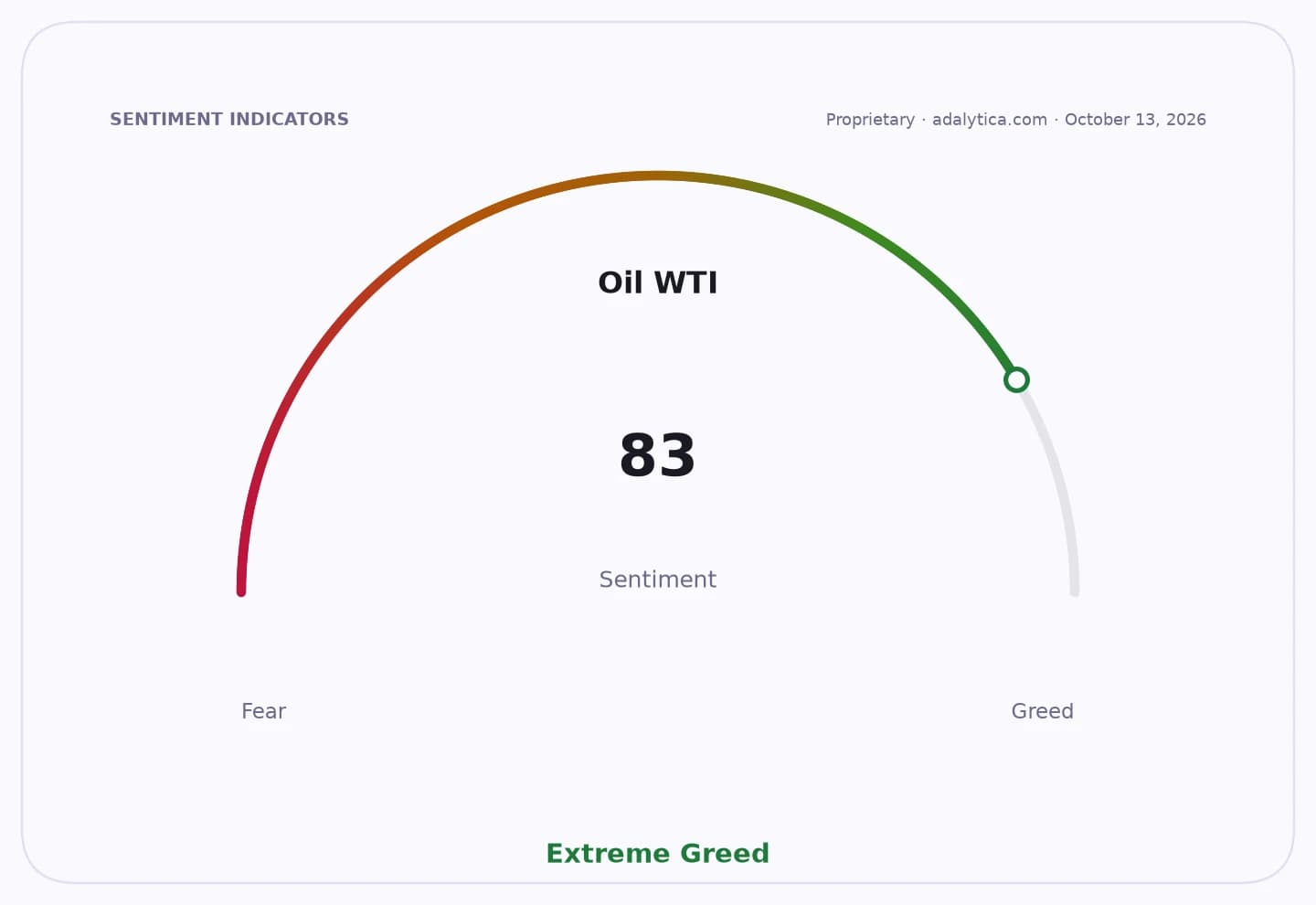
That matters because petrol and diesel costs feed directly into household spending, transport costs and inflation expectations. In a country where commuting and freight are highly sensitive to fuel prices, even modest relief can influence consumer sentiment, but it also has fiscal and climate-policy costs that coalition partners are no longer hiding.
Sentiment IndicatorsⓘProprietary · adalytica.com · October 13, 2026
This is a snapshot — live sentiment, awareness and momentum for 130+ markets update continuously in the dashboard.Open AlphaPulse
The latest dispute centers on a 60 million euro package backed by National Coalition Party allies that Finance Minister Riikka Purra said would not lower prices at the pump. Purra, writing from Bangkok on X, argued the plan contained no measure that would cut gasoline or diesel prices and renewed her call for a temporary easing of the distribution obligation, the blending mandate that requires fuel suppliers to add renewable content. The National Coalition Party and the Swedish People’s Party have not agreed to that move.
Orpo told political reporters the deal was stuck with the Finns Party, saying the party was the one blocking an agreement on how to address high fuel prices. Purra shot back, questioning whether the coalition’s remaining term would be marked by the same exchanges, while Finns Party deputy chair Joakim Vigelius and parliamentary group leader Jani Mäkelä both pushed for a softer distribution obligation as the “cheap and effective” way to cut pump prices.
The economic backdrop is politically combustible. Fuel inflation has been volatile internationally, with benchmark crude oil around the mid-$90s a barrel in the latest forecasts and U.S. inflation still elevated. In Finland, the issue is less about global oil alone than about how domestic policy translates refinery and distribution costs into what drivers actually pay. A temporary easing of the blending mandate would likely reduce pump prices more quickly than a tax-offset package or targeted compensation, but it would also weaken climate targets and shift costs elsewhere in the system.
For investors, the dispute is a reminder that fuel policy can move margins, demand and regulatory risk across the energy and transport chain even in a small market. Lower pump prices would help consumers and road freight operators in the short term, but refiners and fuel distributors face a more complicated picture: any policy-driven price cut can squeeze downstream margins, while prolonged political pressure on blending rules can change the economics of biofuels and low-emission fuel investments.
The coalition’s split also matters because it may shape Finland’s policy credibility beyond gasoline. If Orpo cannot bridge the gap between voters angry over transport costs and partners committed to climate policy, the government could end up with a watered-down response that satisfies neither side. That would leave fuel prices exposed to the next oil move while making the political costs of inaction more visible heading into the next election cycle.
| Entity | Gains | Losses |
|---|---|---|
| Finnish drivers | ▲Lower fuel costs if relief is passed | ▼Higher costs if talks fail |
| Transport and farming sectors | ▲Direct diesel relief and lower operating costs | ▼Pressure from delayed or limited aid |
| National Coalition Party / Orpo | ▲Credibility if it delivers visible relief | ▼Support if blamed for weak action |
| Finns Party / Purra | ▲Political traction with motorists on price cuts | ▼Coalition leverage if compromise falls apart |