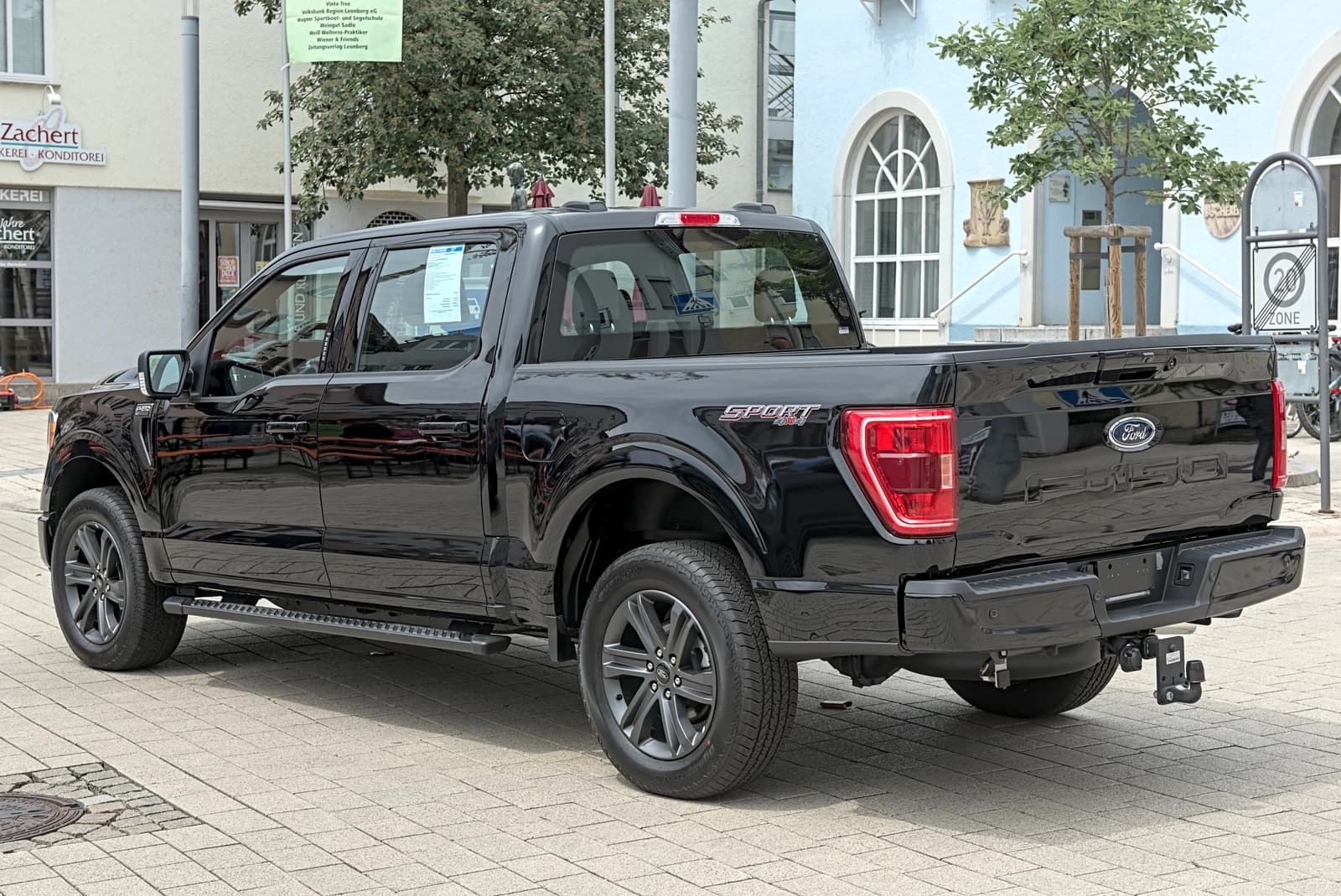
Ford’s decision to hand its Iraq business to Shimal Al Jazeera Auto-Trading and Commercial Agencies is a small corporate move on paper, but it matters because it shows the company is still leaning into emerging-market distribution and aftersales revenue at a time when investors are obsessed with margins, quality and capital discipline.
Ford names new Iraq distributor for sales and service
I believe that is the real story here: Ford is not just changing distributors, it is trying to protect and deepen a franchise in a market where trust, service coverage and parts availability can matter more than showroom traffic. For automakers, especially those with global ambitions, the fight is increasingly won in the network — the dealer, the service bay and the parts counter — not just in headline vehicle sales.
Sentiment IndicatorsⓘProprietary · adalytica.com · September 8, 2026
This is a snapshot — live sentiment, awareness and momentum for 130+ markets update continuously in the dashboard.Open AlphaPulse
The new partner, SAT, will take over Ford vehicle sales, genuine parts and aftersales services in Iraq starting Oct. 1, 2026. Ford said the move reflects its long-term commitment to the country, while also thanking outgoing distributor Al Kasid and keeping operations uninterrupted through Sept. 30. That continuity matters. In a market like Iraq, a smooth transition can be the difference between preserving brand equity and losing customers to competitors that move faster on service and availability.
The appointment also tells you where Ford sees value. SAT is a joint effort between March Holding and Alayyan Group, combining local market reach with decades of automotive distribution experience. That kind of structure is exactly what global manufacturers want in frontier and high-friction markets: a partner that can navigate logistics, relationships and aftersales, while the OEM retains brand control and recurring revenue potential.
For investors, the implication is broader than Iraq. Ford has been working to stabilize its earnings profile by improving mix, pricing and operational execution, and international distributor appointments are part of that playbook. They are low-capex, high-optionality bets on growth in markets where ownership can expand over years, not quarters. If Ford can improve service penetration and parts availability in Iraq, it supports a higher-quality revenue stream and reinforces the brand in a region that remains underpenetrated.
That said, the stock story for Ford is still shaped far more by quality execution and North American fundamentals than by any single market announcement. Ford shares have been volatile in recent months, with technical readings showing the stock hovering around its 50-day moving average and above its 200-day average, suggesting the market has not yet assigned a decisive trend. Investors remain sensitive to recall risk, production consistency and pricing power, and those issues can easily swamp incremental international wins.
Still, this is the kind of announcement that matters over time. Iraq is not a volume engine that will move Ford’s quarterly numbers tomorrow, but it is the sort of market where a disciplined distribution strategy can build a durable asset: customer loyalty, recurring service revenue and a stronger aftermarket footprint. In a sector where margins are often won after the sale, Ford’s move looks less like routine housekeeping and more like a quiet bid to own more of the value chain in an underappreciated market.
The investable takeaway is straightforward: Ford’s Iraq shift is a reminder that the best automotive opportunities may not come from unit growth alone, but from the network economics around distribution and service. Long-term investors should watch for more of these asset-light expansion moves, because they can compound quietly even when the headline story stays focused on recalls and near-term execution.
| Entity | Gains | Losses |
|---|---|---|
| Ford | ▲stronger Iraq footprint | ▼transition risk |
| SAT | ▲new brand mandate | ▼execution pressure |
| Al Kasid | ▲smooth exit relationship | ▼distributor role |
| Ford investors | ▲aftermarket upside | ▼near-term distraction |