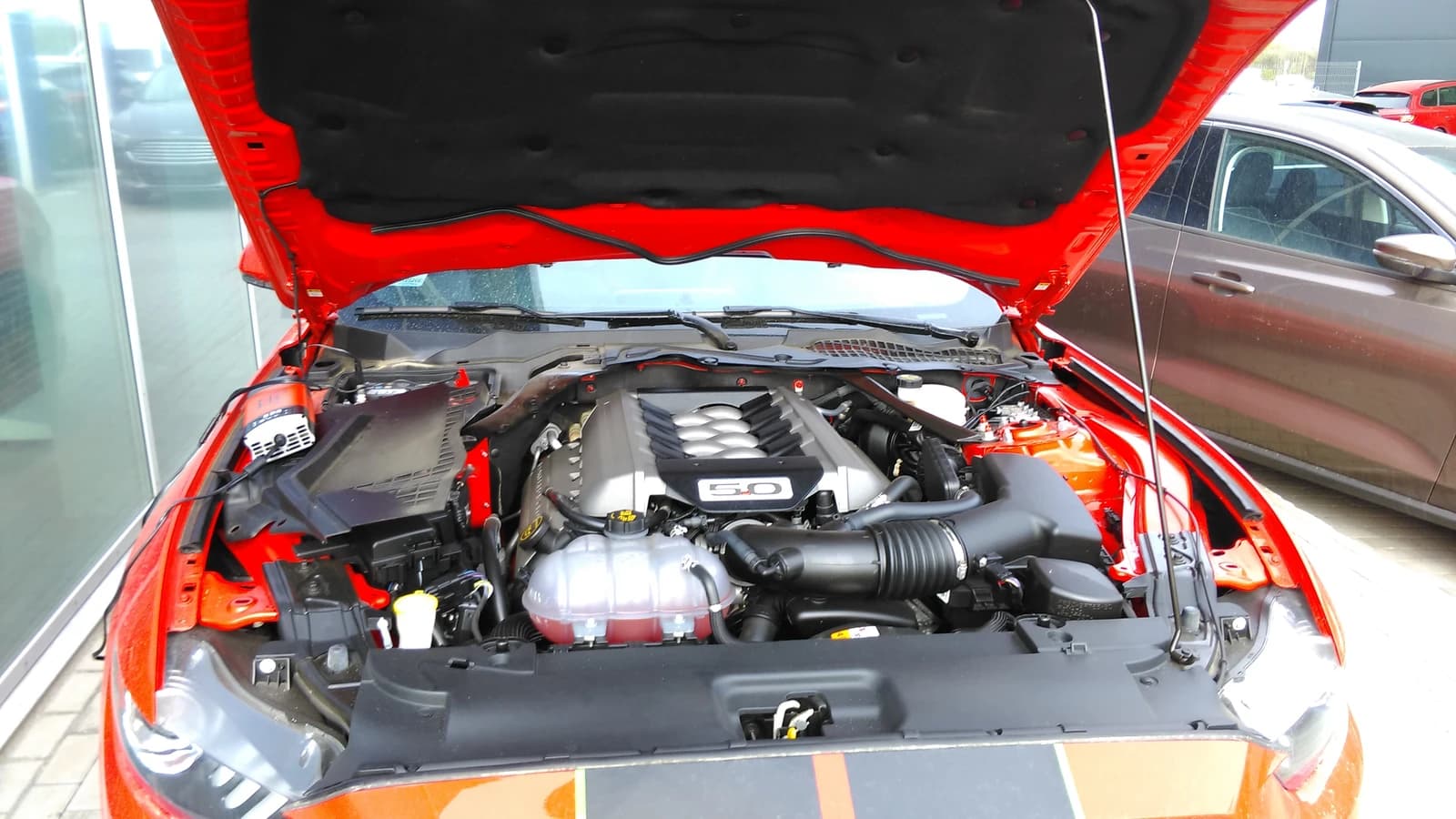
Ford is using the new Mustang GT to do more than sell cars: it is monetizing enthusiast demand with a factory-backed performance kit that lifts output to at least 800 horsepower and could become a high-margin accessory business with real investor relevance.
Ford Mustang GT supercharger kit reaches 800 hp
That matters because the auto industry is under pressure to find growth outside the traditional new-vehicle cycle. Ford’s supercharger kit, unveiled around SEMA, is a reminder that parts, accessories and dealer-installed upgrades can carry better economics than the underlying vehicle, especially when they are tied to a halo nameplate like Mustang. The kit will be available for seventh-generation Mustang GT models with the 5.0-liter V8, and Ford says it will be sold with a 3-year or 36,000-mile warranty and CARB compliance when installed by a dealer or certified technician. That lowers the friction for buyers and raises the odds that this becomes a mainstream performance add-on, not just a boutique modification.
For Ford, the strategic value is bigger than the headline horsepower figure. A factory-approved upgrade lets the company capture spending that would otherwise leak to third-party tuners, while reinforcing the Mustang’s brand equity at a time when legacy automakers are trying to defend profitable niches. The company also previewed an FP800S concept package built around the kit, with a half-shaft upgrade, lowering kit, Borla cat-back exhaust and carbon-fiber aero pieces, which suggests Ford sees room to expand the ecosystem around the car rather than stop at one accessory.
Investors should read this as another sign that Ford’s enthusiast and truck businesses can still generate pricing power even in a choppy market. The stock has been volatile and technical indicators show it recently slipping below its 50-day moving average, with momentum weakening after a summer run. But that kind of trading action can obscure the more durable story: Ford is leaning harder into margin-friendly, branded add-ons at a moment when consumers still pay up for identity, performance and factory backing.
The opportunity here is not the supercharger kit alone. It is the broader playbook it represents: turn iconic products into platforms, sell more content per vehicle, and protect profitability through parts and accessories rather than volume alone. If Ford keeps extending that model across Mustang and beyond, investors get a cleaner way to own a legacy automaker with a hidden aftermarket engine.
| Entity | Gains | Losses |
|---|---|---|
| Ford Performance | ▲Higher-margin parts revenue | ▼Third-party tuners |
| Mustang GT owners | ▲Factory-backed 800-HP upgrade | ▼Base-car exclusivity |
| Ford shareholders | ▲Accessory and brand monetization | ▼Purely volume-driven growth |
| Competing muscle-car brands | ▲— | ▼Mustang performance halo |