Detroit’s biggest truck and muscle-car makers are betting that the V8 is far from finished, and investors should pay attention because the shift is about profit, not nostalgia. General Motors, Ford and Ram are leaning back into big engines just as Washington eases emissions pressure, removes companywide fuel-economy fines and ends the federal EV tax credit, giving America’s truck-heavy automakers room to sell what customers still want most.
GM, Ford and Ram Add More V8 Truck Engines
That matters because full-size pickups and performance vehicles remain among the industry’s most profitable products. Cox Automotive said U.S. consumers spent about $15 billion on full-size pickup trucks in December alone, a reminder that the appetite for big gas-powered vehicles is still alive even at a time when gasoline costs more and the electric-vehicle story is getting less generous policy support. For automakers, the V8 is less about sentiment than margin: if the regulatory penalty is lower, the financial case for building the engines gets a lot better.
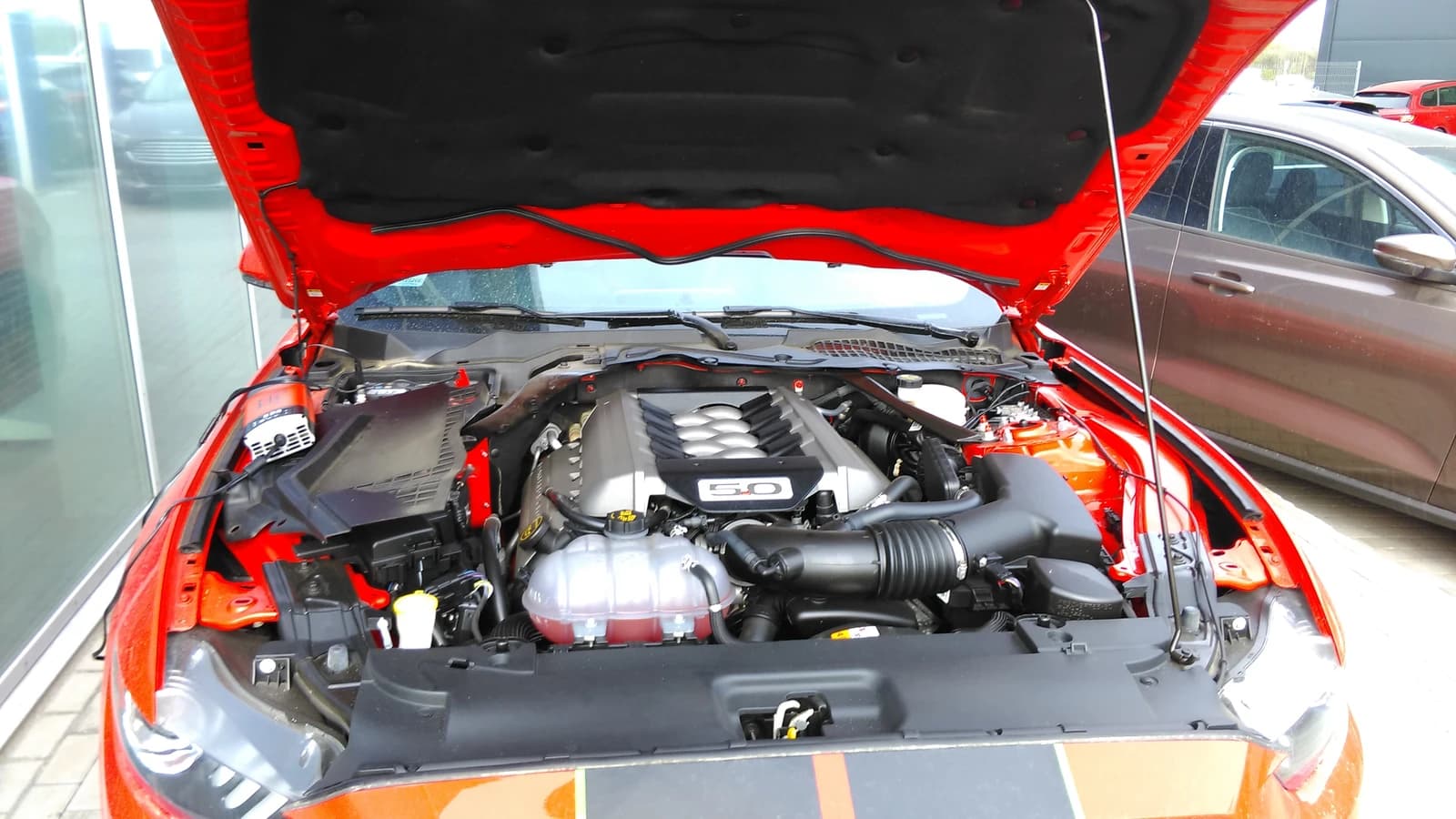
GM is making the clearest commitment. It said Thursday it will launch two new V8s for the 2027 Chevrolet Silverado and GMC Sierra after investing roughly $830 million in U.S. propulsion plants. Earlier, it shifted production at its Western New York propulsion plant from EV batteries back to truck V8s after an $888 million investment. Ram brought back its Hemi V8 in August, then relaunched the TRX this month as a high-performance pickup. Ford, meanwhile, is keeping the 5.0-liter V8 in the updated 2027 F-150 and plans a faster V8 Mustang trim, extending the engine’s life across both utility and enthusiast vehicles.
For long-term investors, the key point is that Detroit is following demand where the economics are strongest. The modern auto market has been telling a split story for years: EVs may be the strategic future, but trucks and large SUVs still carry the industry’s cash flow. GM’s latest filings underline that point, describing its vehicle portfolio as anchored by high-margin full-size pickups and SUVs. That kind of mix can help cushion the business when the broader auto cycle turns choppy.
Ford’s stock has reflected that tension. Shares recently traded around $12.74, below the 200-day moving average near $13.29, while momentum indicators such as RSI and MACD suggest the stock has been under pressure. GM, at about $83.20, has also cooled from recent highs but still sits well above its 200-day average around $80.39. Ferrari, by contrast, continues to command a premium valuation around $409.94, underscoring how performance branding and scarce, desirable vehicles can still reward shareholders when pricing power is strong.
The risk, of course, is that policy can change again, and the long-term direction of travel in autos still points toward electrification, efficiency and software. But for the next several years, the winners may be the companies that can sell both versions of the future at once: EVs for regulation and technology, V8 trucks and muscle cars for profit and demand. That makes the V8 comeback worth watching, and for patient investors, it reinforces why the most enduring auto plays are the ones built around scale, brand and profitable product mix.
| Entity | Gains | Losses |
|---|---|---|
| GM | ▲Higher-margin truck mix | ▼EV battery retooling |
| Ford | ▲Keeps loyal truck buyers | ▼More exposure to fuel rules |
| Ram/Stellantis | ▲Reclaims performance halo | ▼Smaller EV momentum |
| EV-only rivals | ▲Less policy advantage | ▼Truck and muscle-car share |