France’s 10-year borrowing cost has moved above the U.S. Treasury yield for the first time in more than a decade, a striking sign that investors now see French debt as riskier than the benchmark U.S. market.
France 10-Year Yield Tops U.S. Treasury Yield

That matters because sovereign yields are the price governments pay to fund themselves, and when France loses its traditional discount to the U.S., it usually reflects a deeper shift in confidence about growth, politics and budget discipline. For long-term investors, it is also a reminder that bond markets can reprice quickly when fiscal credibility comes into question.
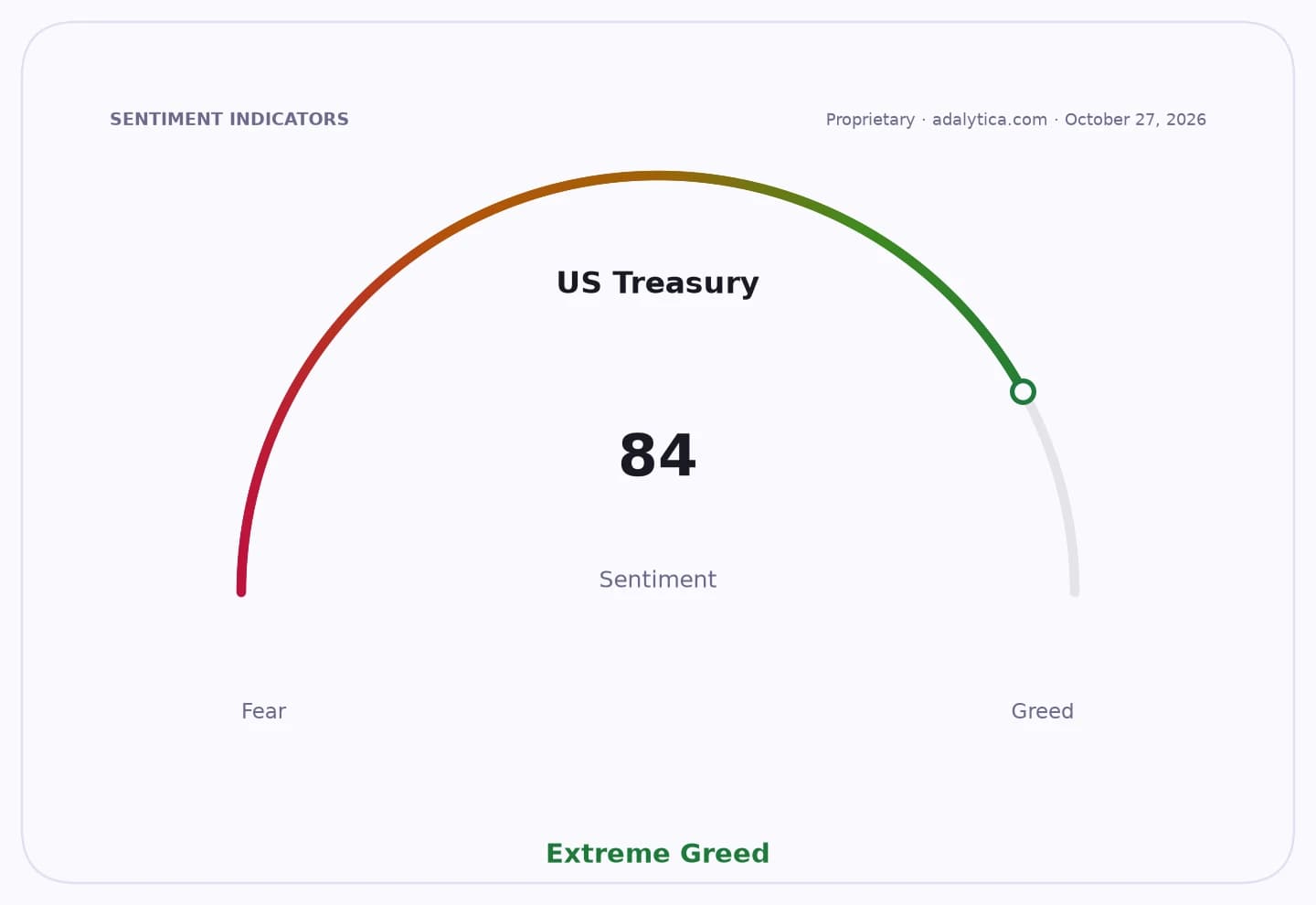
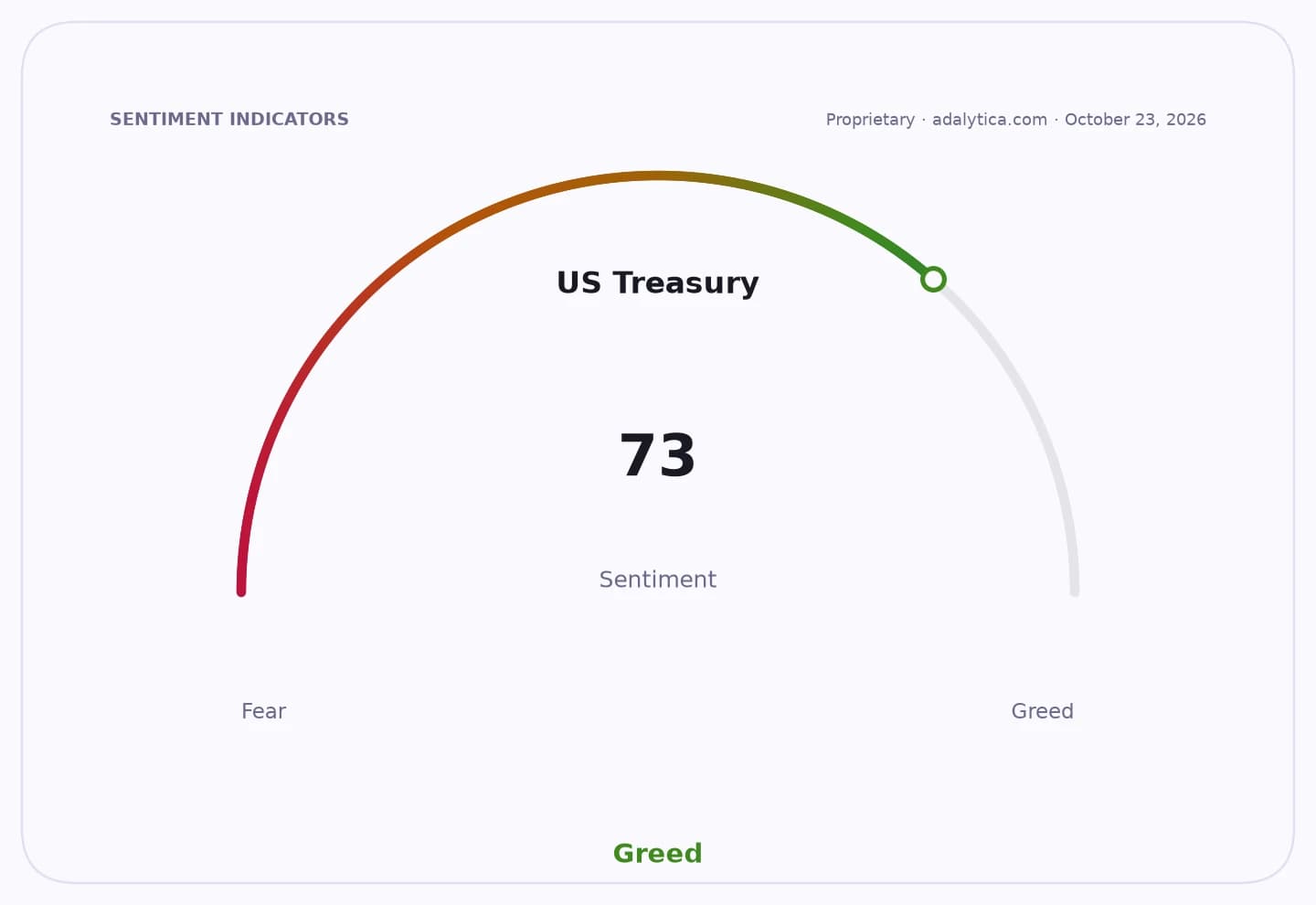
Sentiment Indicators
The move is even more notable because it comes in a market environment that has been increasingly sensitive to inflation, central bank policy and deficits. The U.S. 10-year Treasury was near 4.99% on the latest readings, while the French equivalent had climbed above that level, flipping a relationship that had held since the eurozone debt crisis era. In practical terms, France is now borrowing at a premium to the United States, a development that would have looked unthinkable to many fixed-income investors just a few years ago.
Why does that matter economically? Higher sovereign borrowing costs raise the hurdle for public spending, debt rollover and future fiscal stimulus. For France, a sustained premium over U.S. Treasuries could make it harder to finance budgets already under pressure from slower growth and political friction over spending restraint. It also raises the odds of tighter fiscal policy, which can weigh on domestic demand and corporate profits over time.
For investors, the signal goes beyond French government bonds. It speaks to the relative appeal of U.S. Treasuries, euro-area debt and the euro itself. When French yields rise above U.S. yields, global capital can become more selective about where it wants duration and sovereign exposure. That can ripple into European bank funding costs, currency markets and the pricing of other eurozone debt.
The bond market reaction has already shown up in exchange-traded funds tied to Treasuries. The iShares 20+ Year Treasury Bond ETF, TLT, has recently traded around $80 to $82, with technical indicators showing a sharp rebound: its price has pushed back above the 50-day moving average and the 14-day RSI has surged to elevated levels, suggesting strong near-term demand. The iShares 7-10 Year Treasury Bond ETF, IEF, has also held up near $91, supported by the same bid for government debt.
Adalytica’s market expectation gauge for Federal Reserve rate decisions still shows fear, which fits the broader message from the bond market: investors are not yet comfortable that policy risk has disappeared. In that environment, relative sovereign yields matter more than ever, because they tell you where capital feels safest after adjusting for return.
This does not mean France is entering a crisis tomorrow. But it does mean the old assumption that core European sovereign debt should always trade richer than U.S. Treasuries is no longer a given. If France wants to restore that premium, it will need steadier politics, clearer budget control and a better growth backdrop. Until then, investors should treat French debt as a market that now demands a higher yield — and a higher standard.
| Entity | Gains | Losses |
|---|---|---|
| U.S. Treasury buyers | ▲Higher relative yield appeal | ▼Safe-haven status gets tested |
| French government | ▲None in the near term | ▼Higher funding costs |
| Eurozone bond investors | ▲Potential value opportunities | ▼More sovereign-risk dispersion |
| Long-duration bond holders | ▲Possible volatility trading range | ▼Price pressure from higher yields |