France’s film financing model faces its sharpest political threat in years as France Télévisions says a far-right plan to privatize public broadcasting would strip the industry of one of its biggest backers and weaken production across the sector.
France film financing faces RN privatization threat
Manuel Alduy, who oversees cinema and international series at France Télévisions, said the broadcaster would stop investing in French feature films if the Rassemblement National carried out its plan, warning that fewer movies would be made and that the ones that do get financed would be poorer in scope and quality. The warning lands at a sensitive moment for a sector that depends heavily on public money, broadcaster pre-financing and a tax-funded support system that has long underpinned France’s cultural influence.
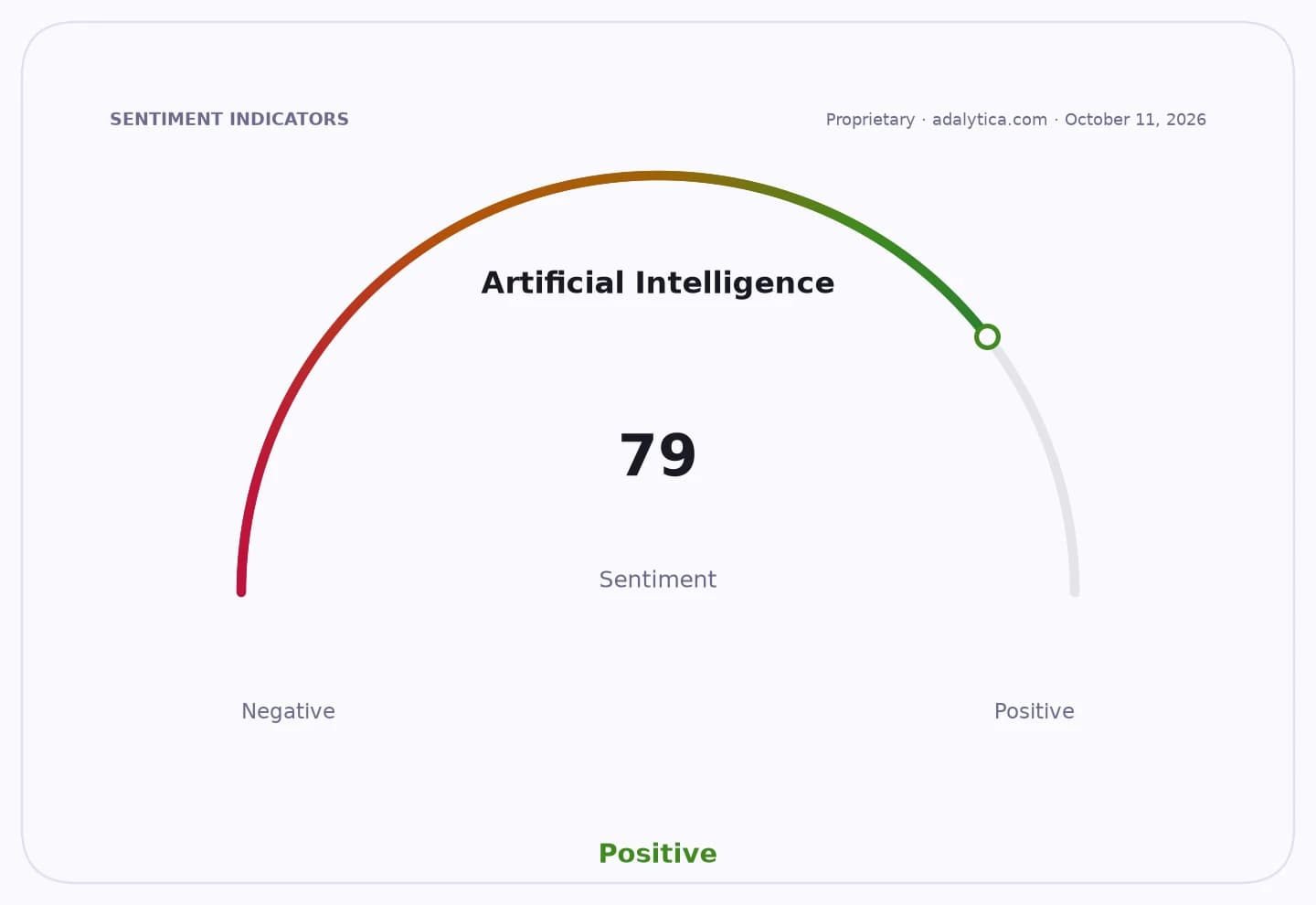
Sentiment IndicatorsⓘProprietary · adalytica.com · October 19, 2026
This is a snapshot — live sentiment, awareness and momentum for 130+ markets update continuously in the dashboard.Open AlphaPulse
The RN, led by Marine Le Pen and Jordan Bardella, is polling ahead of the 2027 presidential election and has proposed dismantling the National Film Board, privatizing public broadcasting and cutting public broadcasting funding by €3.5 billion by 2028, a reduction of more than 90%. For French cinema, the economic issue is not just whether a few films lose a sponsor. It is whether the financing architecture that supports first-time directors, arthouse titles and international co-productions survives intact.
France Télévisions is one of the pillars of that system. The broadcaster invests more than €60 million a year in pre-financing over 60 films, nearly a third of them first or second features, the kind of projects that often struggle to secure support from commercial broadcasters or streamers, which tend to favor more mainstream fare. In 2025, France Télévisions invested €476 million across film and TV, making it the biggest overall backer in the sector.
The stakes extend well beyond domestic cinema. France’s influence at Cannes and in European independent film rests partly on this financing model. This year, 81% of the films in Cannes’ official selection were financed by France, while France Télévisions co-financed seven of the 22 competition titles. The CNC, the national film board, backed 69 films in the official selection. Its funding comes from a levy on theatrical admissions, including Hollywood releases, which recycles box-office revenue back into production — a structure widely regarded as one of Europe’s most effective cultural policy tools.
That system is already under pressure. France Télévisions is facing a €47 million cut in 2027 under the government’s finance law, plus another €47 million in subsidies, while lawmakers are also considering diverting some CNC resources to the state budget. More than 170 filmmakers, including Jacques Audiard, Justine Triet and the Dardenne brothers, have warned in an open letter that the cuts could lead to 400 fewer French films over five years.
The dispute also exposes a second, more immediate risk for investors in French media and content production: the possibility that Canal+ walks away from its latest film-financing deal. The pay-TV group has threatened to withdraw from a five-year agreement to invest nearly €1 billion in French and European films between 2028 and 2032 if the government doubles VAT on pay-TV subscriptions to 20% from 10%. Canal+ says the tax hike would cost it about €200 million a year and would effectively void the pact.
For equity investors, the headline is not simply that a public broadcaster is warning about culture policy. It is that French audiovisual financing is becoming a balance-sheet issue, with budget policy, tax policy and election politics converging on a sector built on mandated investment. If public broadcasting support is cut and private commitments become less reliable, the losers are likely to be independent producers, arthouse distributors and smaller filmmakers; the beneficiaries would be commercial broadcasters and streamers with deeper balance sheets, though even they are unlikely to replace the lost financing on the same terms.
Netflix and other streaming platforms add another layer of complexity. Netflix became France’s largest private contributor to local production for the first time in 2025, investing €308 million in audiovisual production and cinema last year. France Télévisions remains larger overall, but industry players increasingly fear that streamers are changing the mix of what gets made, favoring content with broader commercial appeal. On television, broadcasters can increasingly team up with streamers to fund expensive series, but that model does not transfer easily to theatrical films because of France’s windowing rules.
| Entity | Gains | Losses |
|---|---|---|
| French film producers | ▲Stable public financing | ▼RN privatization cuts |
| France Télévisions | ▲Policy continuity | ▼Loss of film role |
| Canal+ | ▲Tax relief / deal stability | ▼VAT hike pressure |
| Streamers | ▲More bargaining power | ▼Harder local standards |