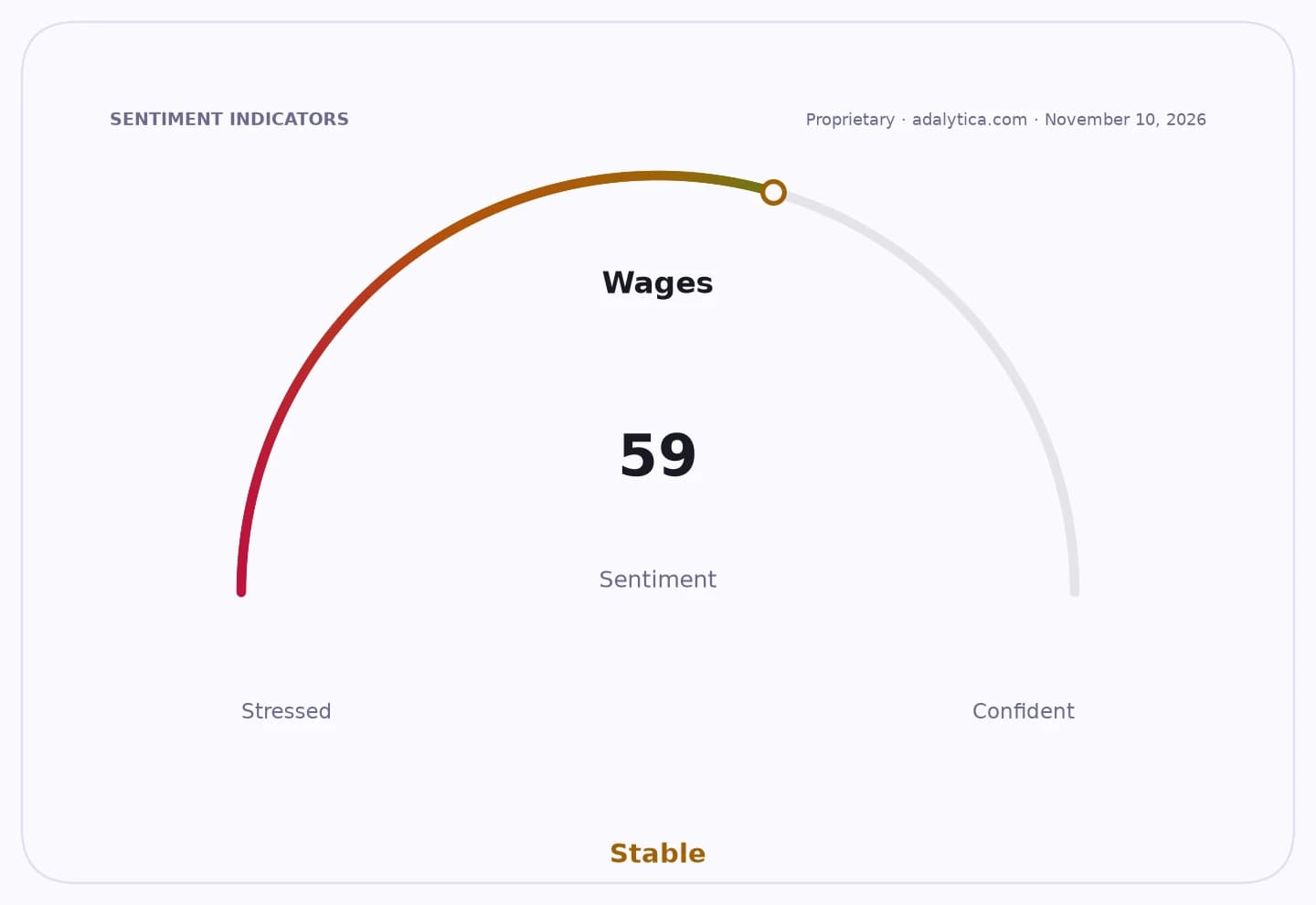
French households are set for a second straight year of falling purchasing power, a deterioration that helps explain why wage and cost-of-living protests are resurfacing across the country and why the political debate is now centered on who is absorbing the inflation shock.
France household purchasing power falls in 2025-26
The Insee estimates that purchasing power per consumption unit fell 0.7% in 2025 and will drop another 0.6% in 2026 if recent trends hold, a modest decline on paper but a meaningful one for households already squeezed by food, fuel and rent. Economically, the key issue is not just that prices are still rising, but that wage gains and social transfers are failing to keep up fully, while the state has less room to cushion the blow than it did in the peak inflation years.
Sentiment Indicators
That matters because France’s consumer economy is heavily dependent on household spending, and the composition of the squeeze is changing. In 2025, Insee says the drag came in part from lower dividends paid to households, while in 2026 the return of inflation is the main culprit, not fully offset by wage increases and benefits. In other words, the source of the pain is shifting from financial income to everyday consumption costs, which tends to hit sentiment harder and hit lower- and middle-income households disproportionately.
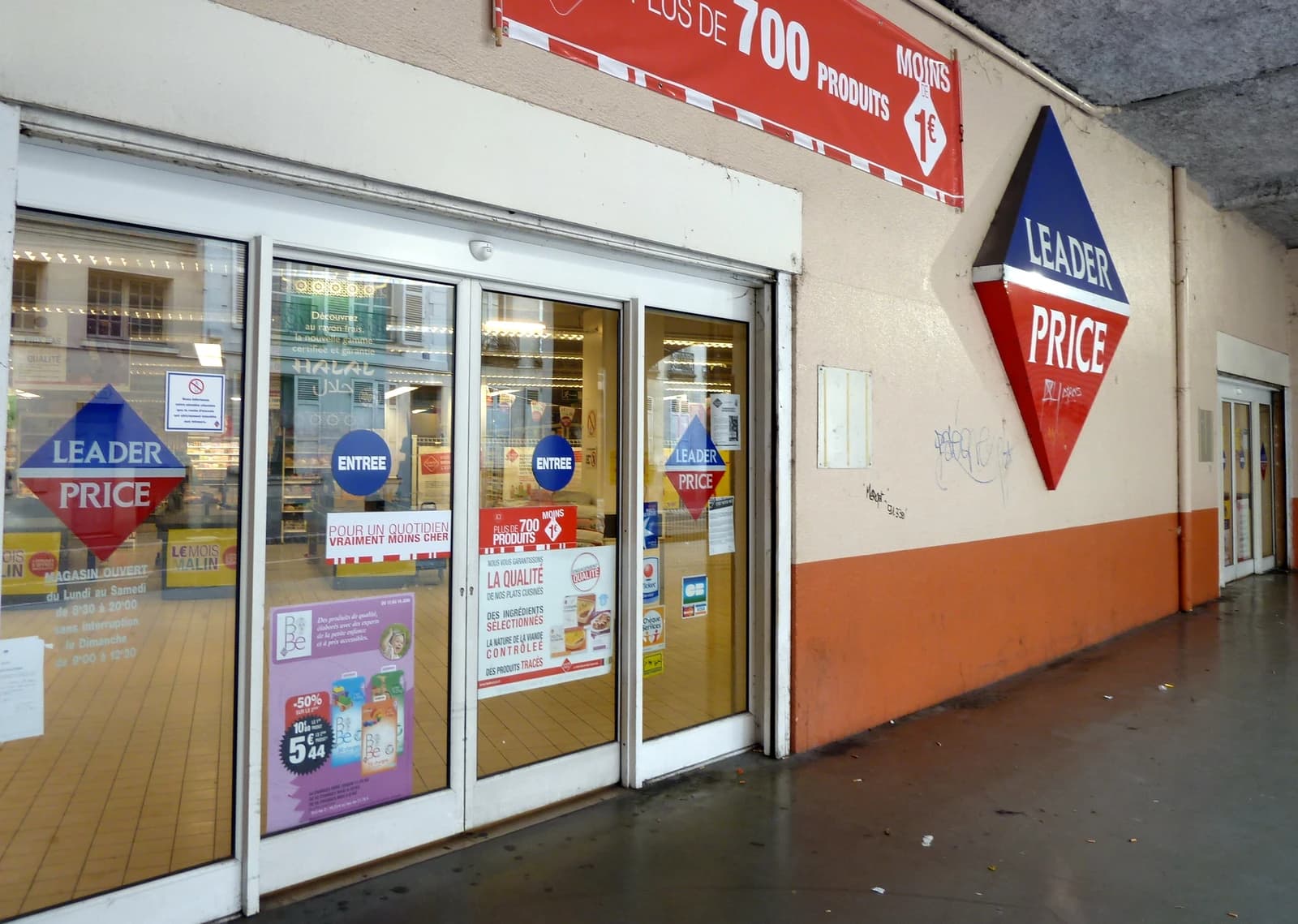
The gap between official measures and lived experience is at the center of the unrest. Insee’s macroeconomic calculation averages across households, but its own surveys show a sharp drop in perceived purchasing power over recent months, both for individual circumstances and for the broader economy. That divergence has widened because French households are more sensitive to volatile essentials such as fuel and food, and because so-called pre-committed spending — rent, utilities, telecoms and similar fixed bills — has doubled as a share of disposable income since the early 1960s, to about 30% from 13.5%.
For investors, the implication is that France is entering a more politically constrained phase of disinflation. Households cannot rely on broad-based state compensation as they did when the energy-price shock prompted the tariff shield in 2022, and that raises the risk of social pressure for higher wages, more targeted transfers or tax relief. All three can support consumption in the near term, but all three also complicate the fiscal math for Paris.
There is also a competitiveness angle. Nicolas Laine of Institut Montaigne argues French real wage growth has been weak for three decades and lags other European economies. The European Commission projects French real wages will still be 2.4% below their 2019 level in 2026, versus a 1.4% rise across the EU, underscoring how the French recovery is underperforming peers despite the country’s high public spending.
The broader narrative is that France is no longer dealing with a temporary inflation spike, but with a slower-moving erosion in living standards that is increasingly structural. That makes the political stakes higher: if inflation remains sticky while wages and public transfers lag, protests over purchasing power are likely to remain a recurring feature of the policy landscape, and markets will have to price a France where household demand is more fragile and fiscal flexibility more limited.
| Entity | Gains | Losses |
|---|---|---|
| French households with savings/market income | ▲Partial inflation buffer | ▼Falling real purchasing power |
| Wage earners and pensioners | ▲Higher pay demands gain traction | ▼Still lag prices and fixed costs |
| French government | ▲Pressure to target aid more narrowly | ▼Less fiscal room for broad compensation |
| Consumer-facing companies | ▲Some support from wage-linked spending | ▼Softer discretionary demand if squeeze deepens |