France’s housing crisis is no longer just a social problem — it is becoming an economic drag that is freezing construction, worsening affordability and deepening a supply shortage that policymakers have failed to fix.
France Housing Shortage Hurts Construction and Affordability
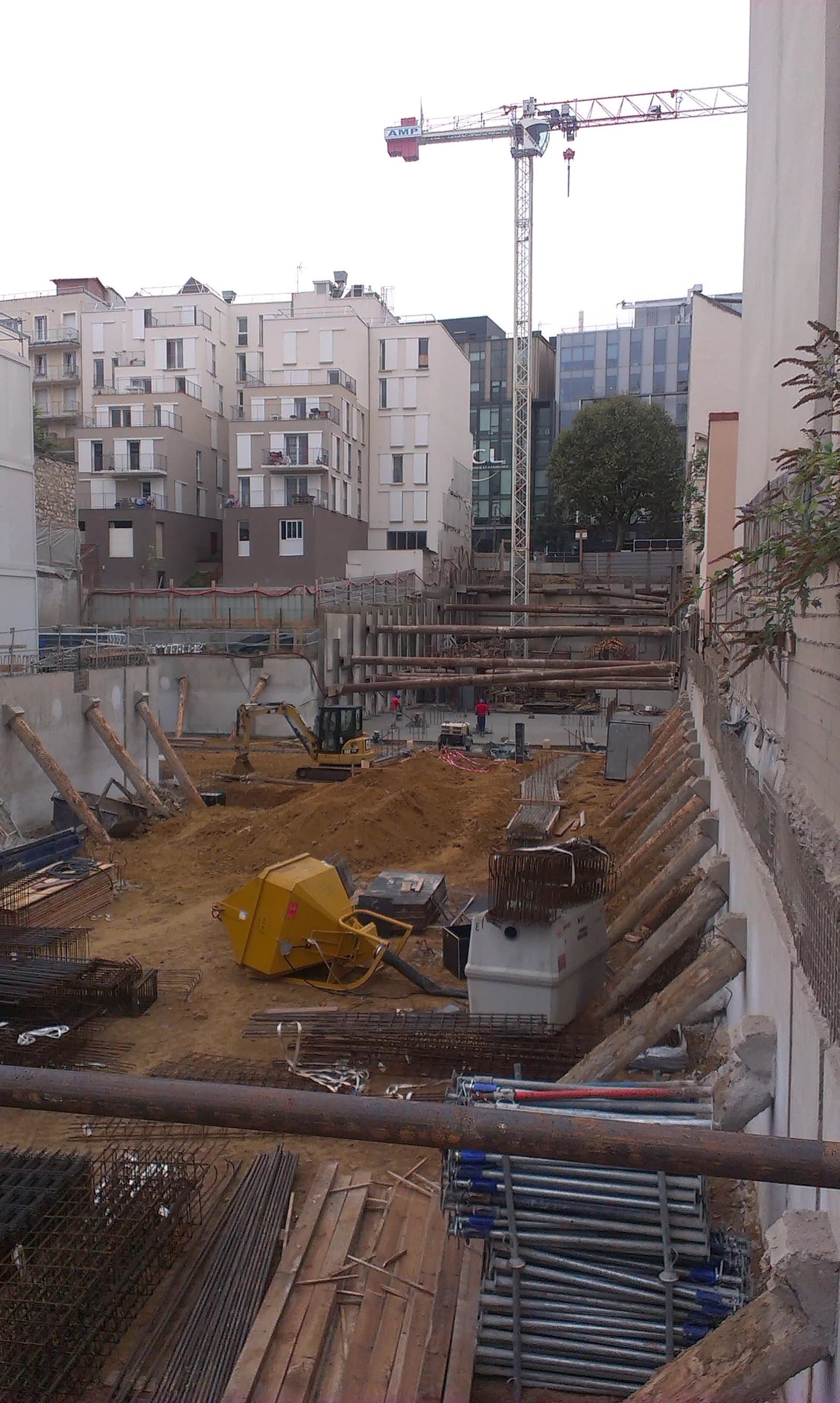
The most important development is not a temporary slowdown in sales or a cyclical dip in demand. It is the breakdown of the entire housing chain: heavy taxation, elevated construction costs and financing conditions that remain restrictive even as inflation cools. That combination is choking new supply in France at the exact moment households are already under strain from housing being the biggest expense in the budget.
Sentiment Indicators
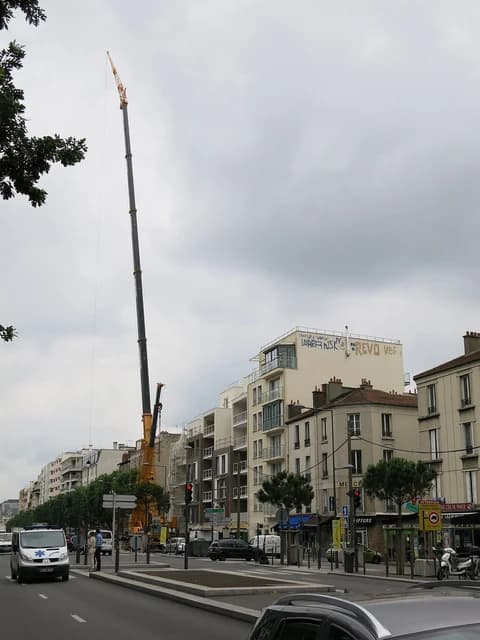
That matters because housing is one of the economy’s largest transmission channels. When new building stalls, the effects spread quickly: fewer permits, fewer jobs in construction and materials, less turnover in existing homes and weaker household mobility. In France, where the political debate increasingly centers on cost of living, the housing market has become both a social pressure valve and an economic bottleneck.
The macro backdrop is not helping. Consumer prices are still rising, with U.S. CPI running at 337.476 in October versus 333.979 in May, while the 10-year Treasury yield sits near 4.88%, a reminder that global borrowing costs remain high. Even if those are U.S. readings, the message is the same for real estate globally: debt is expensive, capital is selective and developers need more margin than ever to make projects work. In that environment, France’s tax burden and construction inflation are especially punitive.
Housing (Real Estate)
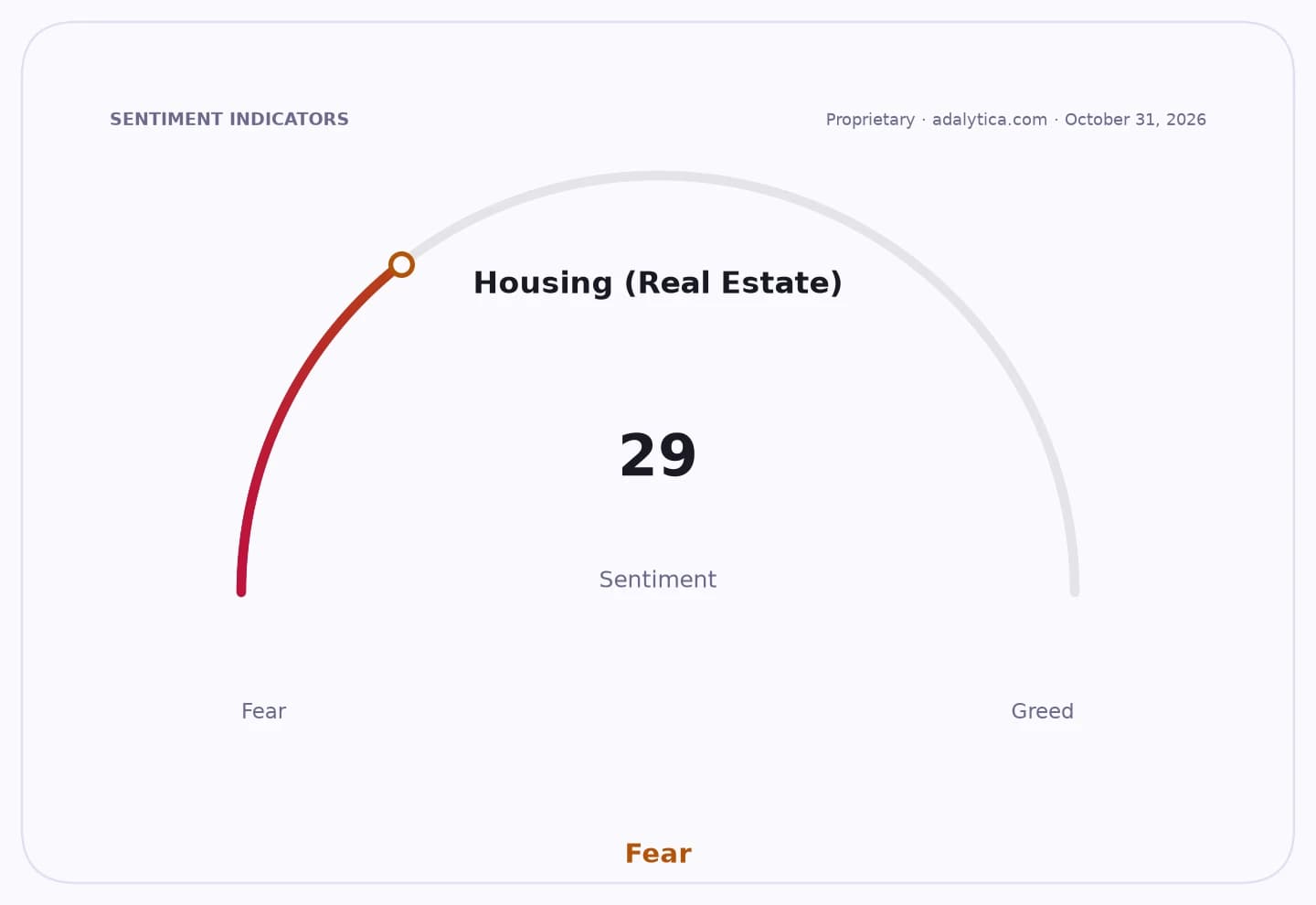
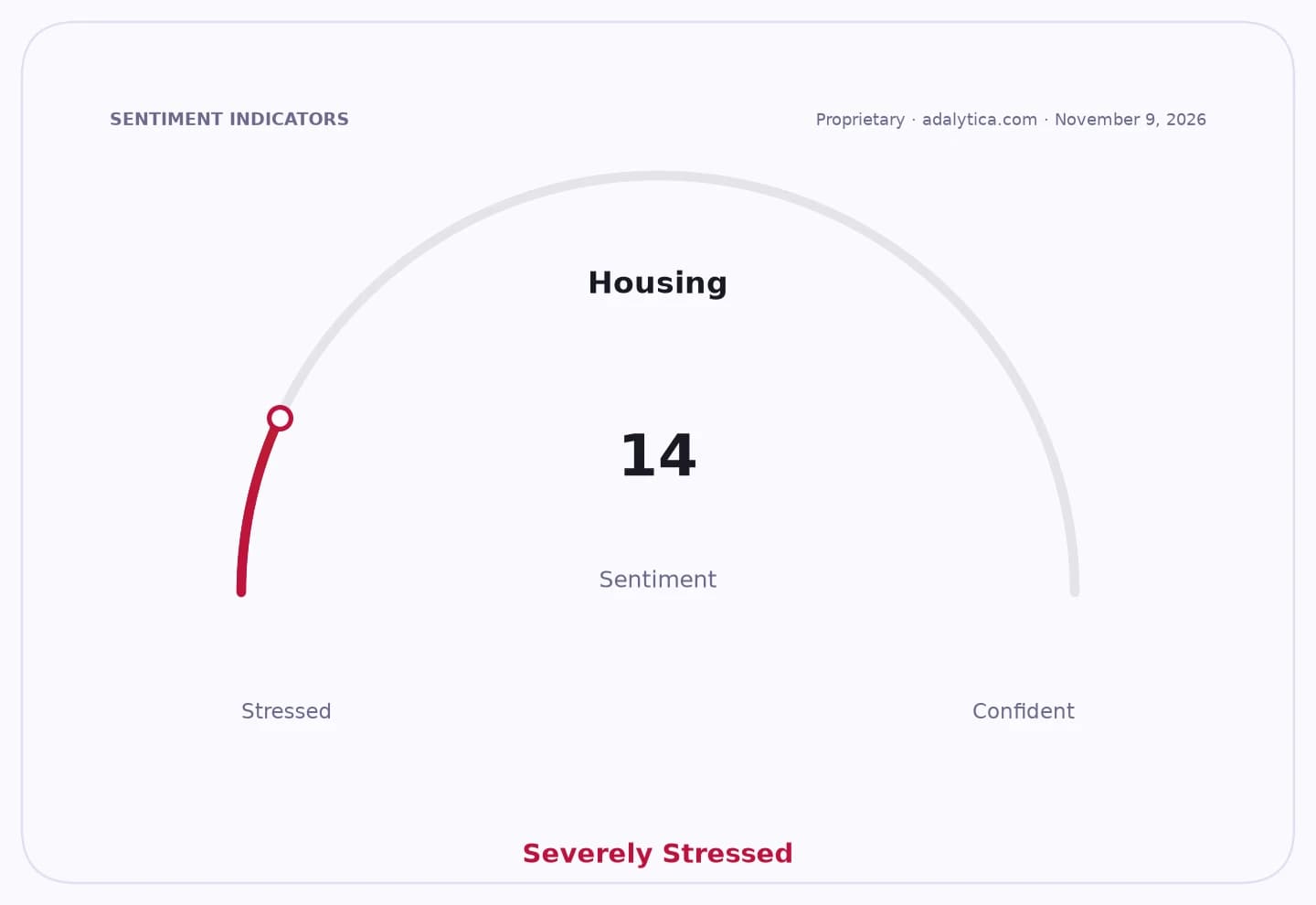
Investor sentiment reflects that stress. Adalytica’s Housing Fear & Greed Index for XHB is deep in “Fear” at 21, with “Extreme Fear” awareness at 4. That does not mean the sector is dead; it means the market is already discounting bad news. For contrarian investors, that is where the opportunity begins — not in chasing a quick rebound, but in identifying the scarce winners from a prolonged shortage.
The beneficiaries are the businesses that profit from scarcity, not volume. Established landlords, rental housing operators and selective homebuilders with strong balance sheets can gain pricing power as supply remains constrained. The losers are obvious: smaller developers, landowners reliant on turnover and households waiting for relief that keeps getting pushed out. If policy does not unblock land use, taxation and permitting, the French housing market will stay trapped in a low-supply, high-frustration equilibrium.
My view is straightforward: the market underestimates how durable this housing shortage can be. France is not facing a short-lived affordability wobble; it is facing a structural supply failure. That means the next big trade is not a broad housing recovery, but a long-duration bet on the few players that can survive a frozen market and monetize the scarcity it creates.
| Entity | Gains | Losses |
|---|---|---|
| Large rental housing operators | ▲Higher occupancy and pricing power | ▼— |
| Well-capitalized homebuilders | ▲Share gains in scarce supply | ▼Smaller rivals squeezed out |
| French households | ▲— | ▼Higher rents and fewer homes |
| Policy inaction / high taxes | ▲— | ▼Worse affordability and weaker construction |