France’s housing minister is pushing banks to relax mortgage-lending rules, arguing that the current 35% debt-to-income cap is blocking buyers and freezing parts of the property market just as borrowing costs remain near 4%.
France Housing Minister Pushes Mortgage Rule Easing
The move matters because housing in France is already under strain from scarce supply, elevated prices and tighter credit conditions. When lenders are forced to reject more applicants under a hard affordability threshold, demand weakens further, transactions slow and the transmission of monetary policy into the real economy becomes more restrictive. That can be a drag on construction, household spending and the broader economy.
Sentiment Indicators
Vincent Jeanbrun said on BFMTV that he wants to “give back fluidity to the banking system” and broaden access to mortgage credit, including for first-time buyers and buy-to-let investors. He has met banks and asked them to “let go a lot more,” while acknowledging the regulator’s role. The French banking federation has separately called for the 35% rule to be scrapped, saying the current framework is too rigid.
The debate is about more than housing policy. At rates close to 4%, a borrower can quickly hit the ceiling even if disposable income remains ample. Jeanbrun pointed to a household earning 10,000 euros a month and already paying 3,500 euros in debt service, which would still be blocked from borrowing despite 6,500 euros of remaining income. Banks say the cap protects consumers and lenders from overextension; the regulator, the Haut Conseil de stabilité financière, argues there is no credit supply constraint and has resisted easing.
For investors, the key question is whether any loosening would revive volumes without increasing credit risk. A softer rule could support home purchases, refinancing and mortgage originations, which would be welcome for banks and brokers if demand returns. But it could also encourage more leverage at a time when French lenders are already exposed to long-dated fixed-rate loans, and when higher rates are making affordability harder across Europe.
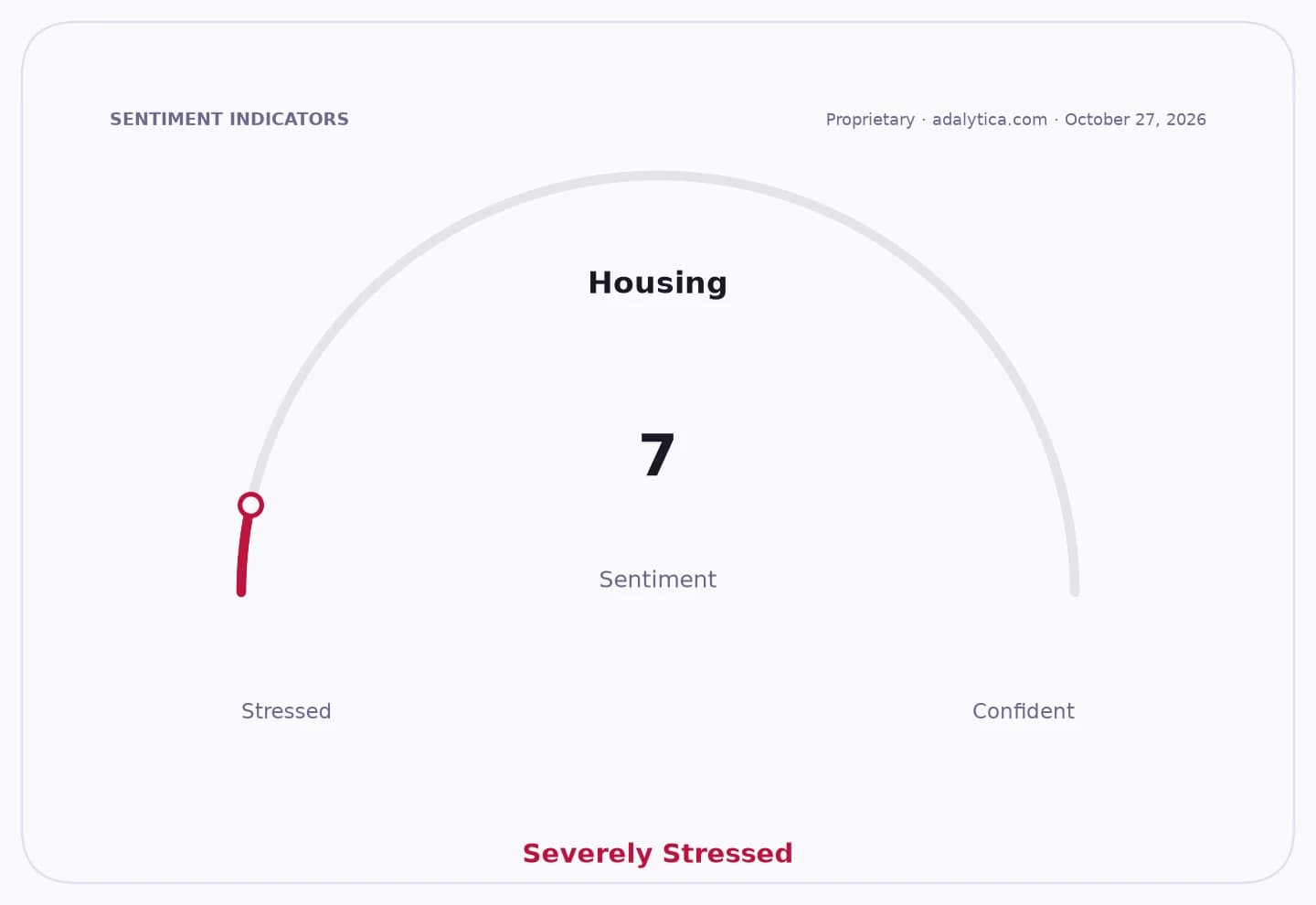
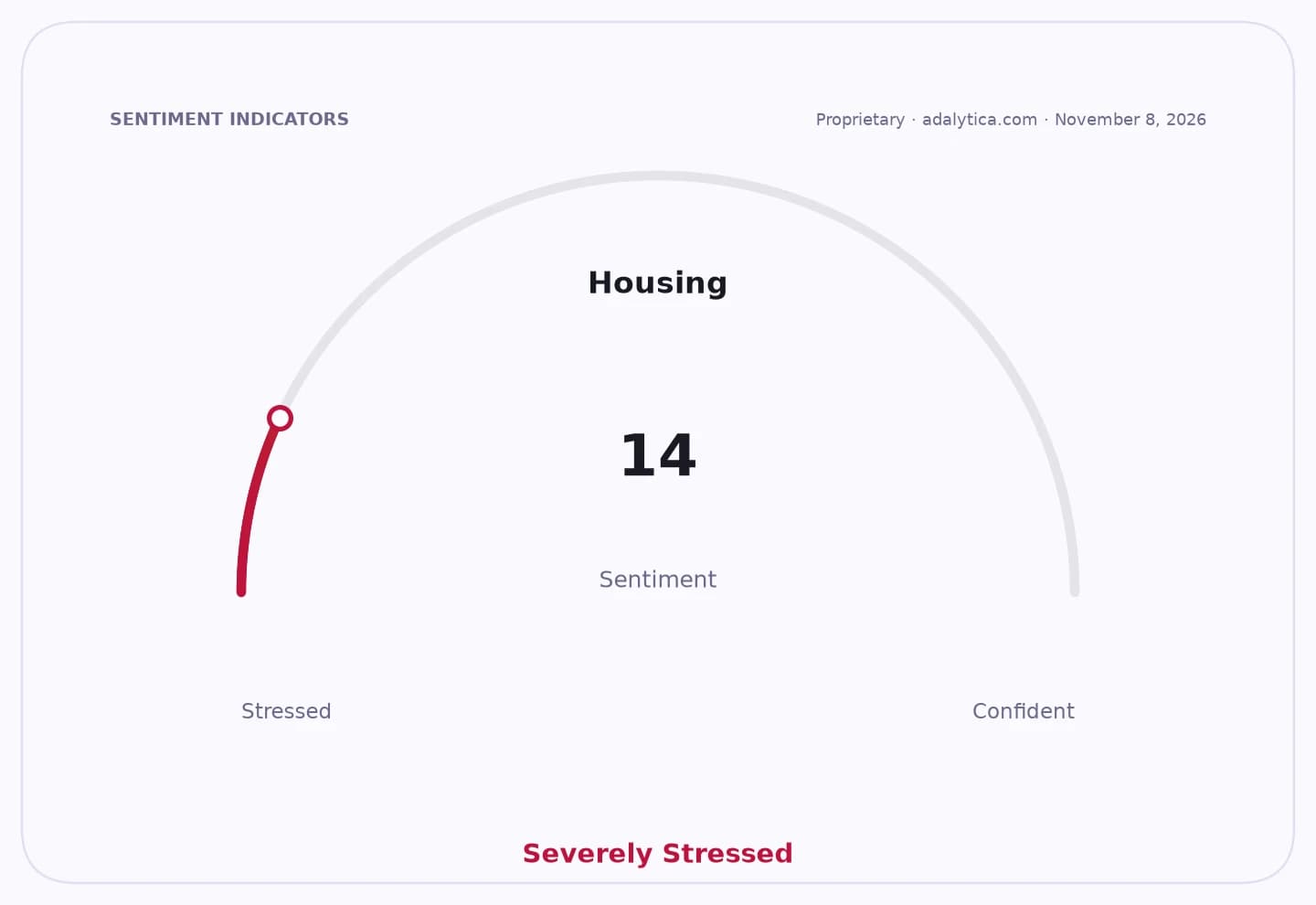
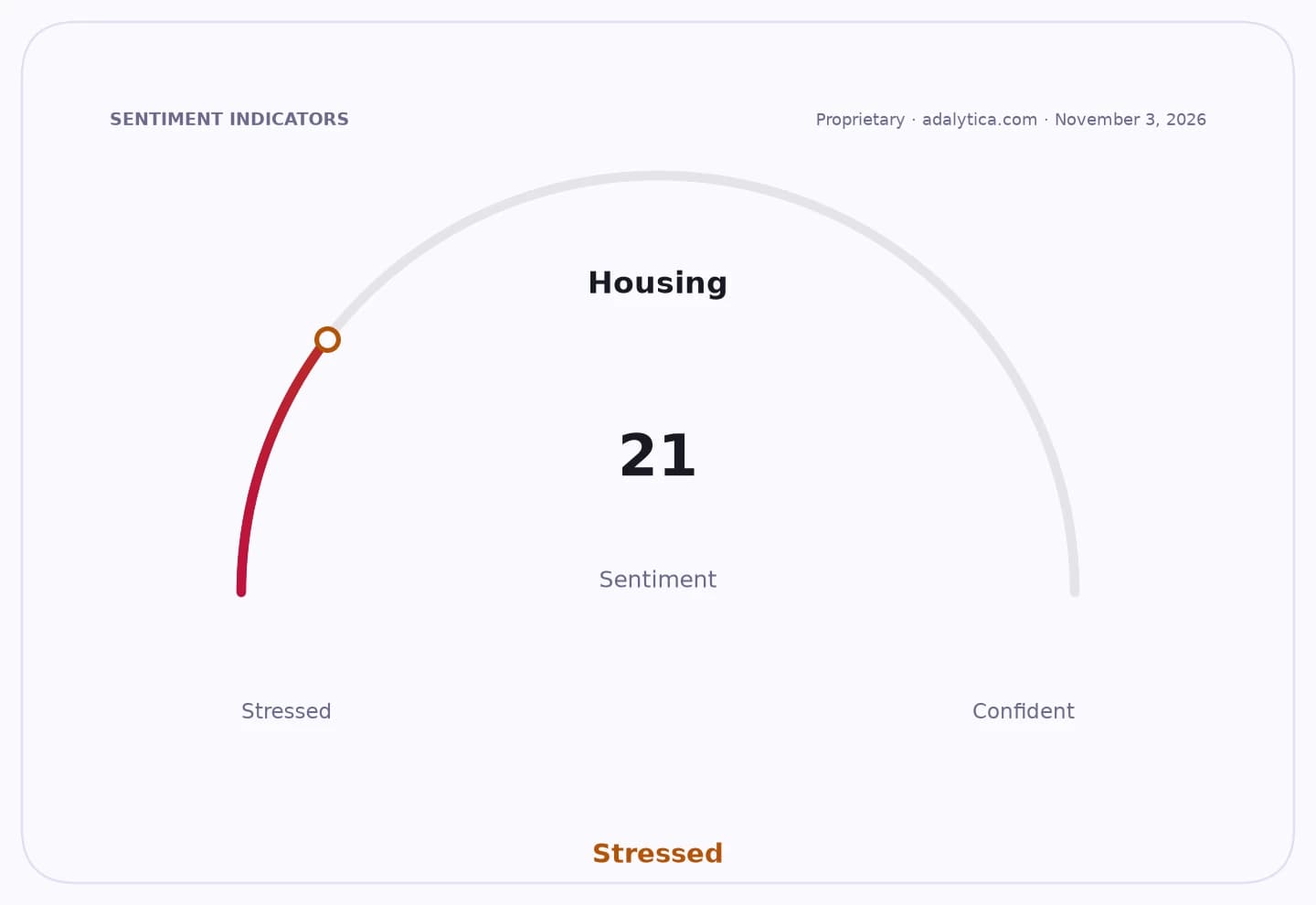
The policy signal also lands in a fragile housing backdrop. Adalytica’s Housing Fear & Greed Index for XHB is at 4, or “Extreme Fear,” while housing and rent inflation sentiment is also in “Extreme Fear” territory. U.S. housing equities have been volatile as well, underscoring how sensitive the sector remains to financing conditions. In Europe, the same squeeze on credit is likely to keep pressure on activity unless regulators and banks find a middle ground.
The next catalyst is whether Jeanbrun can win support from the economy ministry, the Bank of France and the HCSF. If he does, lenders could get more room to extend credit, particularly to first-time buyers. If not, France’s housing market may stay caught between high prices, expensive debt and a rulebook that still limits how far banks can go.
| Entity | Gains | Losses |
|---|---|---|
| First-time buyers | ▲Easier mortgage access | ▼Current 35% cap |
| Banks | ▲Higher lending volumes | ▼Tighter underwriting rules |
| Housing market | ▲More transaction liquidity | ▼Affordability bottleneck |
| HCSF/regulators | ▲Stability focus preserved | ▼Pressure to ease rules |