Low-income households are driving a growing share of France’s rental payment problems, even as the average amount left unpaid has dropped sharply, underscoring how stretched tenants remain in a housing market where affordability pressure is shifting rather than easing.
France rent delinquencies shift to smaller households
A new study from rental management platform Monsieur Hugo shows unpaid rent covered about 3% of rents collected through its system in July, little changed from June’s 3.1% and only slightly above the start of the year. But the average missed payment fell to 637 euros from 786 euros a month earlier, the lowest level since December 2025, suggesting the stress is increasingly concentrated among smaller, more vulnerable households rather than higher-balance arrears.
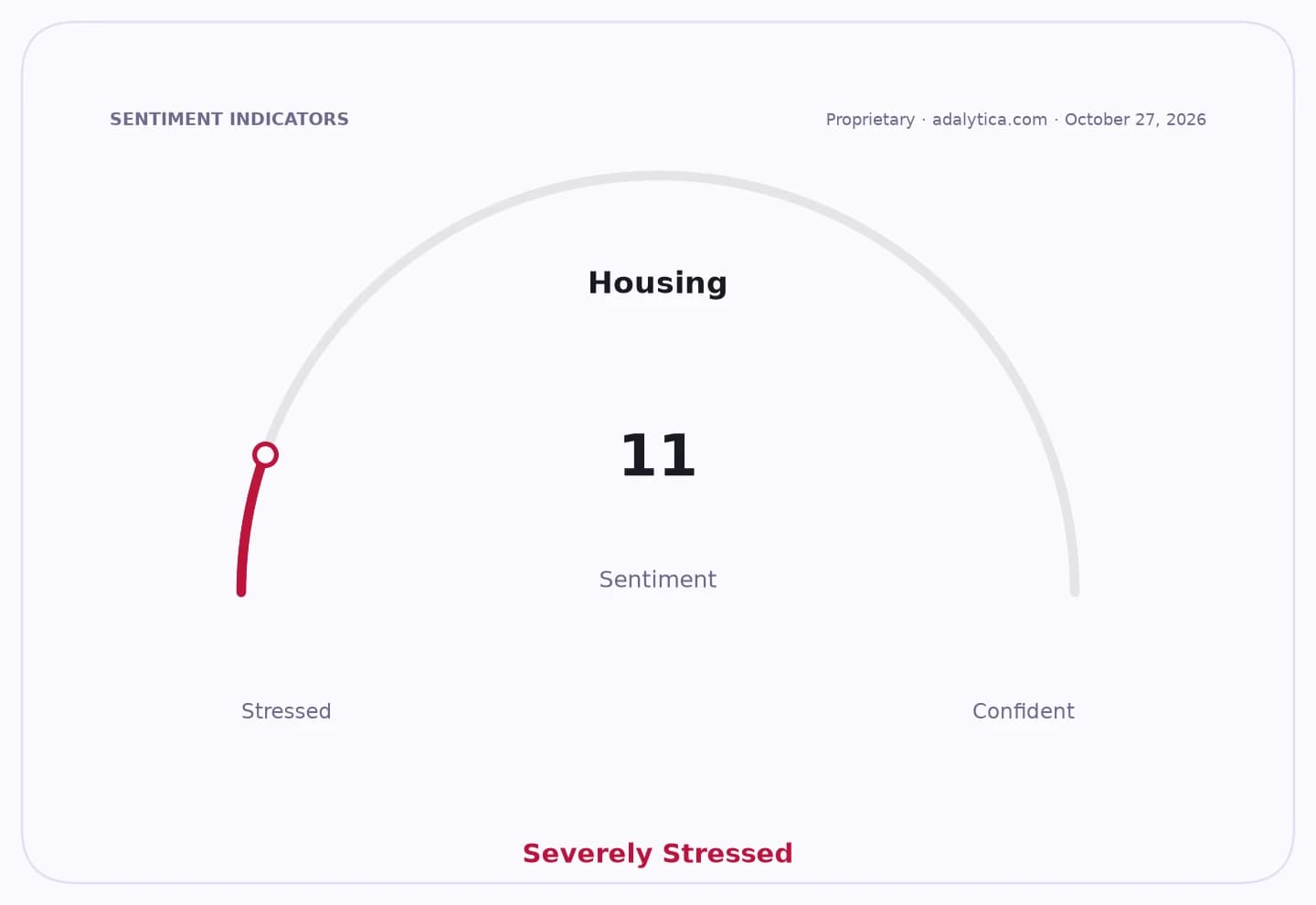
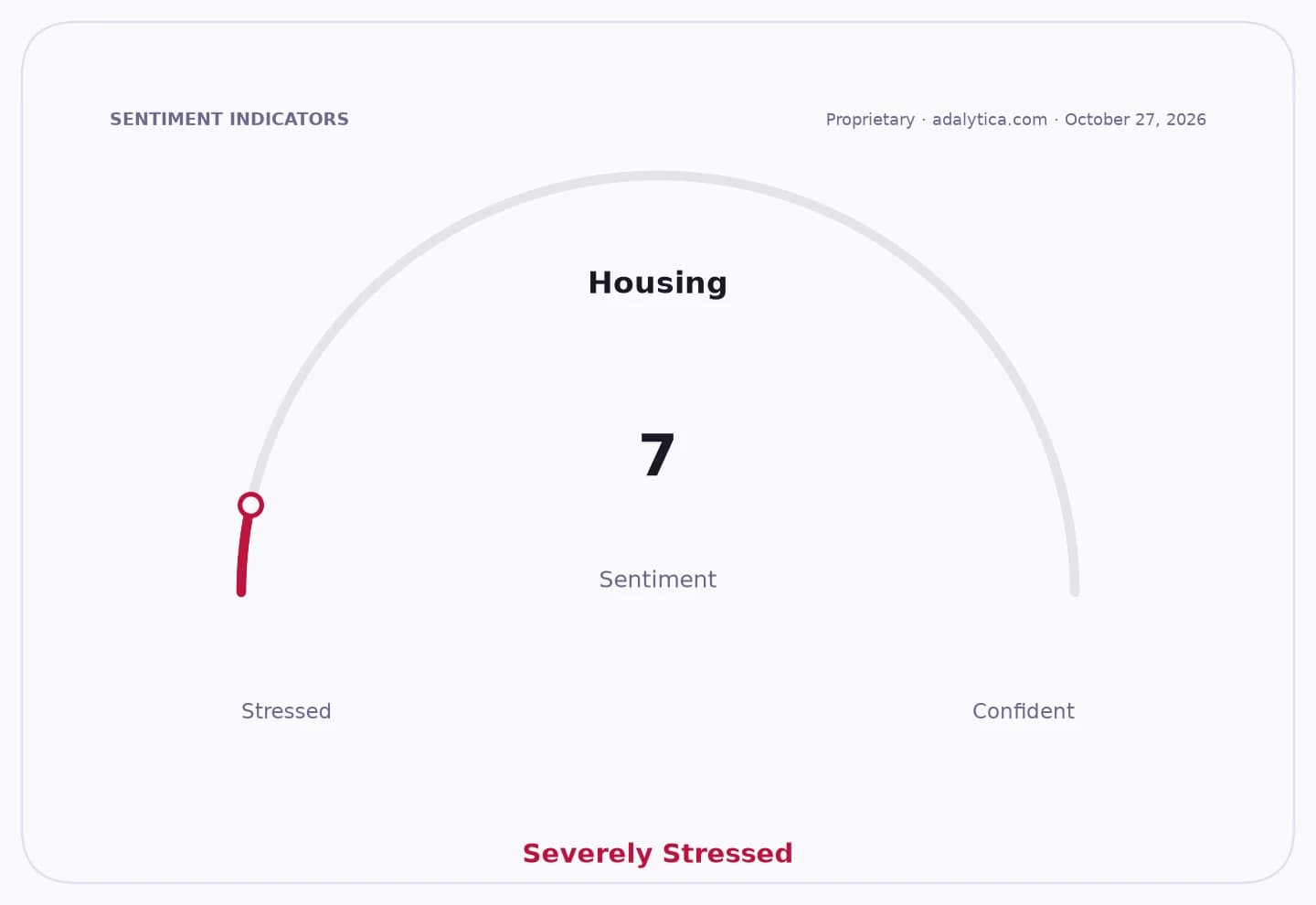
Sentiment IndicatorsⓘProprietary · adalytica.com · October 27, 2026
This is a snapshot — live sentiment, awareness and momentum for 130+ markets update continuously in the dashboard.Open AlphaPulse
That matters because rent delinquency is one of the clearest early-warning indicators for broader household financial strain. If tenants are missing smaller sums more often, landlords may face more frequent collection issues without necessarily seeing large one-off losses. For investors in residential property, the pattern points to a different kind of credit risk: less about the size of each default, more about the number of households on the edge.
The burden is not spread evenly. Monsieur Hugo said payment incidents were most pronounced in Hauts-de-France, Grand Est and Île-de-France, where incidents reached 17.9% of debits processed on the platform. In Hauts-de-France, where 19% of residents and 37% of tenants live below the poverty line, rent payment problems reflect a labor market and income profile that leaves little room for shocks.
The timing is also relevant. France has just shortened the deadline for regularizing unpaid rent from two months to six weeks, and new leases signed from Oct. 1 must include a clause spelling out that shorter timetable. That should give landlords a faster route to action, but it also raises the stakes for tenants with thin cash buffers and may accelerate disputes or evictions if support systems do not keep pace.
For the housing market, the message is that affordability stress is becoming more granular. Bruno Cantegrel, founder of Monsieur Hugo, said the firm had previously seen a zone of fragility around 750 to 800 euros, roughly where rent consumes more than a third of household income. July, he said, revealed a second pocket of risk around 600 euros, often in small furnished units in the regions, where the problem is not just an elevated rent burden but the absence of any savings cushion.
That has implications for owners, rental platforms and listed residential landlords. U.S.-style technical strength in apartment stocks may not translate to Europe, but the underlying economics are similar: delinquency trends can erode cash flow quality before they show up in headline occupancy. The latest data suggest France’s rent stress is not disappearing; it is moving lower down the income scale, where recovery is harder and policy intervention may matter more.
| Entity | Gains | Losses |
|---|---|---|
| Landlords | ▲Faster legal action | ▼Higher collection risk |
| Low-income tenants | ▲Some support eligibility | ▼Greater arrears pressure |
| Rental platforms | ▲More demand for screening | ▼More delinquency management |
| Policymakers | ▲Clearer stress signal | ▼More eviction-risk scrutiny |