Germany’s latest extension of its rent brake is again treating a supply problem as a pricing problem, and that matters because the policy is increasingly shaping where capital flows in one of Europe’s tightest housing markets.
Germany rent brake and housing supply debate
The core economic issue is not whether tenants need relief — they do — but whether capping new-lease rents can improve affordability without worsening the shortage it is meant to ease. The data suggest the latter risk remains real. German home-price and housing-cost measures have surged over the past several years, reflecting a persistent imbalance between demand and supply, while investors in rental property are being asked to absorb higher financing, construction and maintenance costs alongside tighter regulation.
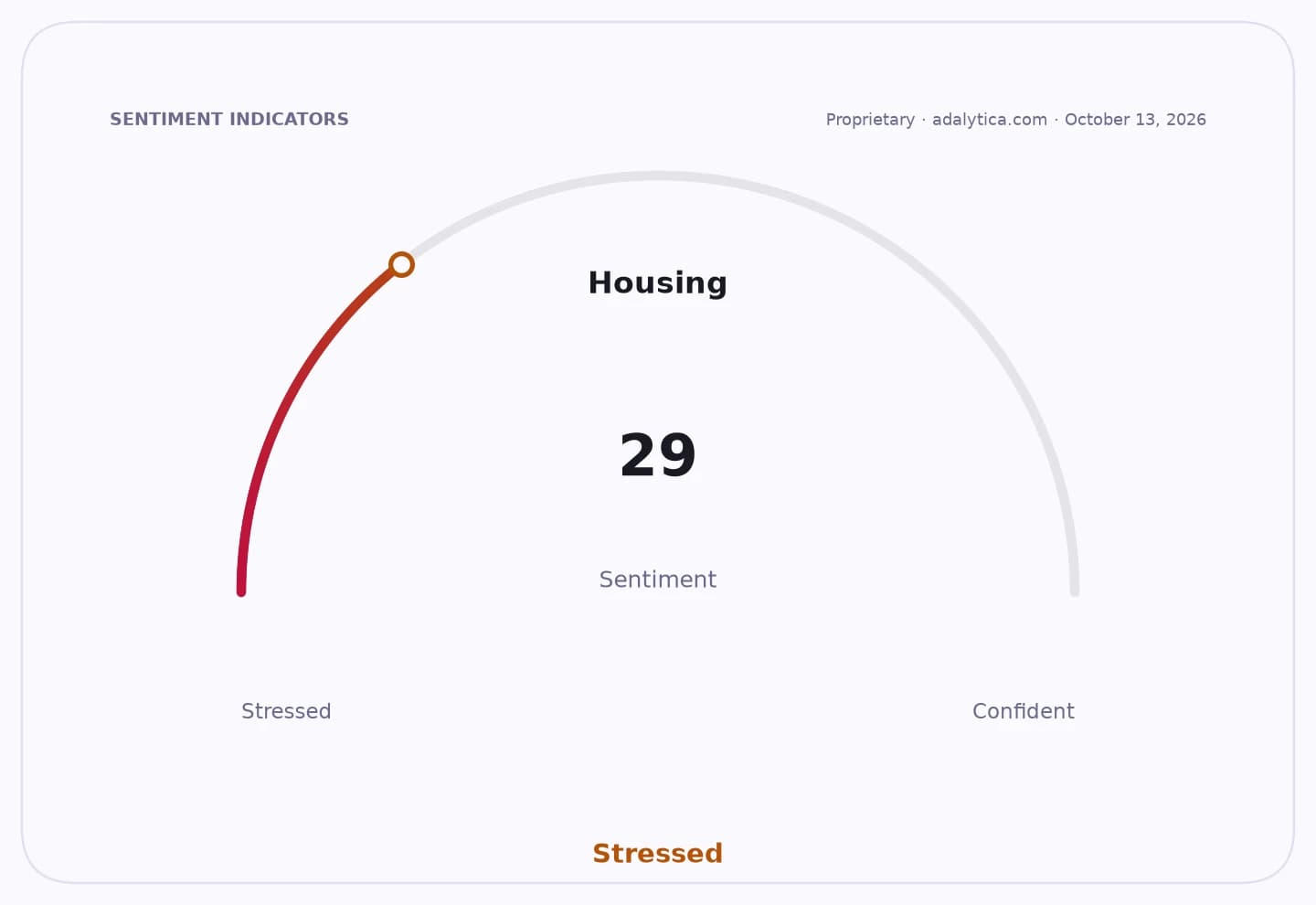
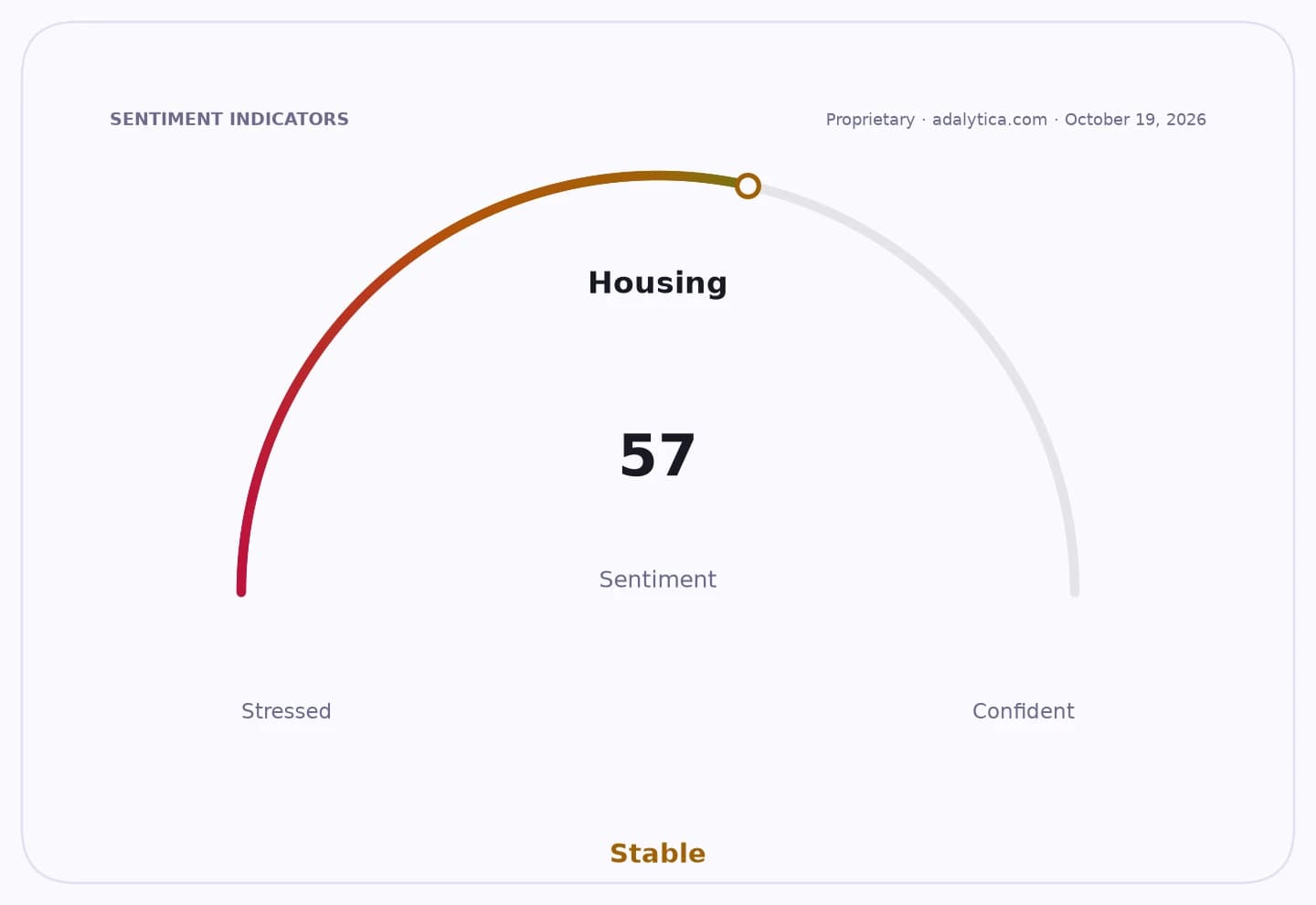
Sentiment IndicatorsⓘProprietary · adalytica.com · October 19, 2026
This is a snapshot — live sentiment, awareness and momentum for 130+ markets update continuously in the dashboard.Open AlphaPulse
That tension sits at the heart of the debate over the Mietpreisbremse, which limits rents on newly signed leases in many markets. Supporters argue it prevents rent spikes in hot cities and gives households breathing room. Critics say it suppresses the returns needed to keep private capital in the rental market, discourage modernization and support new construction. In a country where housing supply is already constrained, that is not just a landlord problem; it is a macroeconomic one.
The numbers underline why. German housing-related price indices have risen sharply from pre-pandemic levels, with one measure up more than 60% since 2019 and another having climbed steadily to record territory. At the same time, residential real estate investment funds have been volatile, with major listed proxies such as IYR, VNQ and XHB all having retreated from earlier 2026 highs and now sitting below key long-term trend levels on standard technical indicators such as the 50-day moving average and the 200-day moving average. The move reflects more than sentiment: higher rates, policy uncertainty and the prospect of weaker pricing power have all weighed on the sector.
For landlords, the policy mix is squeezing economics from both sides. Rising taxes, building standards and borrowing costs have already eroded yields; rent caps further limit the ability to pass those costs through. That is why the bearish case is not hard to understand: if returns fall below the risk-adjusted alternatives available in bonds, equities or cash, some owners will sell, defer upgrades or avoid new development altogether. That is exactly the dynamic critics fear will tighten supply further, especially in major cities where demand is strongest.
The bull case for the policy is political and social, not financial. Rent brakes can slow displacement, reduce turnover shocks and prevent the most extreme asking-rent spikes in constrained neighborhoods. They also buy time for households while broader supply measures work through the system. But without faster permitting, lighter building regulation and lower construction costs, the cap only manages scarcity — it does not remove it.
That is why investors should watch Germany’s housing debate less as a narrow tenant-rights issue than as a signal about the country’s investment climate. If policymakers keep leaning on price controls while supply remains weak, the likely winners are existing tenants in regulated units and politically sensitive cities. The likely losers are private landlords, developers, housing REITs and, over time, would-be renters who face even fewer available apartments.
The bigger lesson is that rent controls can smooth pain at the margin, but they do not create new homes. In a shortage, they redistribute scarcity.
| Entity | Gains | Losses |
|---|---|---|
| Existing tenants in regulated units | ▲Slower rent increases | ▼Less mobility, fewer available flats |
| Private landlords | ▲Limited upside in tighter markets | ▼Lower yields, weaker incentives to invest |
| Developers and builders | ▲Some policy pressure for reform | ▼Higher uncertainty, delayed projects |
| Prospective renters | ▲Temporary rent relief | ▼Scarcer supply, tougher search conditions |