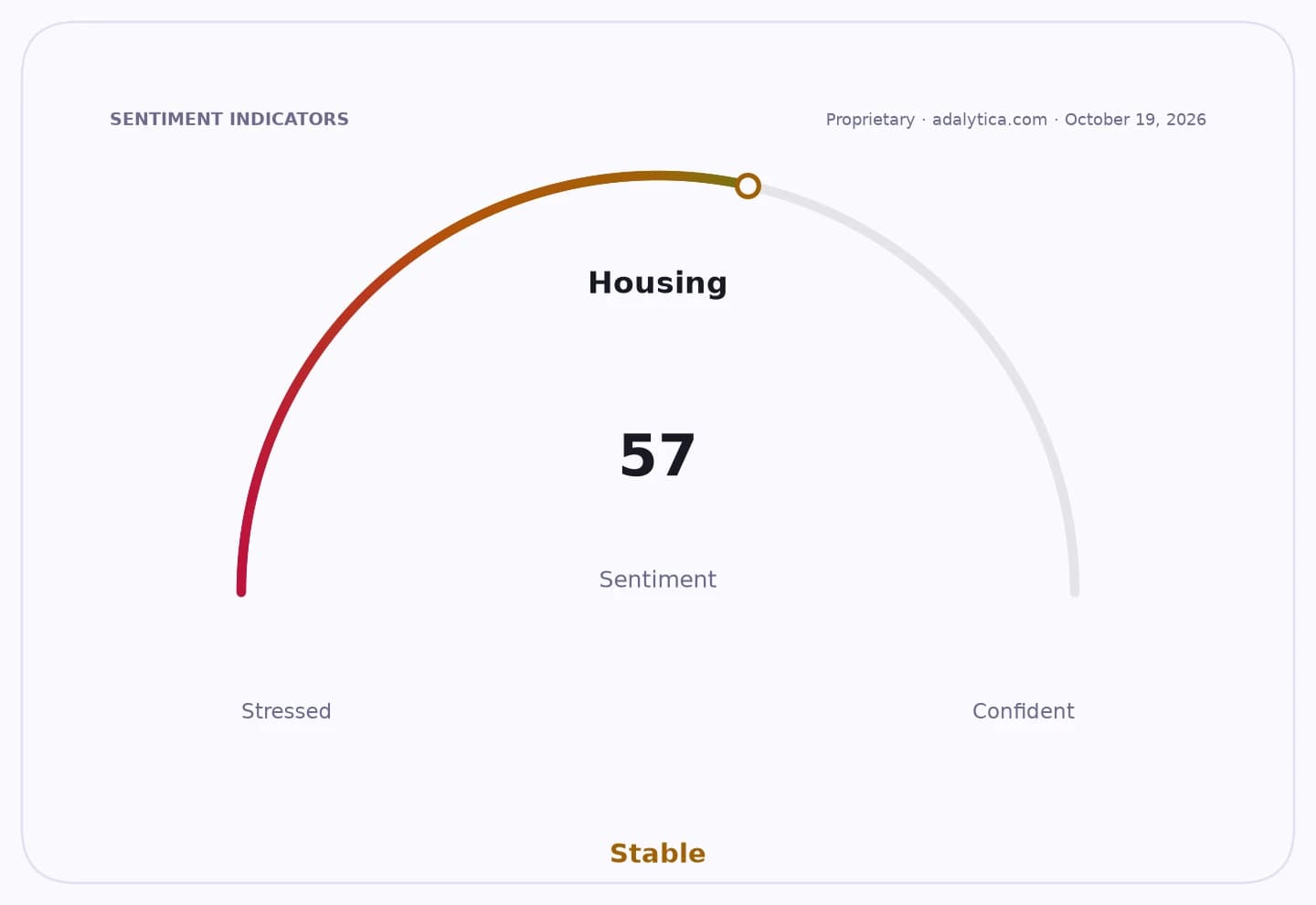
Rent caps may be politically difficult, but the latest polling shows the public wants more intervention in a housing market that has become too expensive for too many households to absorb.
Australia rent caps poll backs more regulation
A new Australia Institute poll found 4 in 5 voters support some regulation of the rental market, while more than half say rents should be kept in line with inflation. That is not just a sentiment shift — it is a warning that housing affordability has become a durable political issue, one that could shape policy for years and alter the outlook for landlords, renters and property investors alike.
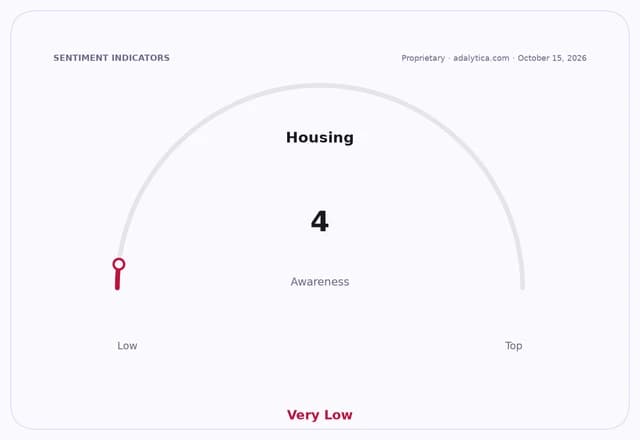
Sentiment IndicatorsⓘProprietary · adalytica.com · October 15, 2026
This is a snapshot — live sentiment, awareness and momentum for 130+ markets update continuously in the dashboard.Open AlphaPulse
Why does that matter economically? Because rent is one of the most visible and persistent pressures on household budgets. When tenants are skipping meals or falling behind on bills, higher rents are no longer just a private hardship; they become a drag on consumer spending, savings and broader economic resilience. If a larger share of income is diverted to housing, there is less left over for retail goods, services and discretionary spending. In an economy already sensitive to cost-of-living stress, that matters.
The poll also helps explain why rent control remains such a live debate even as major parties in Australia have dismissed hard caps. Voters appear open to some form of intervention, but they are also backing a broader fix: more supply. That is the key economic tension. Capping rents can ease pain in the short term, yet it does not solve the underlying shortage that pushes prices higher in the first place. Build more homes, and the pressure eases over time. Freeze rents without more supply, and you risk shifting scarcity elsewhere in the system.
For investors, that means the housing trade is not as straightforward as it once looked. Residential real estate has long been viewed as a resilient asset class because rents tend to rise with inflation and population growth. But stronger tenant protections, political pressure and the possibility of tighter regulation can cap pricing power, slow rent growth and compress returns if policy becomes more restrictive. That does not necessarily make housing a bad long-term investment. It does mean investors need to think more carefully about location, regulation and balance-sheet quality rather than assuming rent increases will always do the heavy lifting.
There is a reason the Australia Institute pointed to the Australian Capital Territory, which has had a form of rent cap for years. Policymakers are clearly testing models that try to balance tenant protection with landlord incentives, even if neither side sees a perfect answer. The broader message is that affordability has moved from a social issue to an economic one, and that usually leads to more policy experimentation, not less.
The long-term winners are likely to be the builders, developers and infrastructure providers that help relieve the shortage. The losers could be landlords relying on aggressive rent growth to drive returns. For investors, the lesson is familiar: own diversified assets, stay patient and focus on businesses with real pricing power, not just temporary scarcity. Housing will remain an essential long-term theme, but the policy backdrop is getting more complex. Worth watching.
| Entity | Gains | Losses |
|---|---|---|
| Renters | ▲More affordability protection | ▼Faster rent increases |
| Landlords | ▲Clearer rules, steadier demand | ▼Pricing power, rent growth |
| Builders/developers | ▲More supply incentives | ▼Policy uncertainty |
| Broad economy | ▲Less household stress over time | ▼Short-term adjustment costs |