Affordable rent is moving from slogan to policy question, and developers may be asked to accept a narrower definition of value: rent no higher than 30% of a tenant’s monthly income and at least 20% below market rates.
Romania affordable rent proposal targets 30% income cap

That framework, outlined by Tinu Sebeşanu, head of Romania’s Federation of Investors and Developers for a Sustainable Economy, matters because it draws a line between social housing and the private rental model developers already know. If lawmakers adopt it, “affordable” would not require a new product so much as a regulated discount, with eligibility tied to groups defined by law such as young families, doctors and teachers.
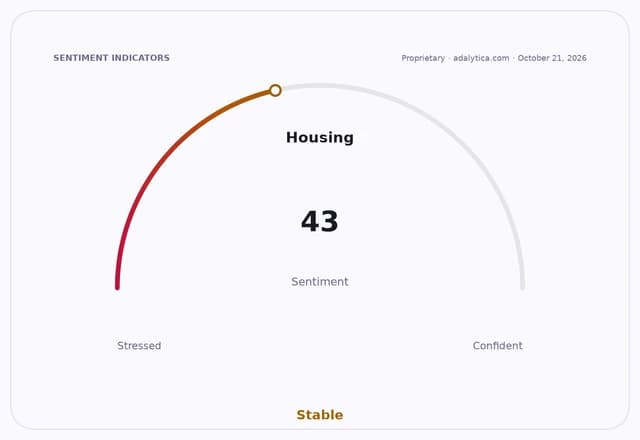
Sentiment IndicatorsⓘProprietary · adalytica.com · October 21, 2026
This is a snapshot — live sentiment, awareness and momentum for 130+ markets update continuously in the dashboard.Open AlphaPulse

For the real estate industry, the proposal is significant because it shifts the affordability debate from construction costs to pricing power. Developers argue the units would not need to differ materially from standard homes, but the economics would change if returns are capped by law or public subsidy. That could make the market easier to finance if the rules are clear and stable, or harder to underwrite if the discount is mandatory without compensating incentives.
Sebeşanu said Romania needs predictable legislation and a government hub to coordinate stakeholders, echoing the broader European move toward tighter tenant protections and rent support. Across the EU, policymakers are increasingly focused on preventing evictions and easing rental stress as housing costs bite households, a trend that could eventually influence national housing policy in Romania too.
The investor question is whether “affordable rent” becomes a bankable public-private segment or a margin squeeze on landlords. For developers, clarity on subsidies, tax treatment and eligible tenants will determine whether the sweet spot Sebeşanu describes is a viable niche or just another unpriced policy ambition.
The broader market backdrop also points to why the issue is getting attention. Adalytica’s housing and rent inflation gauge remains at neutral sentiment but low awareness, suggesting the topic has not yet fully entered mainstream pricing expectations even as affordability pressure persists. If legislation advances, the next catalyst will be whether Bucharest translates the concept into land, financing and tenant-selection rules that institutional developers can actually use.
| Entity | Gains | Losses |
|---|---|---|
| Tenants in eligible groups | ▲Lower rent burden | ▼Less access if rules are strict |
| Developers | ▲Clearer policy framework | ▼Lower rental margins |
| Romanian government | ▲Political relief on housing | ▼Fiscal and legal complexity |
| Existing landlords | ▲Higher policy certainty | ▼Pricing power is constrained |