France’s nearly all-fixed mortgage market is heading into a decisive fight in Brussels, and the outcome could reshape who can still afford to buy a home, how banks price risk and where European housing finance goes next.
France mortgage rules face Basel capital fight
At stake are the Basel banking rules, which France has so far been allowed to bend to its own model of long-dated, mostly fixed-rate lending. If that carve-out expires and the rules are fully applied, banks would have to double the capital they set aside against each home loan, forcing lenders either to tighten credit or pass the cost on through higher borrowing rates and more variable-rate mortgages.
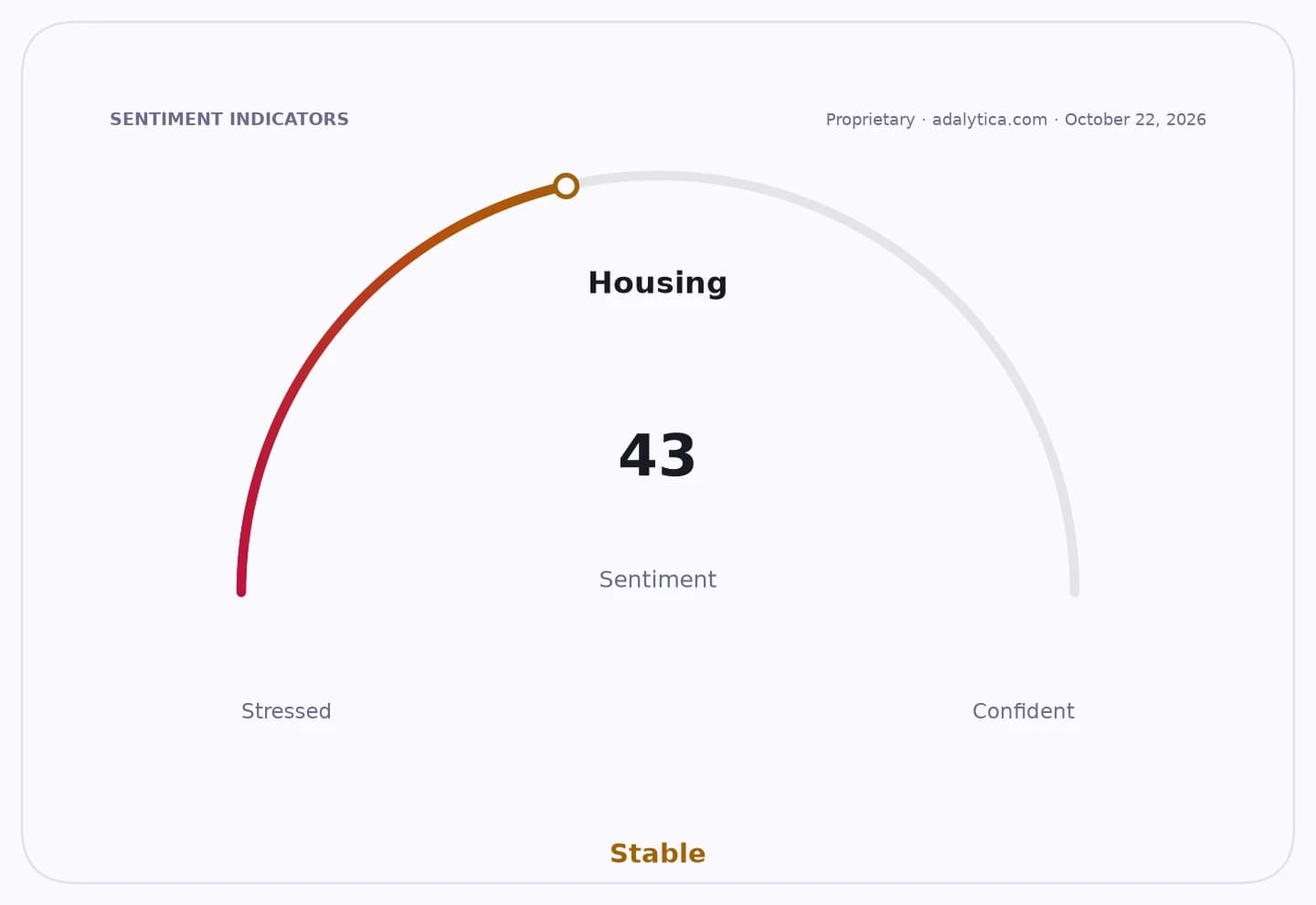
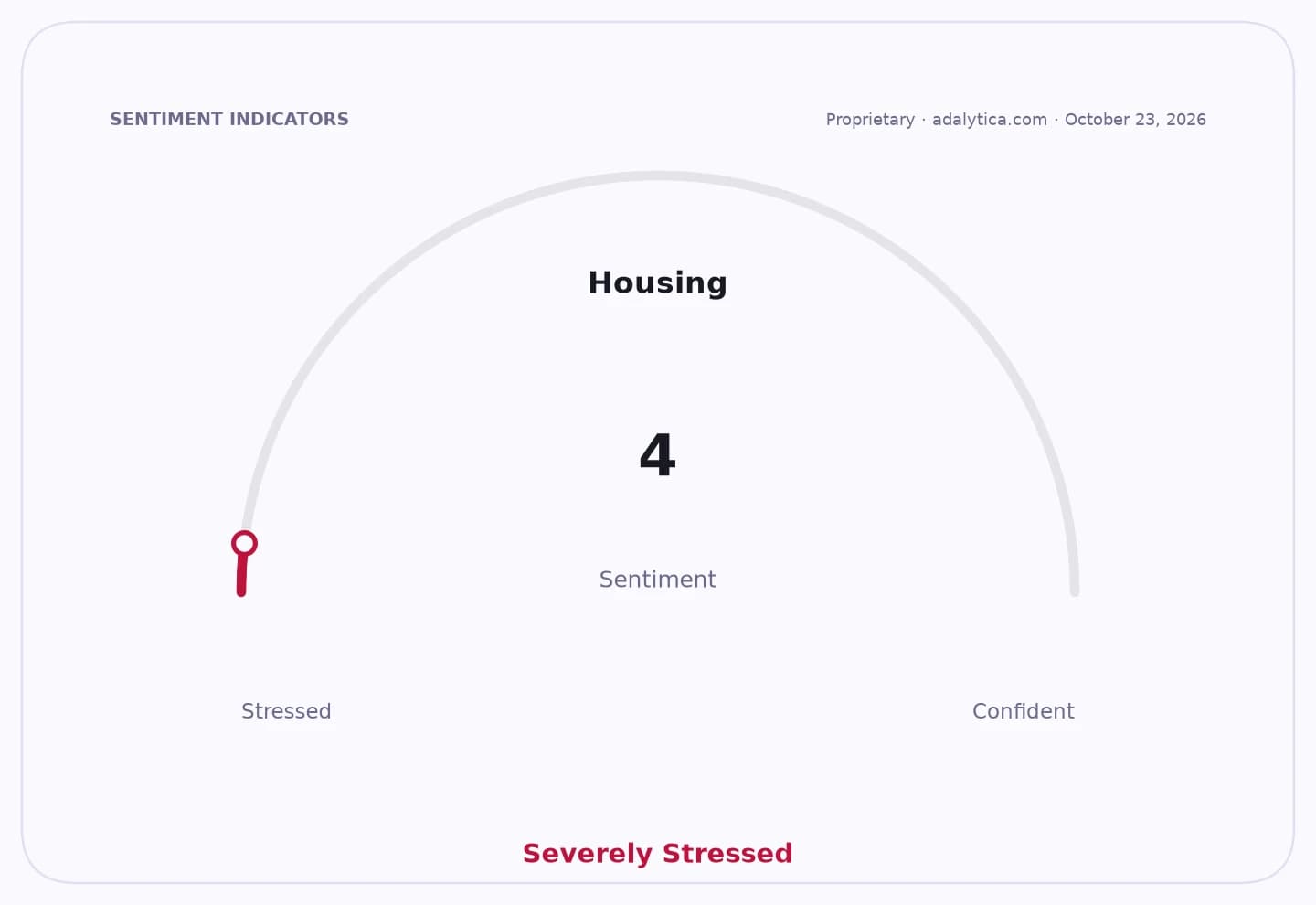
Sentiment IndicatorsⓘProprietary · adalytica.com · October 23, 2026
This is a snapshot — live sentiment, awareness and momentum for 130+ markets update continuously in the dashboard.Open AlphaPulse
That is not a minor technical change. On a 300,000-euro mortgage, the amount a bank would have to reserve would rise from 3,600 euros to 7,200 euros, according to the French Banking Federation. For borrowers, that means the French system’s defining feature — fixed payments that shield households from rate shocks — could become scarcer just as rates remain elevated and housing affordability is already stretched.
The political urgency is real because France’s mortgage market is not like most of Europe’s. About 99% of home loans are fixed-rate, with maturities often longer than 20 years, and lenders judge risk more on a household’s ability to repay than on the value of the property. That structure has long protected borrowers, especially in a high-rate environment, but it also relies on bank balance sheets absorbing more of the interest-rate risk.
Investors should care because the rule change would alter the economics of French lenders, mortgage spreads and housing demand. Higher capital charges typically mean lower loan growth, wider lending margins or both. If banks are pushed toward more variable-rate products, that would shift interest-rate risk back to households and make French mortgage demand more sensitive to the European Central Bank’s policy path.
The market backdrop underscores why this is becoming more urgent. U.S. Treasury yields have climbed back above 5% on the 10-year benchmark, while the 30-year U.S. mortgage rate remains above 7%, a reminder of how quickly housing affordability deteriorates when funding costs rise. In Europe, the pressure is showing up in banking and housing sentiment as lenders in multiple markets reassess mortgage limits, delinquencies and the risk of payment shocks after grace periods.
The broader narrative is that Europe’s post-crisis banking architecture is colliding with a housing market that can no longer rely on cheap money. France is trying to preserve a consumer-friendly mortgage system that has largely insulated households from volatility, but the Basel framework is designed to make banks hold more capital against exactly that kind of long-duration risk. That tension is now moving from theory to policy.
For investors, the key takeaway is clear: if France loses its exemption, the winners will be banks able to reprice credit and any lender exposed to variable-rate lending, while the losers will be first-time buyers, housing demand and any institution built around France’s fixed-rate mortgage tradition. This is a multi-year regulatory catalyst worth watching closely, because it could redefine French housing finance before 2032 — and the market is still underestimating how disruptive that shift could be.
| Entity | Gains | Losses |
|---|---|---|
| French banks | ▲Higher lending spreads | ▼Mortgage volume growth |
| French homebuyers | ▲Short-term policy protection | ▼Affordable fixed-rate credit |
| Variable-rate lenders | ▲Greater product demand | ▼None |
| Housing market | ▲None | ▼Higher financing costs |