Russian banks are shedding mortgage lending because government support no longer offsets the full cost of funding, capital and servicing in a high-rate market.
Russian banks exit mortgage lending as costs rise
That is the core economic shift behind the withdrawal of 33 lenders from the housing-loan market, reducing the number of banks issuing mortgages from 249 to 216, with the tally projected to fall toward 200 by the end of 2027. The problem is not demand alone. It is that the spread between what banks pay to attract deposits and what they earn on subsidized mortgages has narrowed to the point where the business no longer clears after operating expenses, reserves, regulatory capital and default losses.
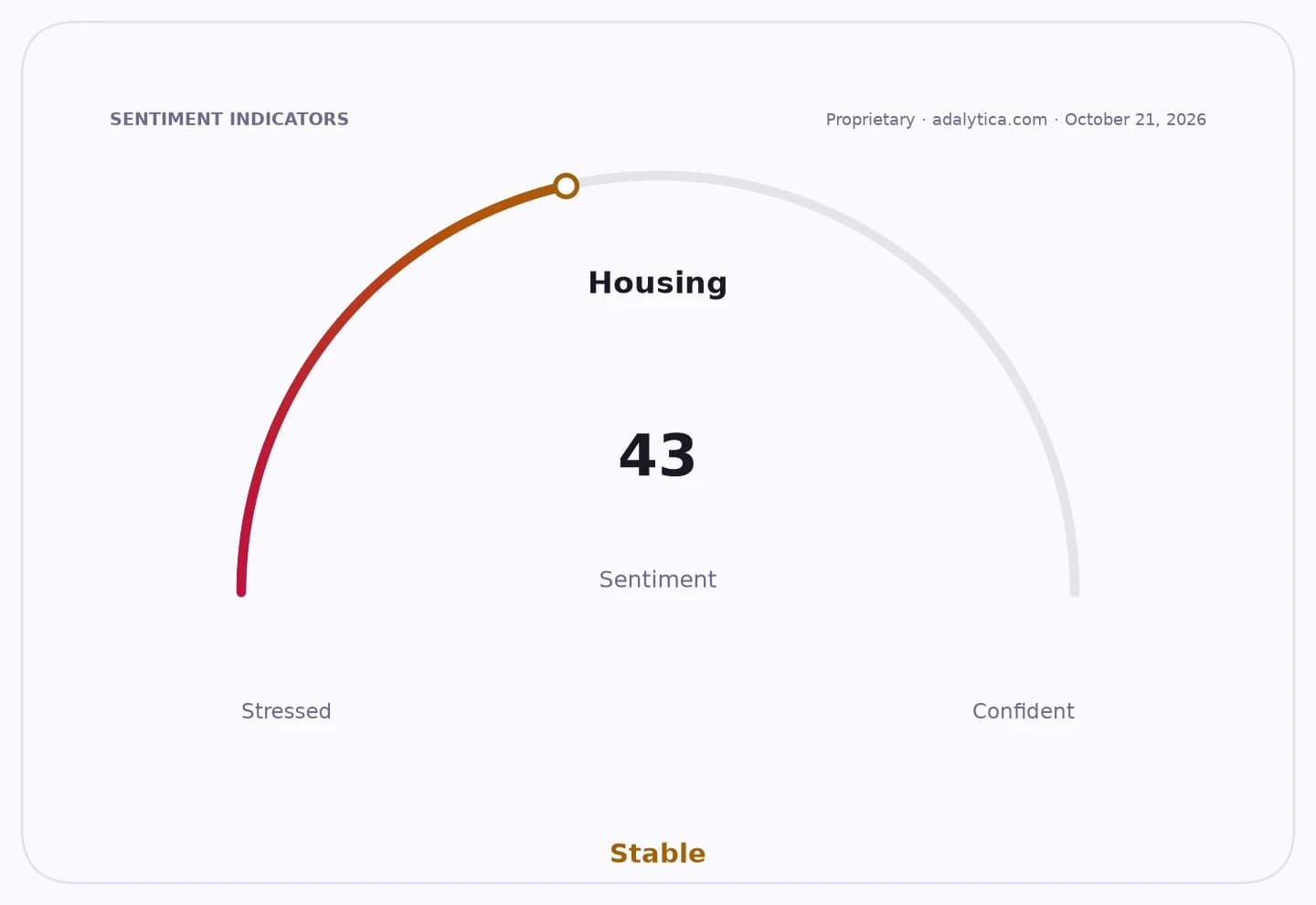
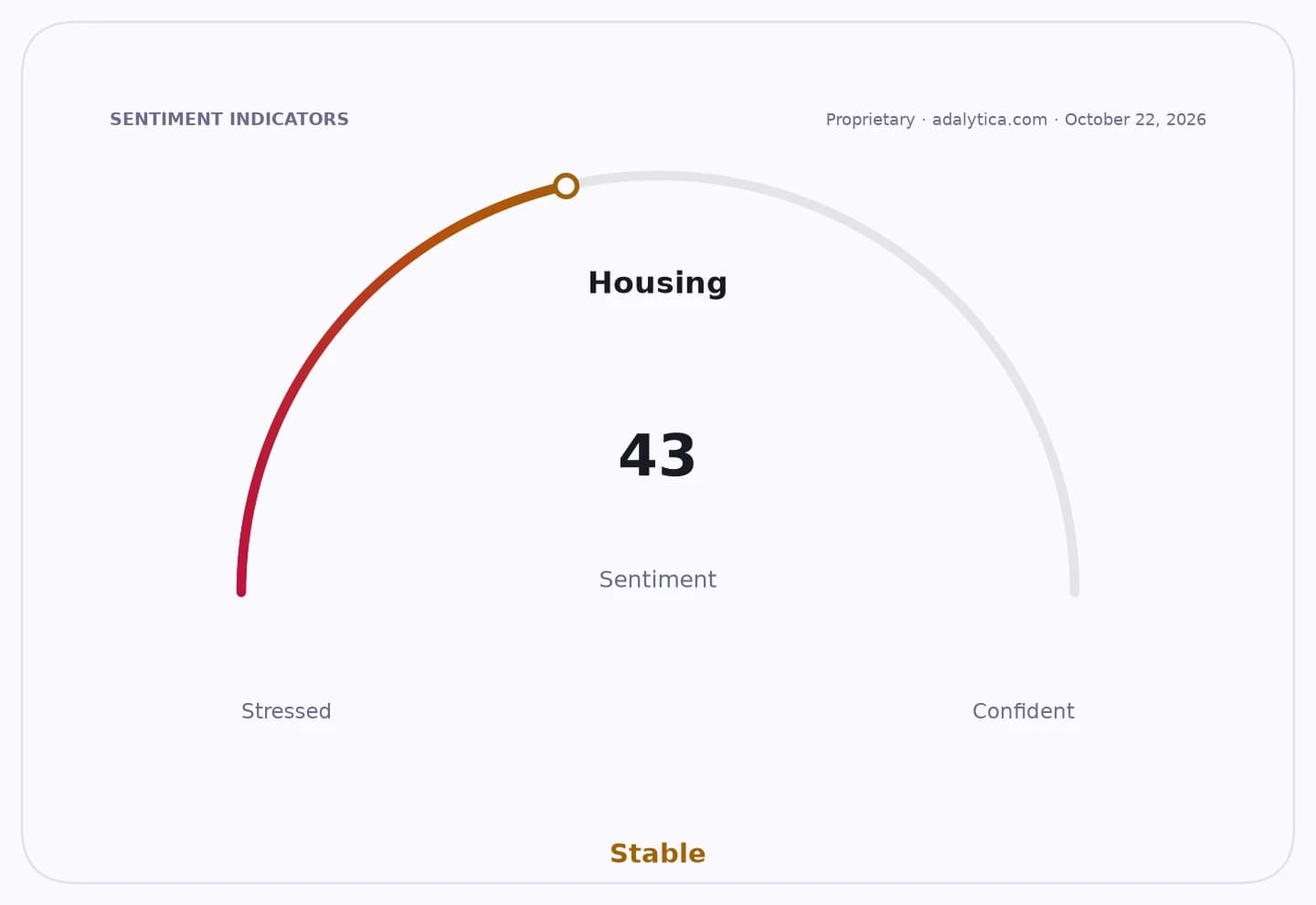
Sentiment IndicatorsⓘProprietary · adalytica.com · October 22, 2026
This is a snapshot — live sentiment, awareness and momentum for 130+ markets update continuously in the dashboard.Open AlphaPulse
In plain terms, the subsidy keeps the rate for borrowers lower, but it does not make the loan economics attractive for the lender. Rising deposit costs are doing the most damage. Banks are being forced to pay up for funding just as demand for market-rate mortgages is weakening and the Bank of Russia is tightening capital and reserve requirements. For smaller and mid-sized institutions, which have thinner client bases and higher fixed costs, the math has become especially unforgiving.
That matters well beyond bank profit margins. Mortgage lending is a transmission channel for housing demand, construction activity and regional economic development. As smaller lenders retreat, access to mortgages in smaller cities and regional centers will tighten first, leaving the market increasingly concentrated in the hands of the biggest banks. That consolidation may stabilize the system, but it also reduces competition and makes housing finance less available outside major urban hubs.
For builders, the consequences are immediate. Fewer active lenders means fewer buyers can qualify for financing, which forces developers to lean harder on installment plans, partnered sales programs and project-finance relationships with dominant banks. In smaller markets, that can slow presales and pressure construction volumes, especially if developers cannot substitute cheaper financing or alternative demand incentives fast enough.
The policy response is likely to determine whether this becomes a manageable consolidation or a broader housing slowdown. Targeted measures such as higher subsidies for banks in smaller cities, lower capital charges on long-duration mortgage books, or securitization and covered-bond programs could help restore economics for regional lenders. Without them, the market will keep drifting toward a two-tier system: large banks dominate mortgage origination, while smaller lenders exit or become niche players.
Investors should read this as a margin story with second-order winners and losers. Big banks with lower funding costs and scale advantages should gain share. Smaller regional lenders, already squeezed by regulation and funding costs, are the most exposed. Developers tied to local mortgage channels face slower sales conversion, while the biggest lenders and any firms that can package, distribute or securitize mortgage risk may become relative beneficiaries.
The message is straightforward: in a high-rate, high-regulation environment, subsidies alone are no longer enough to make mortgage lending profitable for smaller banks. Unless funding costs ease or the state rewires the support scheme, Russia’s mortgage market will keep consolidating, and the investment opportunity will increasingly sit with the institutions best able to absorb scale, regulation and funding pressure.
| Entity | Gains | Losses |
|---|---|---|
| Largest Russian banks | ▲Gain market share | ▼Face less competition |
| Small and mid-sized banks | ▲Preserve capital if they exit | ▼Lose mortgage business |
| Homebuyers in regional cities | ▲— | ▼Lose loan access |
| Developers outside big cities | ▲Can still sell with partner banks | ▼Face slower presales |