Russia’s biggest lender is warning that corporate stress is spreading through the economy, with rising overdue loans, high borrowing costs and weak growth pushing more companies toward default risk.
Sberbank warns Russian corporate stress is rising
Sberbank said the financial condition of Russian businesses has deteriorated in recent months, noting that every third company is now unprofitable and that repayment capacity is weakening faster as interest rates stay elevated. The bank’s warning matters because it points to a broader tightening cycle that is no longer just squeezing demand — it is now feeding through into credit quality, bank provisioning and the ability of companies to service debt.
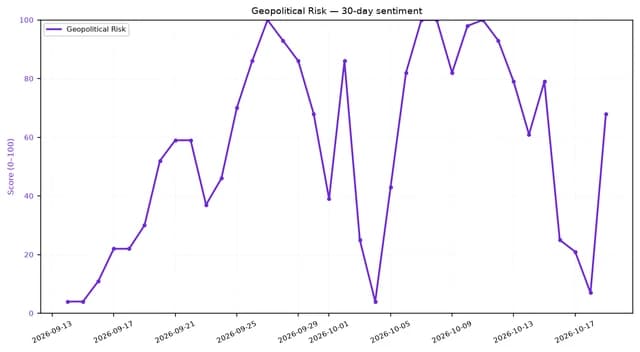
Sentiment IndicatorsⓘProprietary · adalytica.com · October 19, 2026
This is a snapshot — live sentiment, awareness and momentum for 130+ markets update continuously in the dashboard.Open AlphaPulse
The message is especially important in a banking system that remains a key transmission mechanism for policy and economic activity. Higher rates have helped contain inflation, but they are also raising the cost of capital at a time when growth is only barely positive. That combination is particularly painful for sectors already under strain, including real estate, where refinancing needs are large and cash flow is more vulnerable to a slowdown.
For lenders, the immediate implication is higher loan-loss reserves and tighter underwriting standards if the trend continues. Rising problem loans would hit profitability even for large institutions with substantial capital buffers, and could make banks more cautious about extending credit just as businesses need it most. That dynamic risks creating a negative feedback loop: weaker borrowers lead to more provisioning, which leads to tighter credit, which then adds more pressure to the real economy.
For investors, the story is a reminder that Russia’s macro picture is not just about headline GDP or sanctions exposure, but about the quality of corporate balance sheets underneath. If more firms become loss-making and overdue debt keeps climbing, the pressure will likely broaden beyond the hardest-hit sectors into suppliers, contractors and regional lenders. The longer the economy remains stuck near stall speed with rates elevated, the harder it becomes to keep credit losses contained.
The warning also points to a difficult policy trade-off for the authorities. Easing too early risks reigniting price pressures; keeping policy tight for too long risks turning a manageable credit slowdown into a more systemic debt problem. For now, Sberbank’s comments suggest the balance is shifting in favor of caution, with the banking sector bracing for more distress if growth does not recover.
| Entity | Gains | Losses |
|---|---|---|
| Sberbank | ▲higher lending spreads | ▼more credit losses |
| Russian banks | ▲wider margins | ▼larger provisions |
| Profitable exporters | ▲rate pass-through | ▼weaker domestic demand |
| Unprofitable companies | ▲debt relief only if rates fall | ▼refinancing pressure |