Spain’s housing market is becoming more expensive in a way that has little to do with bricks and mortar and everything to do with taxes. For a buyer trying to purchase a €300,000 home, the state can already take roughly €21,000 to €30,000, a burden that is worsening affordability and helping keep the market tight.
Spain housing taxes raise homebuying costs
That matters because Spain is not short of demand, it is short of supply. When taxes add another 7% to 10% or more to the purchase price, they effectively raise the entry bar for first-time buyers, especially younger households with limited savings. In a market where prices are already climbing, the tax bill grows with the home price, turning inflation in housing into a windfall for the Treasury and a squeeze for everyone trying to get on the ladder.
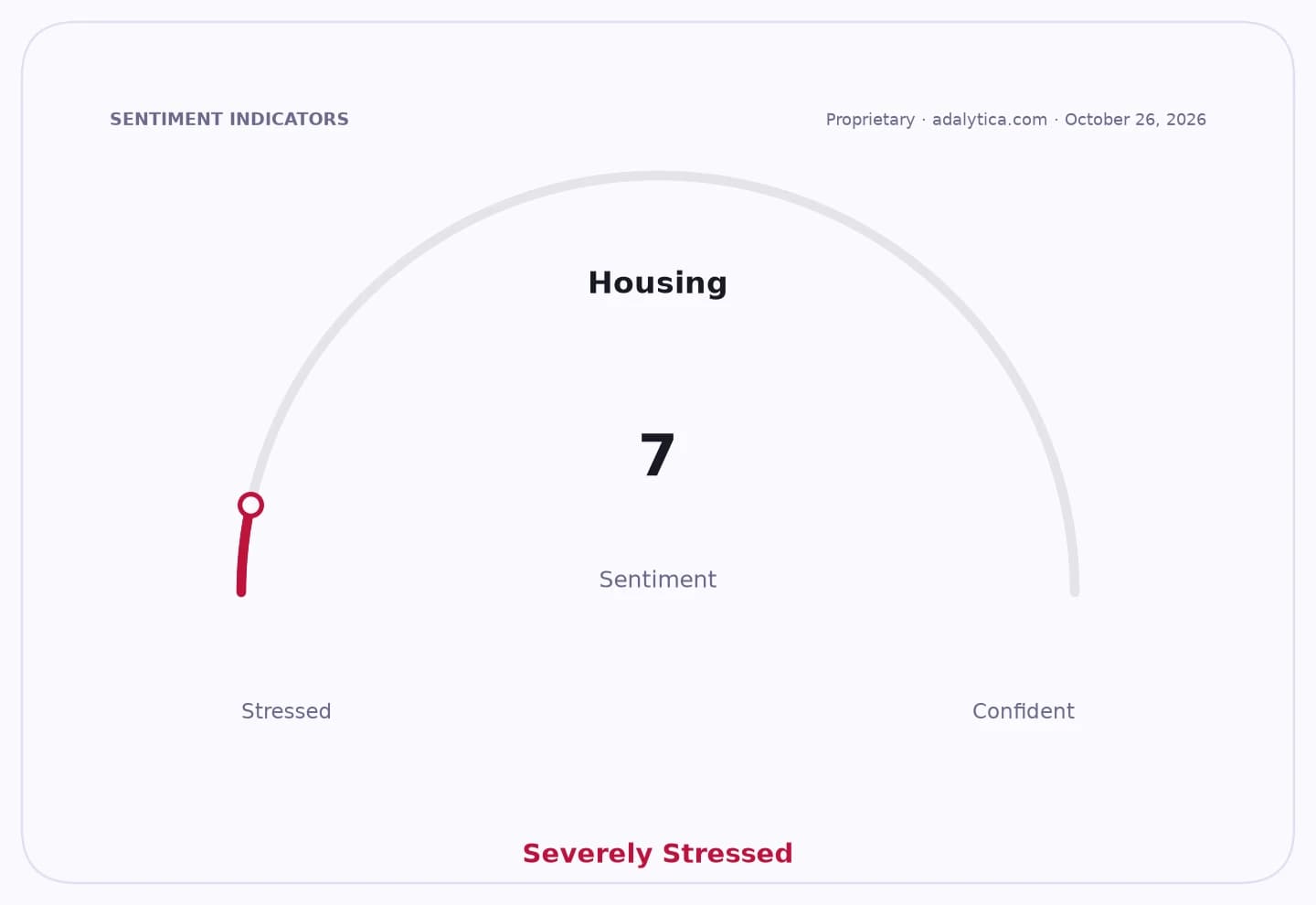
Sentiment Indicators
The University Francisco de Vitoria’s economic observatory says the burden comes from the VAT on new homes, typically 10%, and from transfer taxes on existing homes, which vary by region and can run from 4% to 13%. On a €300,000 purchase, that translates into around €21,000 in transfer tax in many cases, before adding another €1,500 to €4,500 in stamp duty or legal taxes on new-build purchases. The result is a system that does not just collect revenue; it slows transactions and makes households save for longer while prices keep moving higher.
The bigger economic story is that Spain’s housing squeeze is being reinforced by policy on several fronts. The report points to a shortage of new construction, limited land release, slow permitting, regulatory uncertainty and price controls as key reasons supply is not responding. It also says owners are not under enough financial pressure to sell, helped by the fact that 75% of mortgages taken out in 2022 were fixed-rate loans, which insulated many borrowers from higher rates.
For investors, that combination is important because it suggests housing affordability will remain a structural problem, not a temporary one. Homebuilders, landlords and rental-market players may benefit from persistent demand, but buyers face a tougher path and policymakers may come under pressure to make tax and planning rules more favorable. The report also notes that foreign buyers account for 14.6% of transactions, while household debt has fallen to 42.5% of GDP, which means there is still plenty of purchasing power in the system even as the market stays constrained.
The long-term takeaway is simple: Spain’s housing problem is not only about prices, but about the cost of buying into the market. Unless supply rises and transaction taxes come down, the Treasury will keep collecting more as homes get dearer, and ordinary buyers will keep paying the price. For long-term investors, that makes housing-related stocks and landlords worth watching, but it also argues for patience, selectivity and a close eye on policy reform.
| Entity | Gains | Losses |
|---|---|---|
| Treasury | ▲Higher tax receipts | ▼First-time buyers |
| Existing homeowners | ▲Price support from tight supply | ▼Potential sellers needing liquidity |
| Builders and developers | ▲Better case for new supply | ▼Buyers facing higher all-in costs |
| Young households | ▲None | ▼Lower affordability and slower entry |