Homebuyers are once again finding mortgage products on the market, but qualifying for one still comes down to far more than matching a monthly payment to the rent they already pay.
Argentina mortgages return, but income hurdles remain

That is the key shift in housing finance: after years of scarce credit, banks have relaunched home-loan lines, reactivating demand from households that want to move from renting to ownership. Yet the renewed supply of mortgages is colliding with the same economic constraint that has defined lending cycles everywhere — borrowers need stable, documented incomes and enough cushion to absorb inflation, job losses or higher living costs over many years.
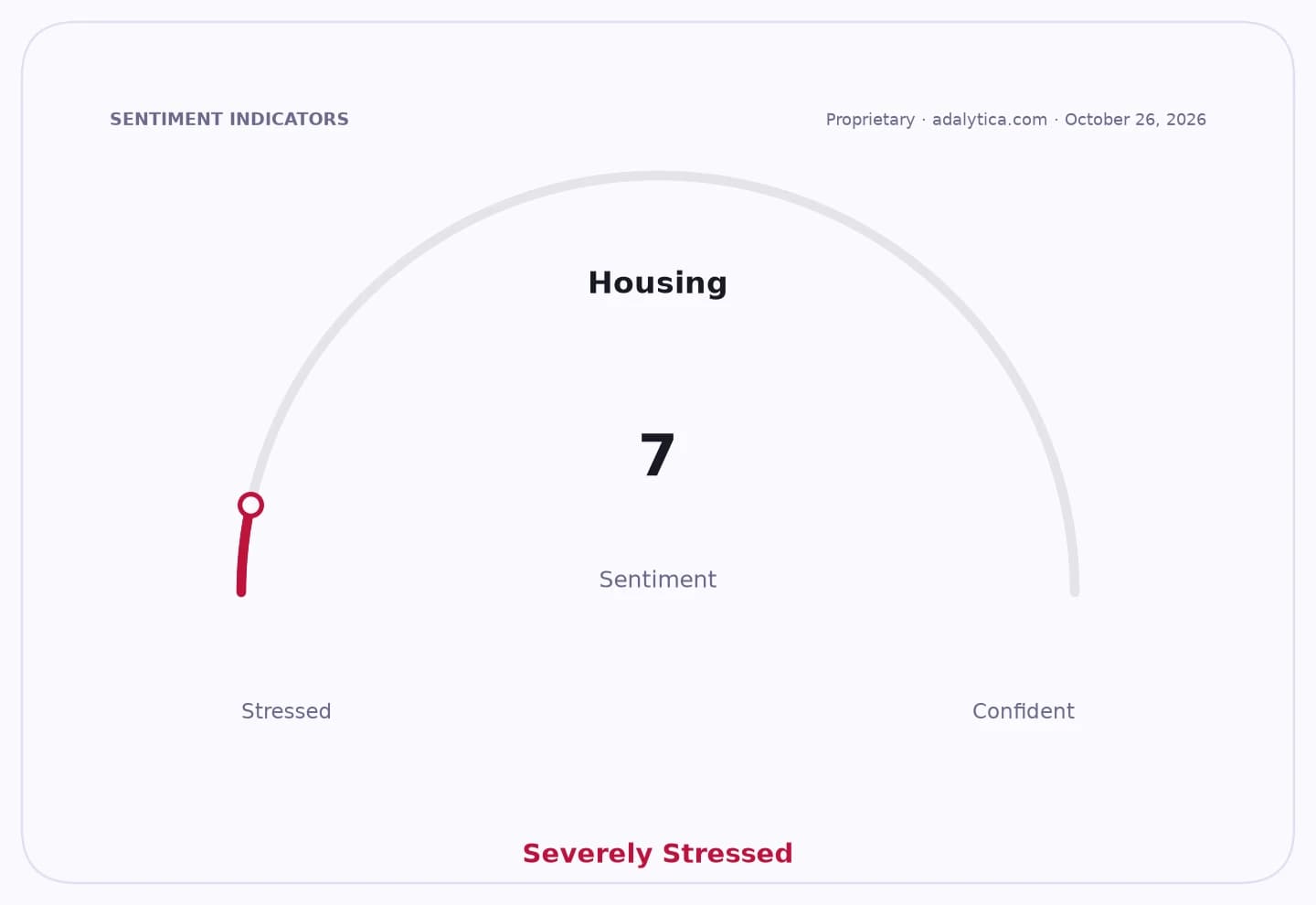
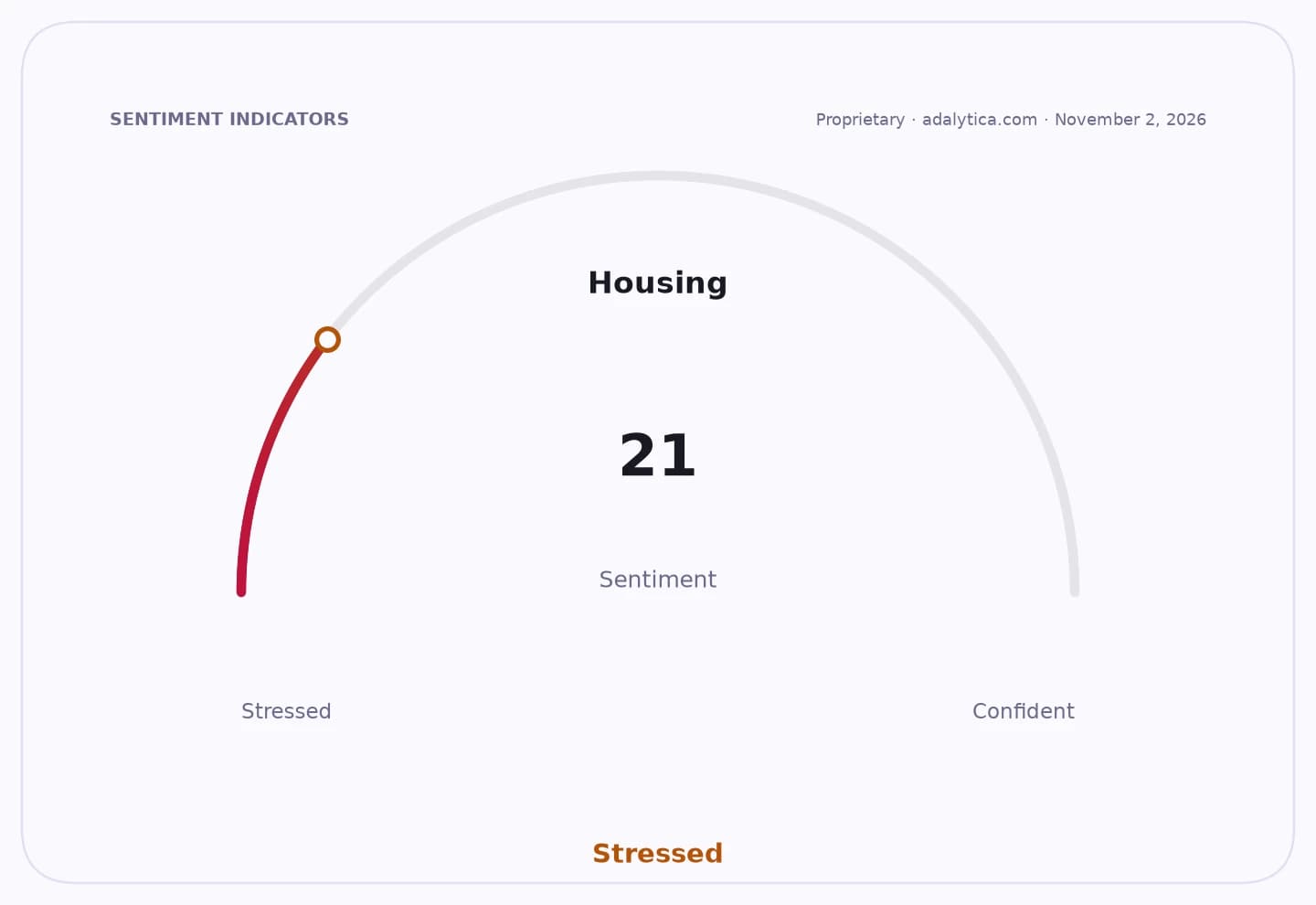
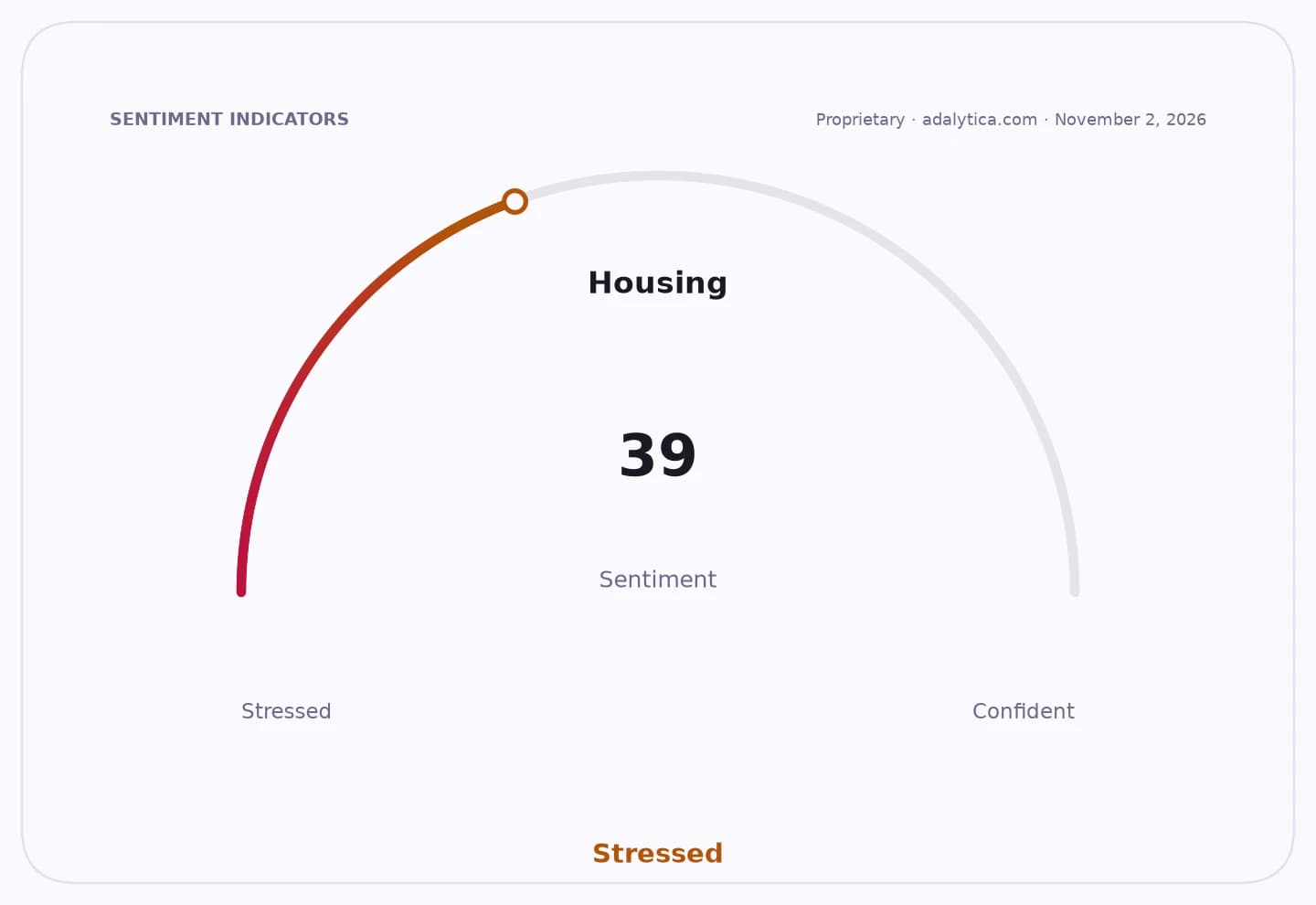
Sentiment Indicators
Housing
In Argentina, most active mortgage loans are denominated in UVA, a unit indexed daily to inflation. That makes the principal move with prices while the interest rate stays fixed, a structure that can keep the initial instalment manageable but leaves borrowers exposed if wages lag inflation. Banks are generally limiting first payments to about 20% to 25% of net income, and several of the main lines now on offer show how sensitive affordability is to the rate and the loan-to-value ratio.
Banco Ciudad is offering a 6.5% annual rate for first homes in Buenos Aires city, Banco Nación 6.7% with financing up to 75% of the property, ICBC 6.9%, and BBVA 7.5% with financing up to 80%. Banco Provincia starts at 9%, but its line is for construction or refurbishment rather than a finished home. The spread is meaningful: as financial adviser Nahuel Bernués notes, a few percentage points can materially change the lifetime cost of the loan and the size of the monthly instalment.
For borrowers, that means the hurdle is not only the rate but also the cash required up front. Banks typically cover only 70% to 80% of the purchase price, leaving buyers to fund the rest plus another 8% to 10% of the property value for deed registration, stamp taxes, fees and insurance. In practice, a household seeking a loan with an initial payment of 400,000 pesos would need at least 1.6 million pesos in monthly net income if the bank allows debt service to consume up to a quarter of pay.
The broader economic significance is that mortgage availability can support housing demand, but only selectively. Households with formal salaries, clean credit histories and sizeable savings are the ones most likely to qualify; everyone else remains locked out, especially if their incomes are variable or informal. That creates a two-tier market in which credit-sensitive buyers can re-enter housing, while renters without accumulated savings see little relief.
The macro backdrop makes that distinction more important. Inflation-indexed mortgages can work only if wages keep pace with price adjustments. If they do not, the loan burden rises over time even when the borrower has not added new debt. Economists quoted in the report stress that buyers should test what happens if inflation accelerates, if salary updates lag or if they lose their job and have to re-enter the labor market at a lower income.
That is why the decision is not simply “buy versus rent.” A mortgage can be attractive when the first instalment is close to the rent on a comparable home, because each payment builds equity rather than going to a landlord. But the borrower also gives up flexibility: moving, refinancing or selling becomes harder once a long-term debt is in place. For households with unstable earnings, renting may remain the safer option even if ownership looks cheaper on paper.
For investors, the reopening of mortgage credit matters because it can revive housing turnover, support builders, banks and home-finance platforms, and eventually feed through to related sectors such as insurance and real-estate services. But the current structure also suggests the recovery will be uneven and fragile, tied to inflation expectations, wage growth and the cost of funding. If those variables deteriorate, mortgage demand can slow quickly and delinquencies can rise just as rapidly.
The message for prospective borrowers is straightforward: the key question is not whether the first instalment is affordable today, but whether it remains manageable if inflation, employment or family expenses turn less favorable. For lenders and housing-market participants, the rebound in mortgage supply may lift activity, but only within a narrow band of households able to clear the income, savings and credit tests that banks are now enforcing.
| Entity | Gains | Losses |
|---|---|---|
| Banks | ▲New loan growth | ▼Higher credit risk |
| Qualified homebuyers | ▲Access to ownership | ▼Cash-poor renters |
| Renters without savings | ▲Flexibility | ▼Ownership access |
| Housing market | ▲More transactions | ▼Still-patchy affordability |