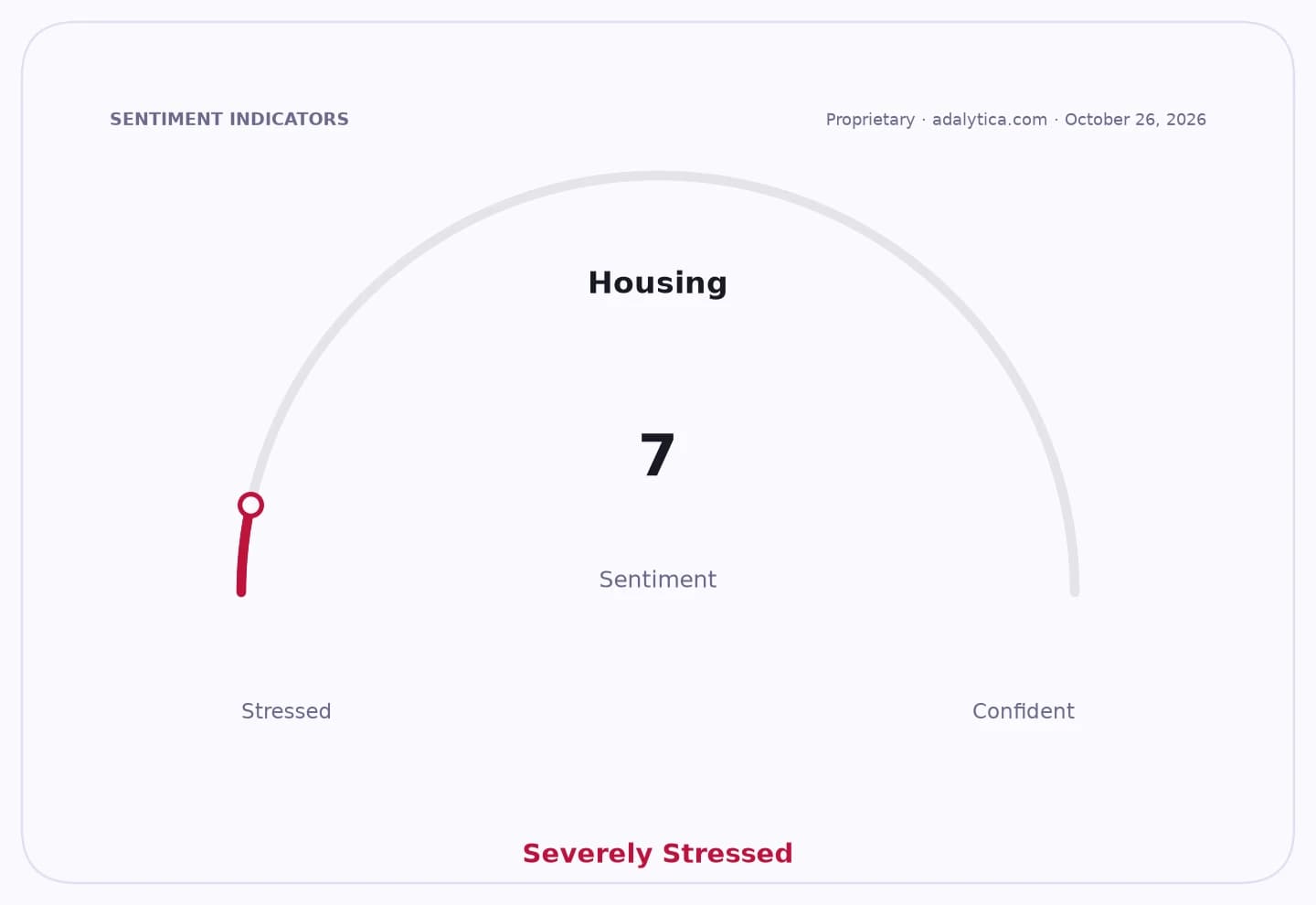
Britain’s housing market failed to regain momentum in September, with HMRC data showing residential transactions slipping 4% from a year earlier as higher mortgage costs and pre-Budget caution kept buyers on the sidelines.
UK Housing Transactions Fall in September
Housing
That matters because housing transactions are one of the clearest real-time gauges of household confidence, mortgage affordability and the health of the wider consumer economy. HMRC estimated 94,800 seasonally adjusted residential sales in September, down marginally from August and below the same month in 2025, underscoring that the summer lull did not rebound into the autumn selling season.
Sentiment Indicators
The figures point to a market where demand still exists, but buyers are becoming more selective and less willing to stretch. Zoopla said higher mortgage rates over the summer and into autumn have cut mortgage buyers’ purchasing power by about 15%, while sales agreed in the past four weeks were 7% lower than a year earlier. It expects around 100,000 fewer housing transactions this year than in 2025.
For the economy, fewer property deals mean slower fee income for estate agents, weaker turnover for conveyancers, surveyors and lenders, and less appetite for big-ticket spending tied to moving home. It also suggests mortgage rates remain high enough to restrain activity even as real incomes and employment improve. The market is not freezing, but it is not healing either.
The Budget added another layer of hesitation. Brokers said uncertainty around tax and policy decisions helped keep would-be buyers waiting for clarity, while the delay to the government’s new Your First Home scheme until next spring risks further softening first-time buyer activity. That is important because first-time buyers are the entry point for the entire housing chain.
Homebuilders are already feeling the strain. In the U.S., listed builders such as Lennar and Pulte have been navigating weaker demand and pricing pressure, while in the UK the same dynamic is showing up in softer transaction data rather than price crashes. The difference is timing, not immunity: if transactions stay subdued, developers eventually have to lean harder on incentives, cut prices or slow starts.
The immediate trading message is straightforward: the market is still oversupplied with caution, not homes. Until borrowing costs fall decisively or policy support translates into actual completions and demand, transaction volumes are likely to remain stuck below normal. For investors, that keeps pressure on housing-linked names, but it also creates an opportunity in firms with strong balance sheets, land banks and the ability to outlast the slump.
| Entity | Gains | Losses |
|---|---|---|
| Cash buyers | ▲More negotiating power | ▼Limited inventory choice |
| Mortgage lenders | ▲Stable demand for refinancing and new loans | ▼Lower purchase-loan volumes |
| Estate agents and conveyancers | ▲Steady activity in select local markets | ▼Fewer completions and fees |
| Homebuilders | ▲Stronger builders with pricing discipline | ▼Smaller peers facing weaker sales |