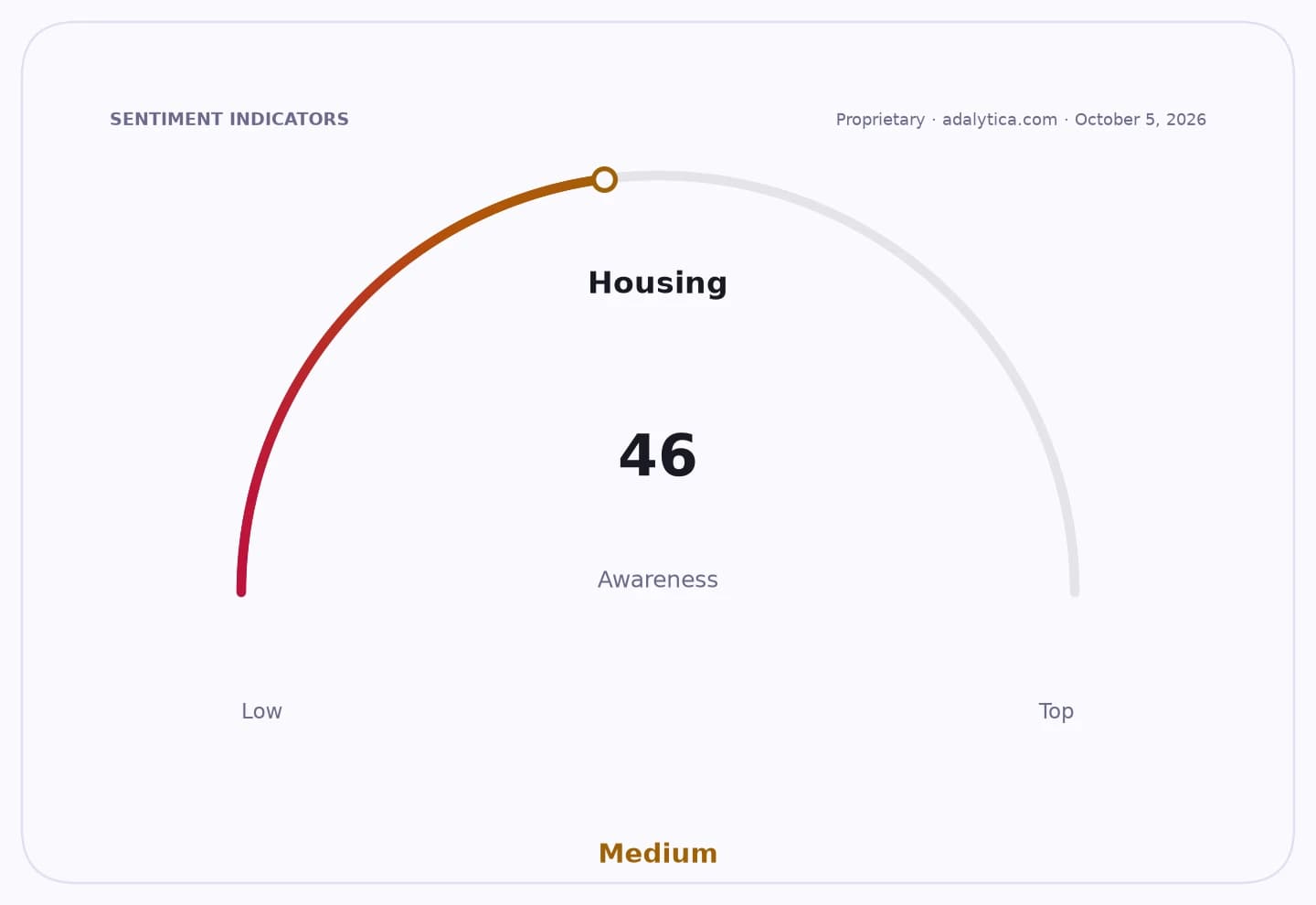
Spain’s mortgage market is entering the second half of 2026 with less momentum than lenders expected, a shift that could force banks to compete harder for borrowers and ease terms on new loans and refinancings.
Spain mortgage lending slows as banks chase borrowers
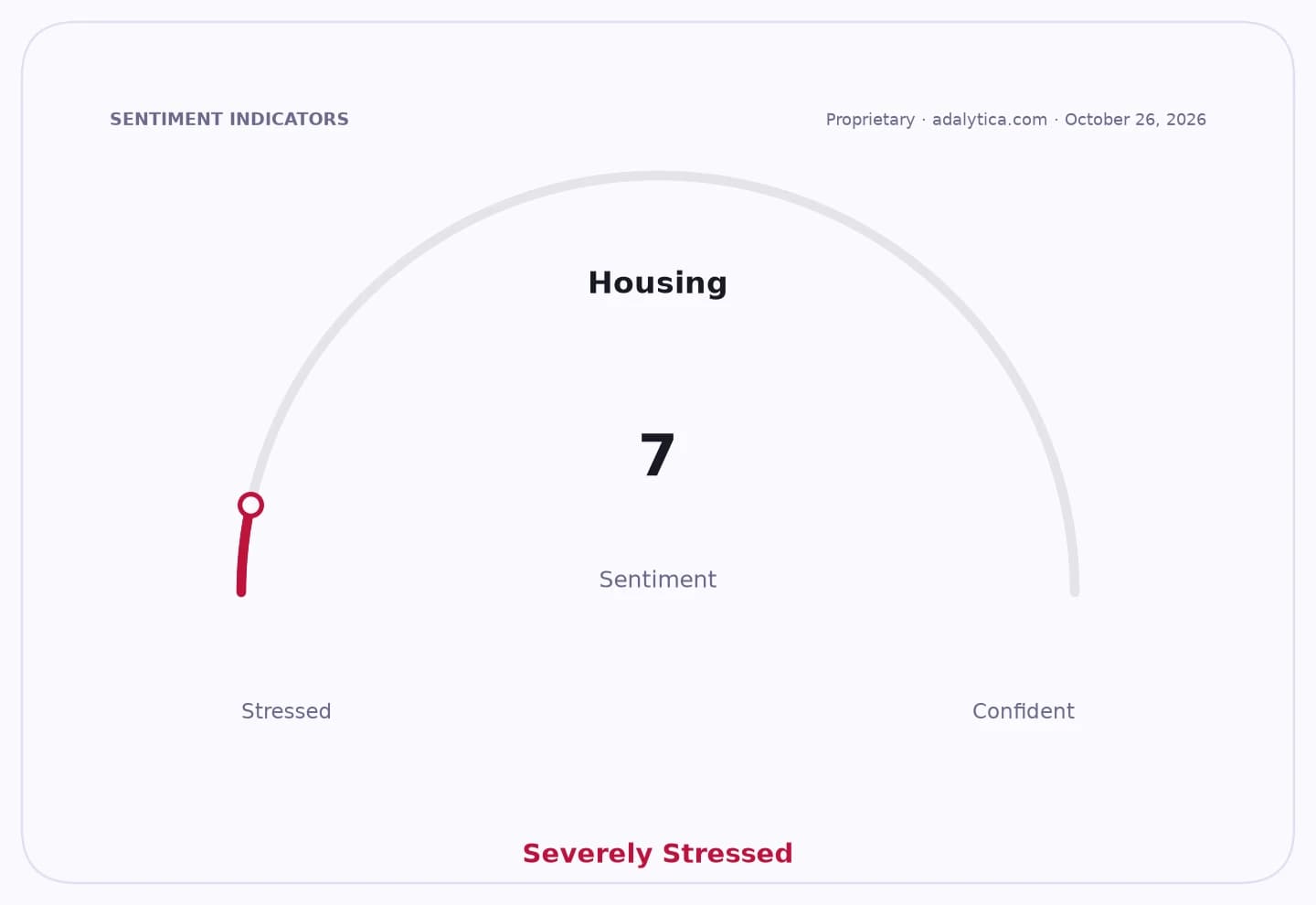
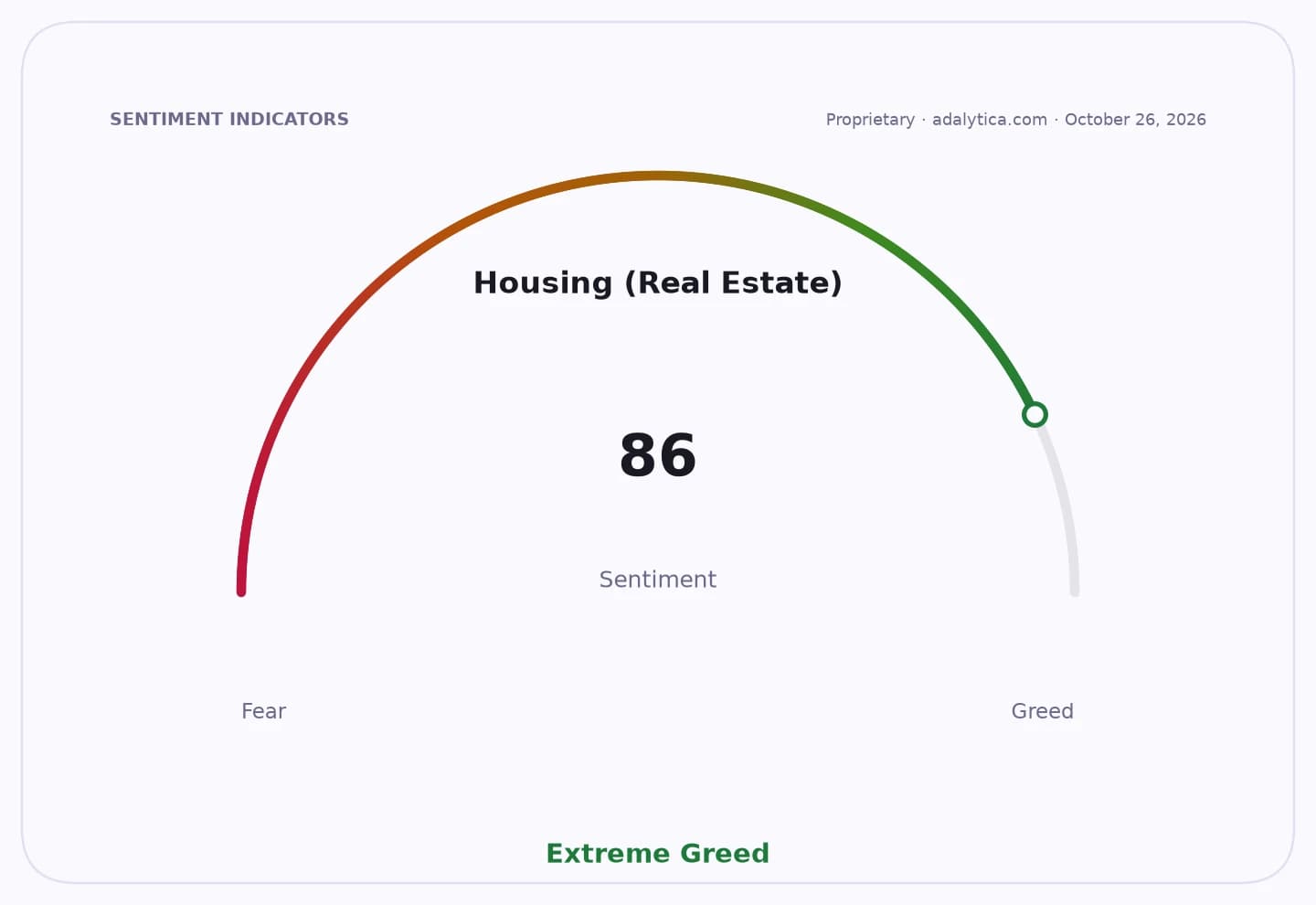
Latest figures from the National Statistics Institute show mortgages on homes fell 3.5% in July from a year earlier to 43,372, while the average loan size rose 10.9% to 180,785 euros and the average rate on new mortgages stood at 3.01%. The combination points to a market where fewer households can clear the affordability hurdle, even as the cost of the homes being financed keeps climbing.
Sentiment IndicatorsⓘProprietary · adalytica.com · October 26, 2026
This is a snapshot — live sentiment, awareness and momentum for 130+ markets update continuously in the dashboard.Open AlphaPulse

That is the backdrop to comments from mortgage adviser Montse Cespedosa, who said banks are not on track to meet their 2026 mortgage targets and will need to close more deals before year-end. For borrowers, that usually means a stronger hand in negotiations. For lenders, it implies pressure to protect volumes after a record 2025, when mortgage lending surged 17.8% and the average loan advanced 12.6%, according to the INE.
The shift matters economically because housing credit is one of the clearest channels through which higher prices and borrowing costs hit household demand. Spain’s housing shortage and elevated prices are already straining younger buyers and lower-saving households, while the rise in average loan amounts suggests that those still able to buy are taking on larger balances. If that dynamic persists, it could cool transaction volumes and eventually slow related spending on homes, furnishings and services.

For investors, the immediate implication is not a broad credit stress story but a margin-versus-volume tradeoff for banks. A softer mortgage market can squeeze fee income and growth in lending books, while stronger competition for deals may prompt lenders to offer narrower spreads, lower down-payment requirements or more favorable refinancing terms. That would help customers but could weigh on returns if volumes do not fully offset weaker pricing.
The comments also reinforce a broader European housing pattern: affordability remains the binding constraint even when mortgage rates ease modestly. With the Spanish 10-year yield around 5.0%, funding costs are still elevated by historical standards, and any move by banks to chase targets will be shaped by that backdrop as much as by demand. The most likely outcome is a more promotional mortgage market into year-end, but one that still depends on whether wages, savings and home prices move enough to bring first-time buyers back.
| Entity | Gains | Losses |
|---|---|---|
| Homebuyers with strong profiles | ▲Better negotiating power | ▼Less if unable to meet bank criteria |
| Spanish banks | ▲Potential to preserve volumes | ▼Weaker pricing and tighter margins |
| First-time buyers and low-saving households | ▲More flexible lending offers | ▼Affordability remains strained |
| Existing borrowers seeking refinancing | ▲Chance to renegotiate terms | ▼May face tougher terms later if demand rebounds |