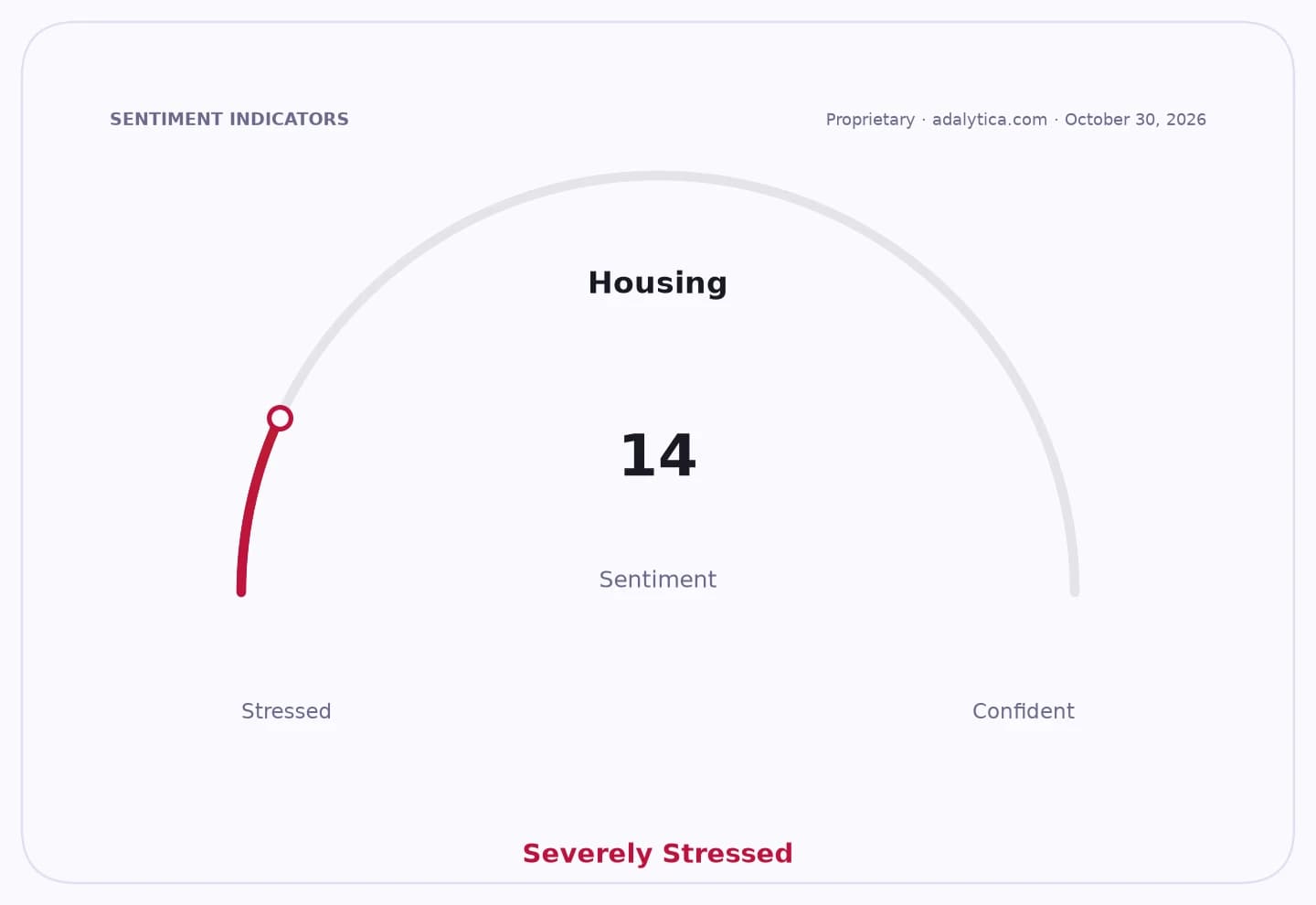
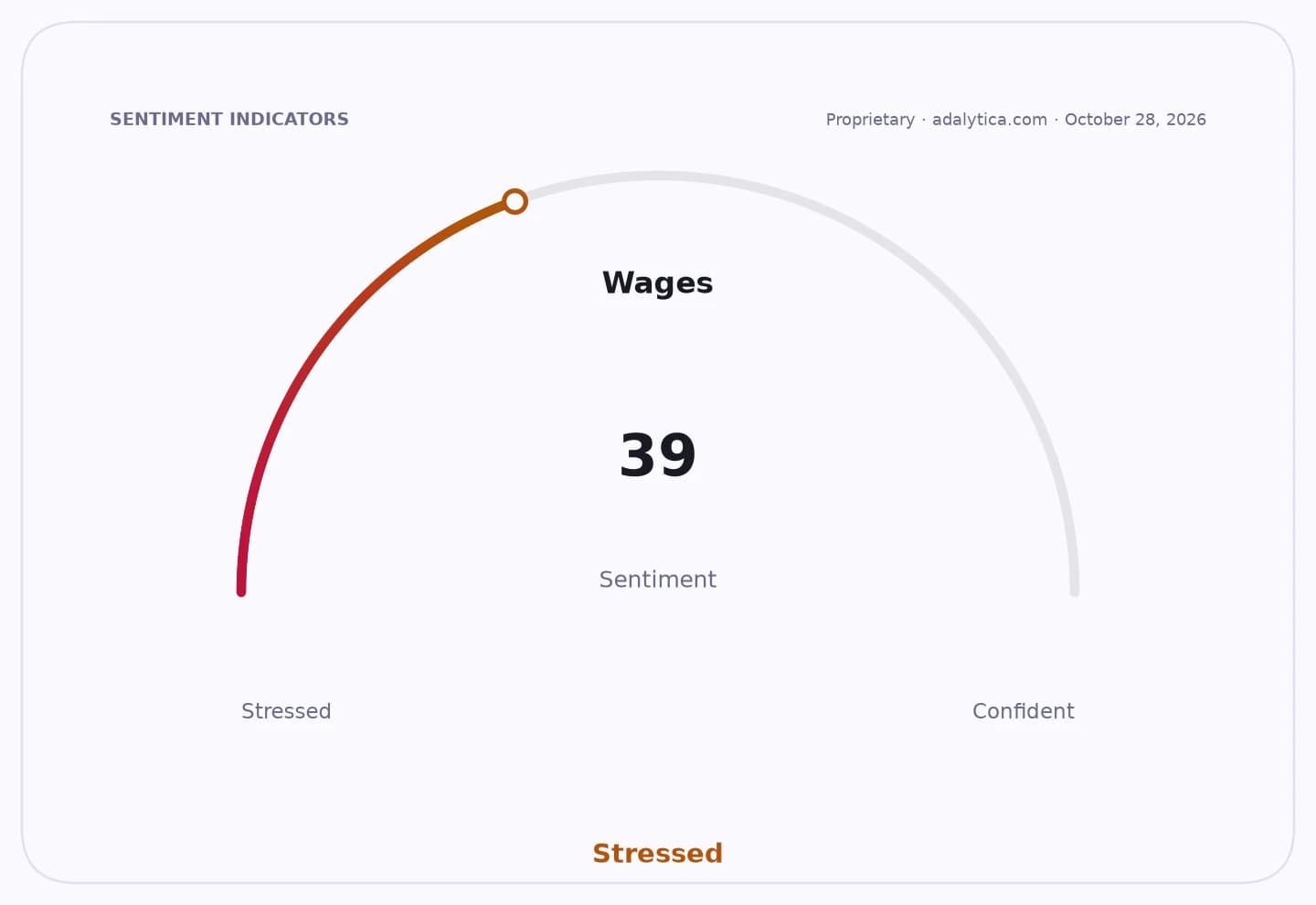
Borrowing capacity is getting squeezed as debt-to-income ratios stay under the microscope and interest rates keep doing the heavy lifting in determining how much households can borrow.
Debt-to-income limits squeeze mortgage borrowing

That matters because the debt-to-income ratio, or DTI, is one of the cleanest gauges of household financial stress: it measures how much of monthly income goes to debt service. Regulators use it to cap leverage before borrowers become vulnerable to higher rates or weaker income, and banks use it to decide how much credit can safely be extended.
Sentiment Indicators
The rule of thumb is stark. In France, mortgage borrowers face a 35% DTI ceiling, including insurance, and a maximum loan term of 25 years. Romania caps the ratio at 40% on local-currency loans. Those limits are meant to prevent a shock in rates or growth from turning into a wave of defaults that hits lenders’ balance sheets.
The bigger investor takeaway is that borrowing power is highly rate-sensitive. With a fixed monthly payment of €1,000 over 20 years, each additional percentage point in interest rates cuts borrowing capacity by roughly €15,000, according to the calculation highlighted in the tool. That transmission channel is why central bank policy quickly filters into housing demand, home prices and lender volumes.
The macro backdrop makes that transmission more important now. The U.S. 10-year Treasury yield was last around 5%, while the Federal Reserve funds rate was forecast near 3.7%, keeping financing costs elevated even as unemployment was seen holding near 4.1%. High rates compress what households can borrow, even when employment is still relatively stable.
That mix matters for banks, developers and mortgage lenders because it can slow originations, cool property transactions and pressure credit demand. It also explains why regulators remain focused on DTI as a macroprudential tool: once income weakens or rates rise, households with stretched ratios can quickly move from manageable repayment to financial strain.
For investors, the key watchpoints are whether rates ease enough to reopen borrowing capacity, whether wage growth offsets debt-service pressure, and whether credit quality holds as households roll through a higher-for-longer rate environment. If not, housing activity and consumer lending can stay under pressure well into the next cycle.
| Entity | Gains | Losses |
|---|---|---|
| Borrowers with low DTI | ▲More borrowing headroom | ▼Less sensitivity to rate shocks |
| Banks and mortgage lenders | ▲Fewer near-term defaults | ▼Slower loan growth |
| Homebuilders and developers | ▲Easier financing if rates fall | ▼Softer demand when DTI binds |
| Regulators | ▲Lower systemic risk | ▼Less credit expansion |