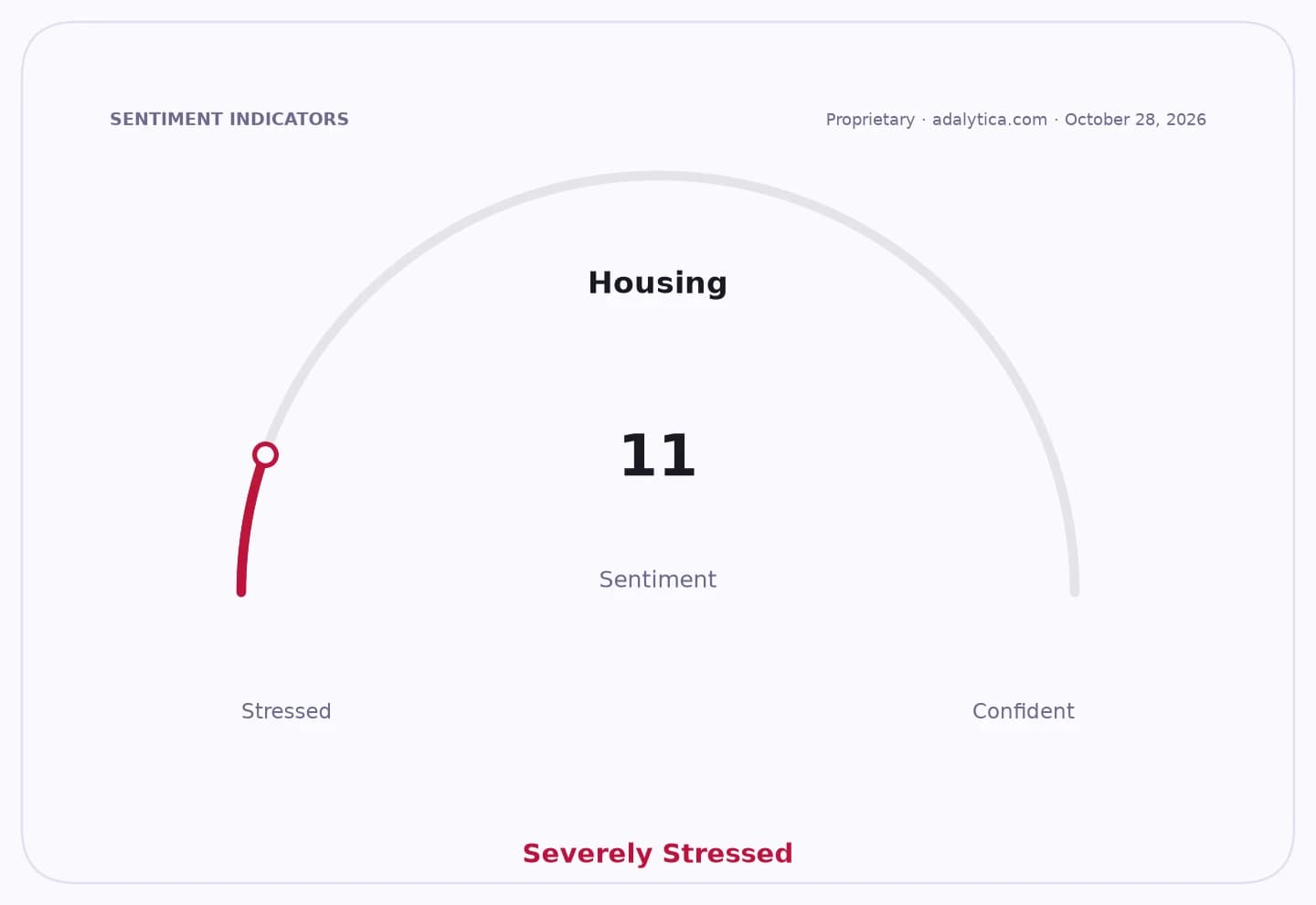
France’s debt strain is feeding directly into higher borrowing costs, and that is now the clearest risk hanging over real estate markets along the Swiss border. As mortgage rates climb, affordability worsens for French households already under pressure, a shift that could cool demand in some of the country’s most expensive commuter and cross-border housing corridors.
France Debt Strain Hits Swiss Border Housing
The macro backdrop matters because housing is one of the first sectors to feel tighter credit. France is still approving mortgage loans, but the mix has turned more fragile: banks have eased access at the margin even as borrower stress builds. That tension is especially relevant near Switzerland, where property demand has been supported by cross-border work patterns, higher incomes and scarce supply. If financing becomes more expensive, the market loses one of its key props.
Sentiment Indicators
Global rate conditions are not helping. The U.S. 10-year Treasury yield is around 5%, while the 30-year mortgage rate has risen to 7.24%, underscoring how stubborn long-term funding costs remain. That is the kind of backdrop that ripples through European property markets too, particularly in regions where buyers are highly sensitive to monthly payments rather than outright prices. When the cost of debt rises faster than wages, transaction volumes tend to slow before prices fully adjust.
For investors, the important point is that border real estate is not just a local story. It is a pressure test for French housing resilience, bank credit quality and the pace of refinancing demand. Mortgage lenders, brokers and real-estate platforms can see lower turnover if buyers step back. At the same time, any cooling in high-end border markets could create selective opportunities for patient capital if sellers eventually concede on price.
The market is underestimating how quickly financing costs can change sentiment in a region built on mobility and borrowing. If French debt concerns keep rates elevated, the pain will show up first where valuations have been richest and leverage matters most. That makes Swiss-border housing a niche market to watch for the next leg of Europe’s property repricing.
| Entity | Gains | Losses |
|---|---|---|
| French banks | ▲Wider lending spreads | ▼Lower mortgage demand |
| Homebuyers near Swiss border | ▲Possible price resets later | ▼Higher monthly payments |
| Property sellers in border areas | ▲None | ▼Slower sales, weaker pricing |
| Mortgage brokers/lenders | ▲More refinance activity | ▼Fewer new purchases |