France’s 2027 budget has been rejected by the National Assembly, underscoring how tighter household spending is feeding political resistance and complicating the government’s fiscal plans at a time when voters feel poorer than the headline data suggest.
France 2027 budget rejected by National Assembly
The rejection matters because the budget fight is no longer just about taxes and deficits. It is increasingly about the structure of French spending, with the cost of housing, transport, energy, insurance and communications consuming almost 30% of household budgets, and as much as 41% for lower-income families, according to an Institut Montaigne study cited by Le Figaro.
Sentiment Indicators
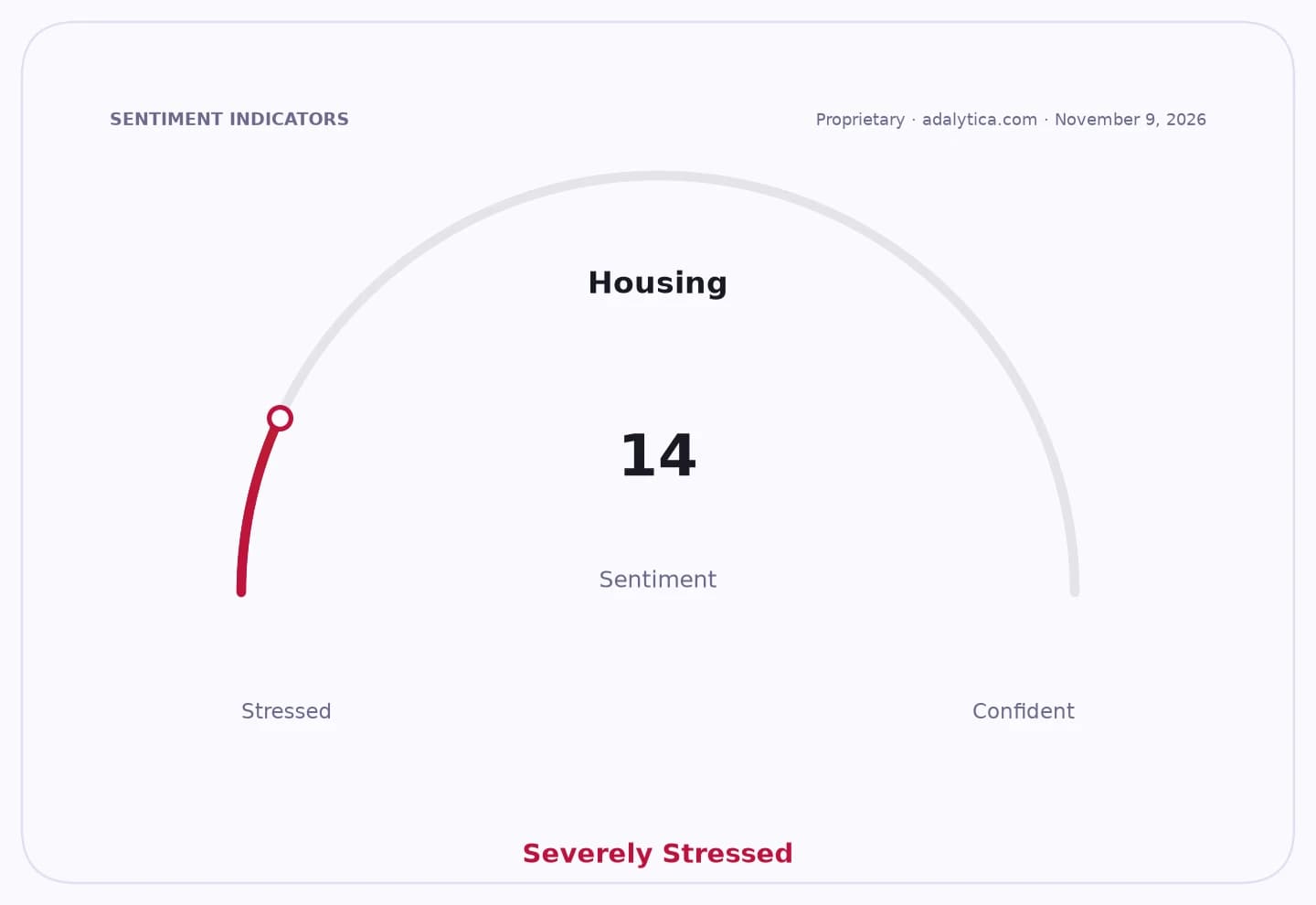
That burden has climbed sharply over time. In the 1960s, constrained spending accounted for just 13% of French income, while housing alone now absorbs 23% of income, more than double its share in the 1960s, according to INSEE. The squeeze helps explain why many households do not feel the benefit of recent wage gains or official measures showing higher purchasing power over the past 15 years.
For investors, the story is not only political but macroeconomic. When essential costs eat up more of income, discretionary spending weakens, consumer confidence frays and growth becomes harder to sustain. That can weigh on French retailers, leisure groups, domestic services and companies tied to consumer credit, while also keeping pressure on policymakers to avoid fiscal moves that would further crimp demand.
The issue is sharpened by France’s urban geography. The concentration of jobs in large cities has pushed more workers into long commutes, forcing many to own cars and spend more on fuel, while rising rents and property costs lock in a higher fixed-cost base for households. Even subscriptions and digital services have become quasi-necessary expenses, adding to the sense that spending is less optional than it once was.
The government had already tried to build support for the budget, including deals with regional authorities and a 2.1% increase in the justice budget, but that was not enough to secure parliamentary backing. The rejection now forces ministers to redraw the fiscal plan and reopen negotiations in a legislature that has shown little appetite for easy compromise.
For markets, the immediate focus will be whether the government can reshape the budget without worsening the strain on households or undermining fiscal credibility. The next test is a revised proposal that can win enough support to move forward while limiting the drag from France’s rising fixed-cost burden.
| Entity | Gains | Losses |
|---|---|---|
| French households | ▲Relief from spending pressure | ▼Higher fixed costs |
| French government | ▲Chance to revise budget | ▼Legislative setback |
| Domestic consumer sectors | ▲Potential policy support | ▼Weaker discretionary demand |
| Savers and creditors | ▲Possible fiscal caution | ▼Budget uncertainty |