Spain will miss the fiscal path it promised Brussels from this year onward, forcing the country’s budget watchdog to call for spending cuts and a new fiscal plan at a time when inflation is still elevated and deficits remain above target.
Spain fiscal path miss raises bond risk

The Independent Authority for Fiscal Responsibility, or AIReF, said the country’s net primary spending is on track to rise 5.7% between 2026 and 2028, far above the 3.2% Spain committed to the European Commission, driven in part by energy aid linked to war-related shocks. Over the full period since 2023, spending would climb 29.8% versus the 20.1% pledged, underscoring the scale of the slippage.
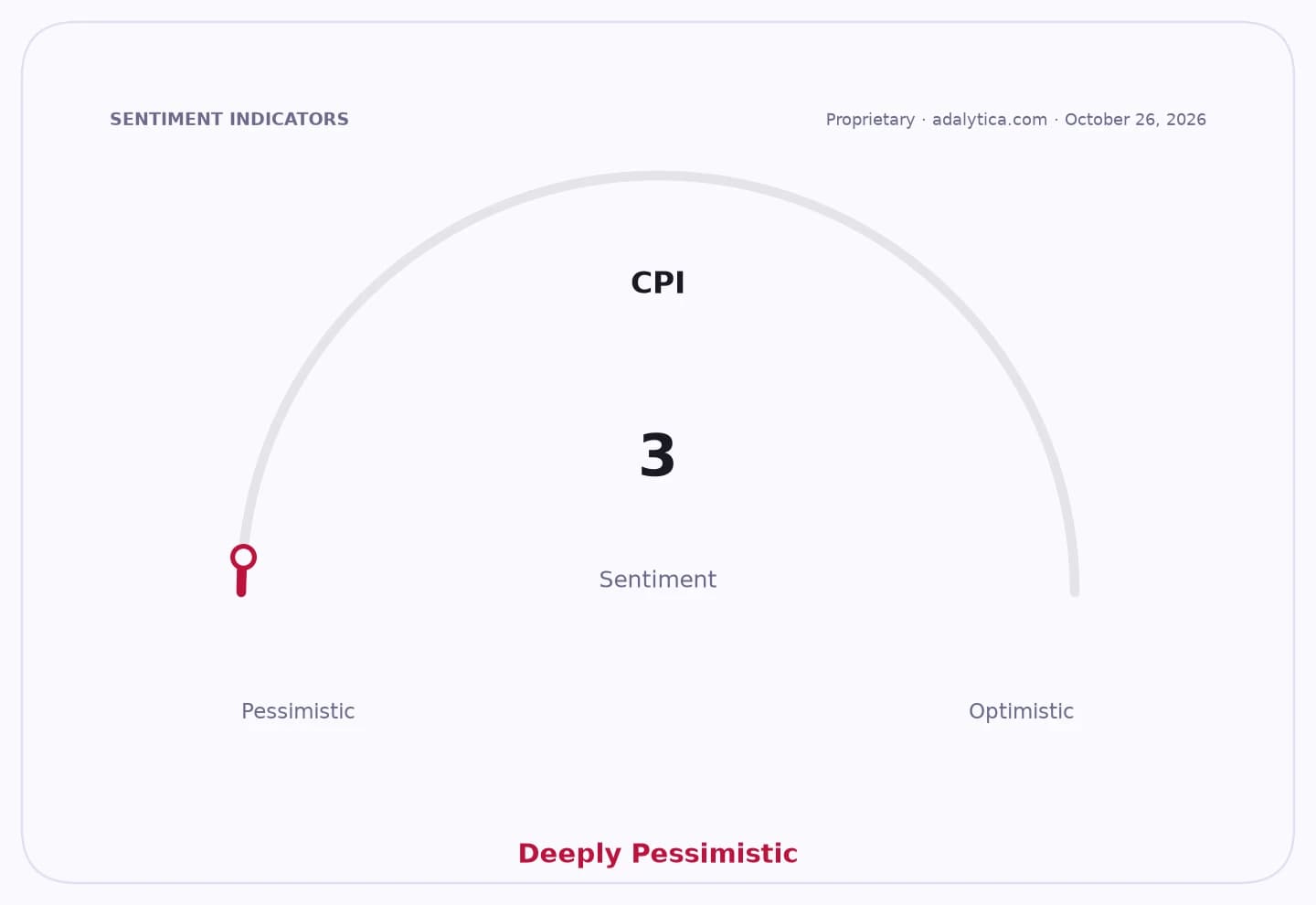
Sentiment Indicators

AIReF president Inés Olóndriz used the warning to press the next government, which will emerge from the ballot box, to negotiate a fresh fiscal plan with Brussels and avoid further permanent spending increases without lasting funding. She also urged the finance ministry to set out a complete fiscal strategy despite the absence of new budgets, saying the lack of fresh accounts is already complicating fiscal oversight across the state, regions and municipalities.
The watchdog said Spain’s central government and nearly all autonomous regions face a risk of breaching the country’s stricter domestic spending rule over the next two years and beyond. Even after applying the national escape clause for defense and energy security worth six-tenths of GDP in the current biennium, Spain would still exceed the limits allowed under the new European fiscal framework.
That matters because a looser spending trajectory raises the odds of larger deficits, more debt issuance and a tougher negotiation with European institutions over how quickly Spain can restore compliance. AIReF lifted its deficit forecast to 2.8% of GDP in 2026 and 2.6% in 2027, compared with a 1.9% reading this year and 2.3% next year without the government’s energy and disaster-relief measures.
The growth picture remains comparatively strong, which gives policymakers more room to tighten later but does not remove the fiscal problem. AIReF nudged its GDP growth forecasts up to 2.6% for this year and 2.2% for next, citing resilient domestic demand and private consumption, while warning that productivity remains the economy’s weak link and growth will slow gradually toward 1.7% by 2031.
Inflation is also proving stickier than expected. AIReF raised its inflation forecast to 3.6% for this year and 3% for next, while noting that October consumer prices came in at 4.9%, above its own outlook, though the government’s emergency measures have shaved between one and four tenths off price growth.
For investors, the immediate issue is not a market shock but a policy risk premium: a wider fiscal gap can keep pressure on Spanish sovereign yields, complicate funding plans and weigh on domestically exposed assets if Brussels demands tougher adjustment. With a new government likely to inherit the problem, the next catalyst is whether Madrid presents a credible medium-term spending plan that can keep Spain inside the EU rules without choking growth.
| Entity | Gains | Losses |
|---|---|---|
| Spanish bondholders | ▲clarity on fiscal adjustment if plan tightens | ▼higher issuance risk if deficits widen |
| Spanish government | ▲room to support energy and disaster spending near term | ▼pressure to cut spending and renegotiate with Brussels |
| European Commission | ▲stronger case for enforcing fiscal rules | ▼needs to manage another member-state deviation |
| Domestic consumers and regions | ▲continued aid and public spending support | ▼risk of future austerity or slower spending growth |