Bulgaria’s inflation accelerated to 6.1% year on year in October, underscoring the strain higher prices are putting on households and on the government as it prepares a 2027 budget that is expected to lean on growth-supportive measures rather than aggressive fiscal tightening.
Bulgaria Inflation Rises to 6.1% in October
The flash reading matters because it arrives just as Sofia is trying to preserve investor confidence after leaving the EU’s money-laundering “grey list” while also managing a wider fiscal squeeze. The government has already reported a budget deficit of 3.669 billion euros, or 2.8% of GDP, through September, and the European Commission has asked for clarification on how Bulgaria will stay within agreed spending limits next year.
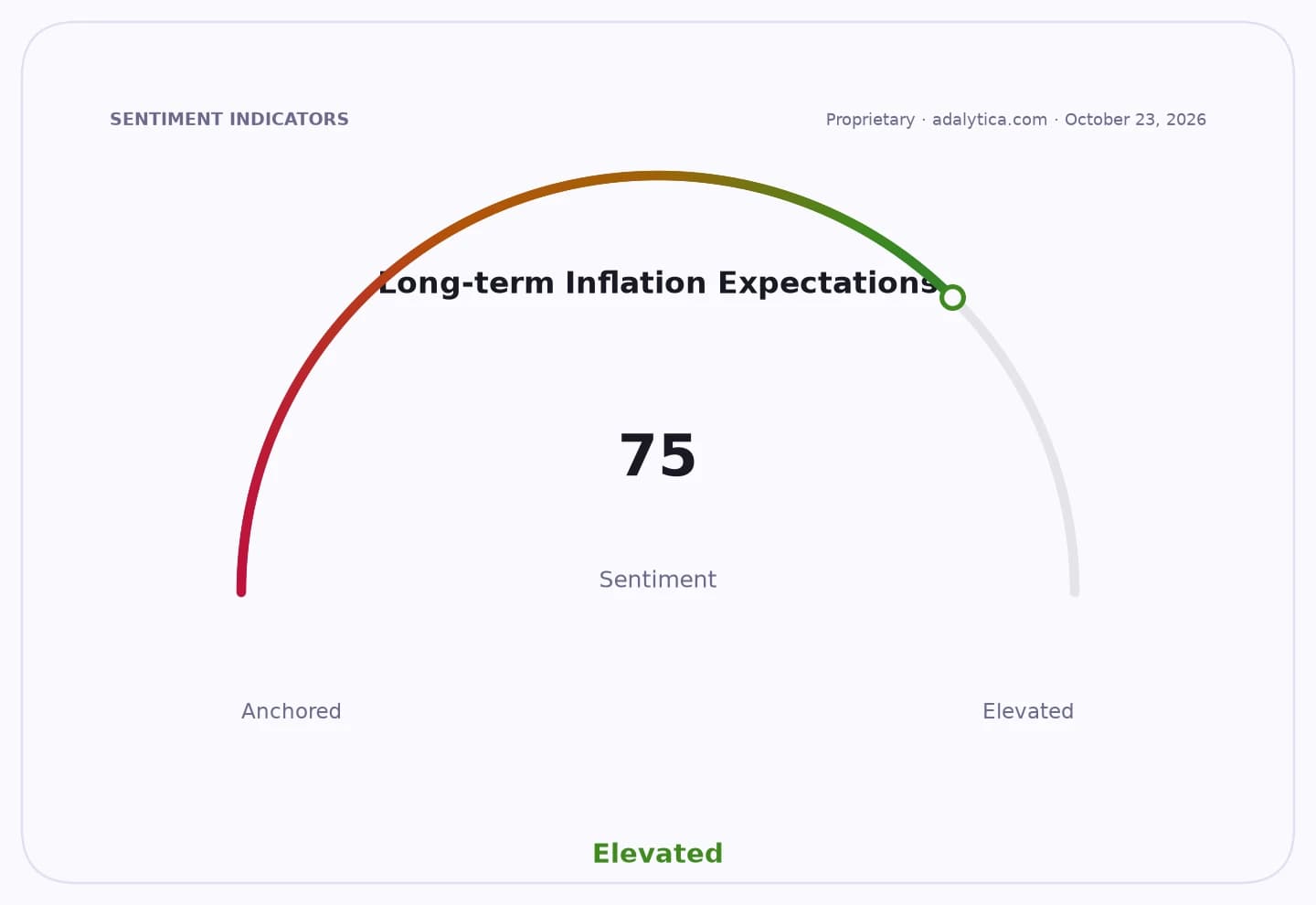
Sentiment Indicators
Long-term Inflation Expectations
For consumers, a faster inflation rate reinforces the burden of already elevated food prices and persistent inequality in the EU’s poorest member state. For policymakers, it limits room to ease up on fiscal discipline even as they plan to lift the gross minimum wage to 660 euros from Jan. 1, 2027. That increase may support domestic demand and living standards, but it also risks keeping underlying price pressures sticky if wage gains outpace productivity.
For investors, the inflation print complicates the macro backdrop at a moment when credibility matters. Bulgaria’s removal from the grey list is a positive for capital inflows and banking confidence, but sustained inflation can dull the appeal of local assets by keeping real yields under pressure and forcing the central bank to remain cautious. The latest numbers also suggest the disinflation story in the region is not yet secure, especially as neighboring Romania continues to wrestle with its own economic slowdown and price pressures.
The immediate market impact should be limited, but the policy implications are clearer: a hotter October print makes it harder for Sofia to deliver a growth-friendly budget without reviving concerns about fiscal slippage. If inflation stays near current levels, the government will have less flexibility to combine wage increases, social support and deficit control, leaving 2027 budget negotiations more exposed to scrutiny from Brussels and bond investors alike.
| Entity | Gains | Losses |
|---|---|---|
| Bulgarian households | ▲Higher nominal wages | ▼Purchasing power erosion |
| Government of Bulgaria | ▲Scope for growth measures | ▼Easier budget balance |
| Bond investors | ▲Potential reform credibility | ▼Inflation and deficit risk |
| European Commission | ▲Tighter pressure on fiscal discipline | ▼Less policy flexibility for Sofia |