Bulgaria will raise its minimum monthly wage to 660 euros from Jan. 1, 2027, a move that shores up worker incomes but also highlights pressure on the country’s pension and social insurance system as the government leans more heavily on enforcement to fill budget gaps.
Bulgaria raises minimum wage to 660 euros in 2027

The new floor, published in the State Gazette, sets the hourly minimum at 3.98 euros for a standard 8-hour day and 5-day week. It comes as Labour and Social Policy Minister Natalia Efremova said the deficit in the state social security budget will be covered through tighter controls and revenue measures rather than a sharp jump in contribution thresholds.
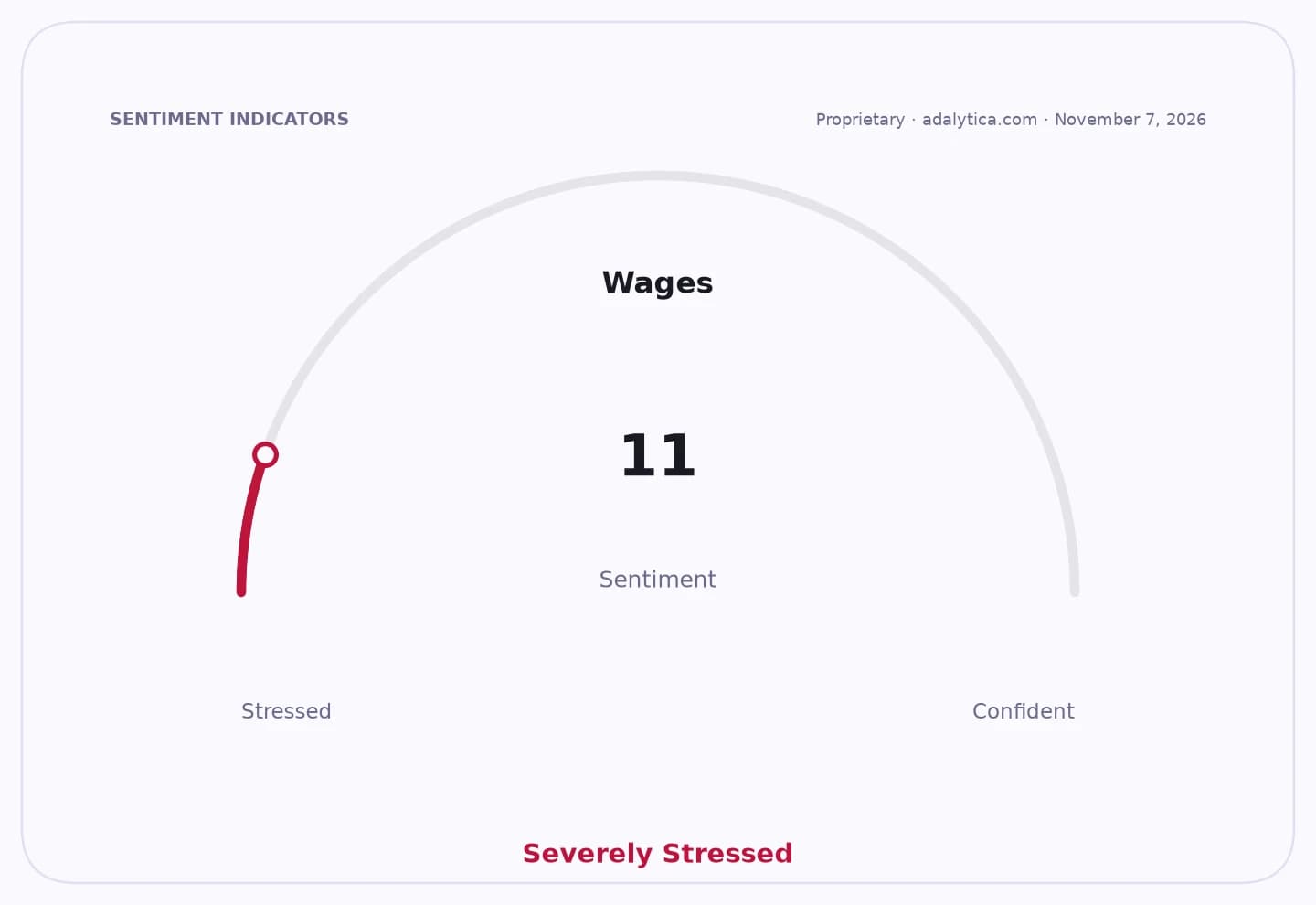
Sentiment Indicators
That matters economically because payroll costs are still being pushed higher, but not fast enough to fully offset the strain on the public insurance fund. Efremova said raising the minimum and maximum social security thresholds will bring in more revenue to the state social security budget, yet added the increases are too small to close the gap on their own.
For employers, especially labor-intensive small and medium-sized businesses, the higher wage floor adds to cost pressure at a time when officials are trying to avoid shocks to household incomes and business activity. The government is also signaling that part of the answer lies in tackling the grey economy, suggesting more inspections and stricter contribution collection.
For workers, the increase supports disposable income and helps protect low-wage earners from inflation, but it also raises the stakes for job retention in sectors with thin margins. Investors watching Bulgaria’s macro picture will see a familiar trade-off: stronger wage growth can support consumption, but if productivity and compliance do not keep pace, it can weigh on hiring and public finances.
The move lands amid broader regional debate over minimum wages, with unions pushing for higher pay and employers warning against abrupt increases. The key risk now is whether stronger enforcement and higher contribution revenue can keep the social security system balanced without forcing sharper fiscal measures later.
| Entity | Gains | Losses |
|---|---|---|
| Low-wage workers | ▲Higher take-home pay | ▼Limited wage upside if jobs are cut |
| Bulgarian government | ▲More social security revenue | ▼Political risk from weak budget gap closure |
| Small businesses | ▲Gradual adjustment pace | ▼Higher payroll and compliance costs |
| State social security fund | ▲Tighter collections | ▼Continued deficit pressure |