Poland’s minimum wage could rise above 5,000 zlotys ($1,220) by 2027, a threshold that would mark another step up in labor costs for employers as Warsaw moves to align pay-setting rules with EU standards.
Poland minimum wage could top 5,000 zlotys by 2027
The shift matters because the minimum wage has become a major input for inflation, consumer demand and corporate margins in Poland, where low-end pay has been rising quickly and now sits at just over half of average earnings. Under the EU directive, the floor is meant to be linked more clearly to national wage levels, pushing policymakers toward a formula based on the median or average salary rather than ad hoc political decisions.
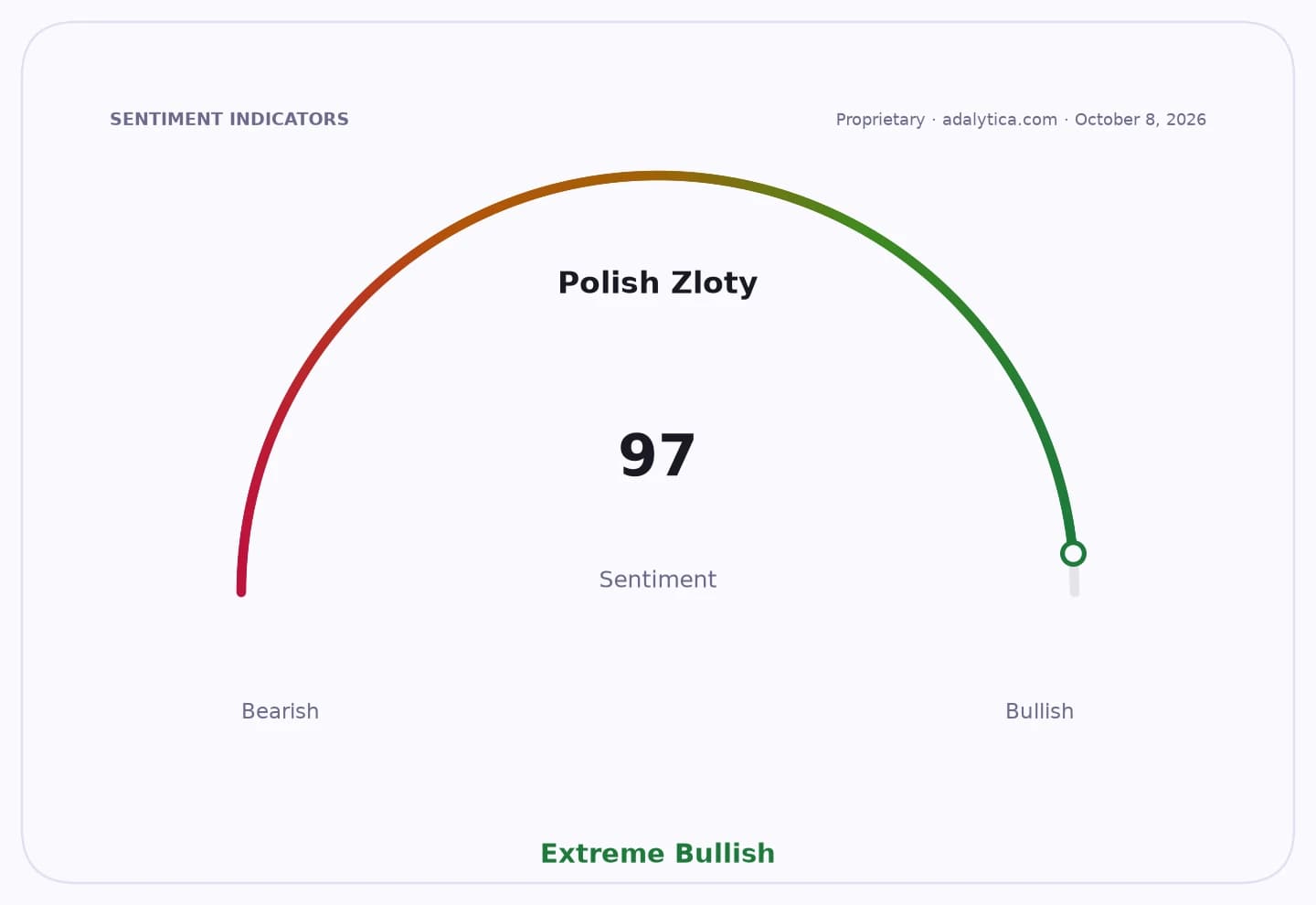
Sentiment Indicators
Latest estimates in Poland point to a minimum wage of about 5,100 zlotys gross in 2027 if current wage growth trends hold. That would extend a rapid upward cycle that has already lifted the floor sharply in recent years, reflecting stronger nominal pay growth, sticky inflation and pressure from workers seeking to preserve purchasing power.
For investors, the implications are mixed. A higher minimum wage supports household spending and could help domestic-demand sectors, retail and services. But it also squeezes labor-intensive businesses, especially small manufacturers, logistics operators and lower-margin service firms that have less room to pass on costs. The risk is that wage gains outpace productivity, feeding inflation and complicating the National Bank of Poland’s policy path.
The policy backdrop is also important for markets because it signals a more structured, and potentially less flexible, approach to wage setting. If the government adopts a clearer formula tied to broader earnings data, future increases may become more predictable but also more difficult to slow in a downturn. That could keep wage inflation elevated even if economic growth cools.
The narrative across Europe is similar: governments are trying to protect real incomes after years of inflation shock, but the trade-off is rising cost pressure for employers and the possibility of renewed price momentum. Poland’s move fits that pattern and will be watched for its effect on inflation, employment and corporate margins through 2027.
| Entity | Gains | Losses |
|---|---|---|
| Low-wage workers | ▲Higher pay floor | ▼None |
| Consumers | ▲Stronger purchasing power | ▼Risk of higher prices |
| Labor-intensive employers | ▲Better demand conditions | ▼Higher wage costs |
| Inflation outlook | ▲More nominal spending | ▼Greater upside pressure |