Roughly 2 million people in Poland are living in extreme poverty even as average household incomes rose last year, underscoring how the country’s growth story is failing to reach the lowest-income households.
Poland poverty rises as real incomes increase
The latest Poverty Watch 2026 report says 5.3% of Poland’s population was in extreme poverty in 2025, a slight increase from 5.2% a year earlier but still below the 6.6% level seen in 2023. That translates to about 2 million people in a country of roughly 37 million, a reminder that Poland’s solid macro performance is masking persistent strain at the bottom of the income ladder.
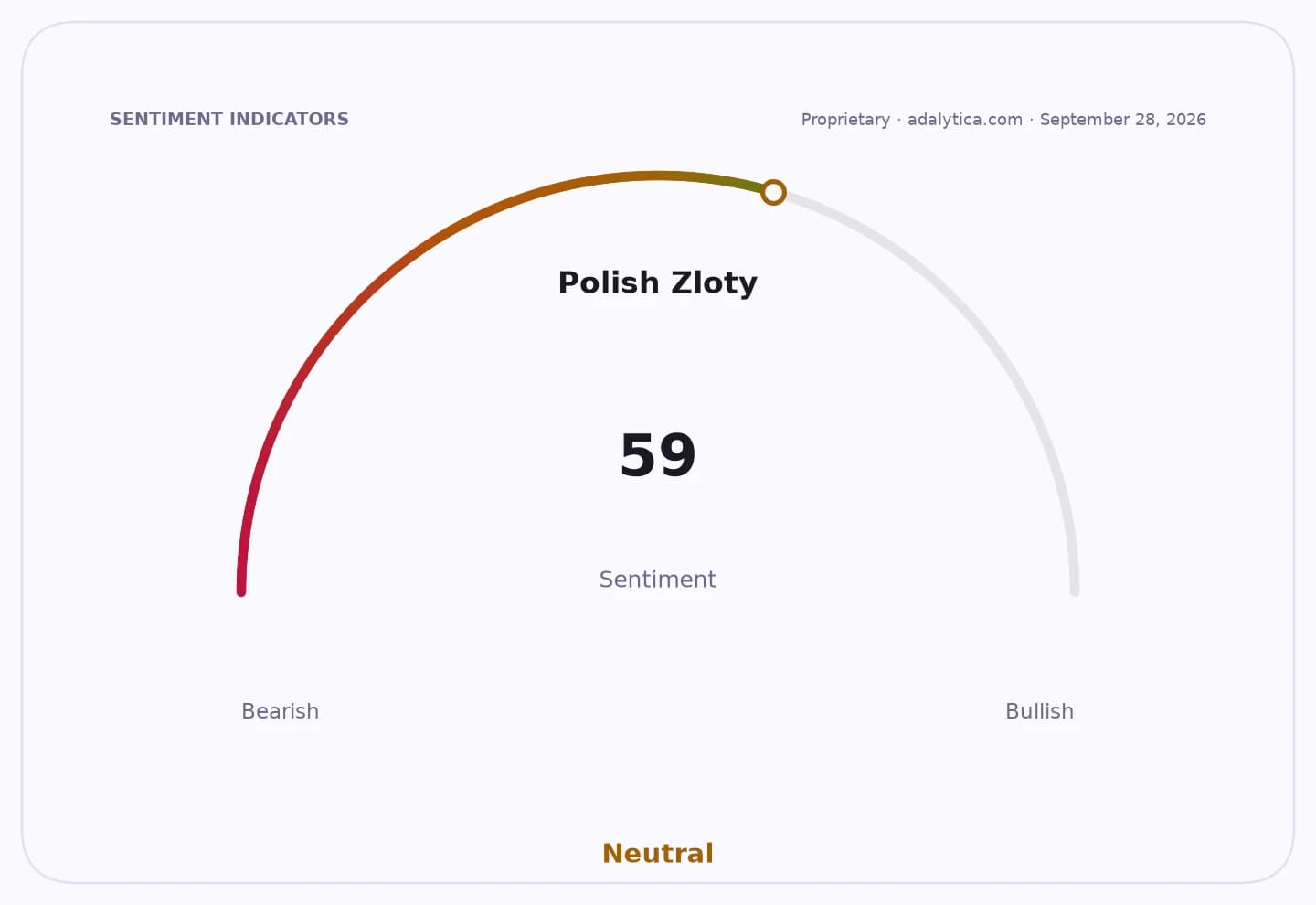
Sentiment IndicatorsⓘProprietary · adalytica.com · October 23, 2026
This is a snapshot — live sentiment, awareness and momentum for 130+ markets update continuously in the dashboard.Open AlphaPulse
The report is economically significant because it shows Poland’s improving averages are not the same as broad-based welfare gains. Real disposable household income rose 6.7% in 2025, while spending increased 3.6%, but those gains did not prevent a rise in the statutory poverty rate to 8.1% from 2.6% in 2024. The authors attribute much of that jump to the January 2025 increase in income thresholds for social assistance, which mechanically pushed more households below the legal line.
That distinction matters for policymakers and investors alike. For the government, it complicates the narrative of a resilient consumer economy and raises pressure to refine benefit policy, especially if social indicators worsen despite wage growth. For investors, it suggests that headline income growth may not translate evenly into retail demand, savings behavior, or political stability. A divided recovery can support consumption at the middle and upper end while leaving demand weaker among the poorest households, who are more likely to cut spending first.
The share of people living below the social minimum also improved, falling to 40.3% from 41.3% a year earlier, or about 15 million people. But that still points to a large portion of the population living on budgets that meet only the most basic needs. In practical terms, the data imply that Poland’s labor market strength and easing inflation pressures have improved conditions, but not enough to meaningfully close the gap for households already near subsistence.
For investors, the broader takeaway is that Poland’s macro backdrop remains more supportive than its social data suggests, but the distribution of gains is uneven. That creates a mixed setup: consumption-linked sectors may still benefit from rising real incomes, yet fiscal and political pressure to expand support could intensify if the legal poverty rate stays elevated. The next test is whether income growth can outpace the higher thresholds that define social support, or whether Poland’s poverty metrics remain stuck even as the aggregate economy improves.
| Entity | Gains | Losses |
|---|---|---|
| Higher-income households | ▲Real income gains | ▼— |
| Low-income households | ▲Slight relief from slower inflation | ▼Legal poverty pressure |
| Polish government | ▲Stronger growth narrative | ▼More pressure on social policy |
| Consumer-facing firms | ▲Broader spending power at the middle | ▼Weak demand from poorest households |