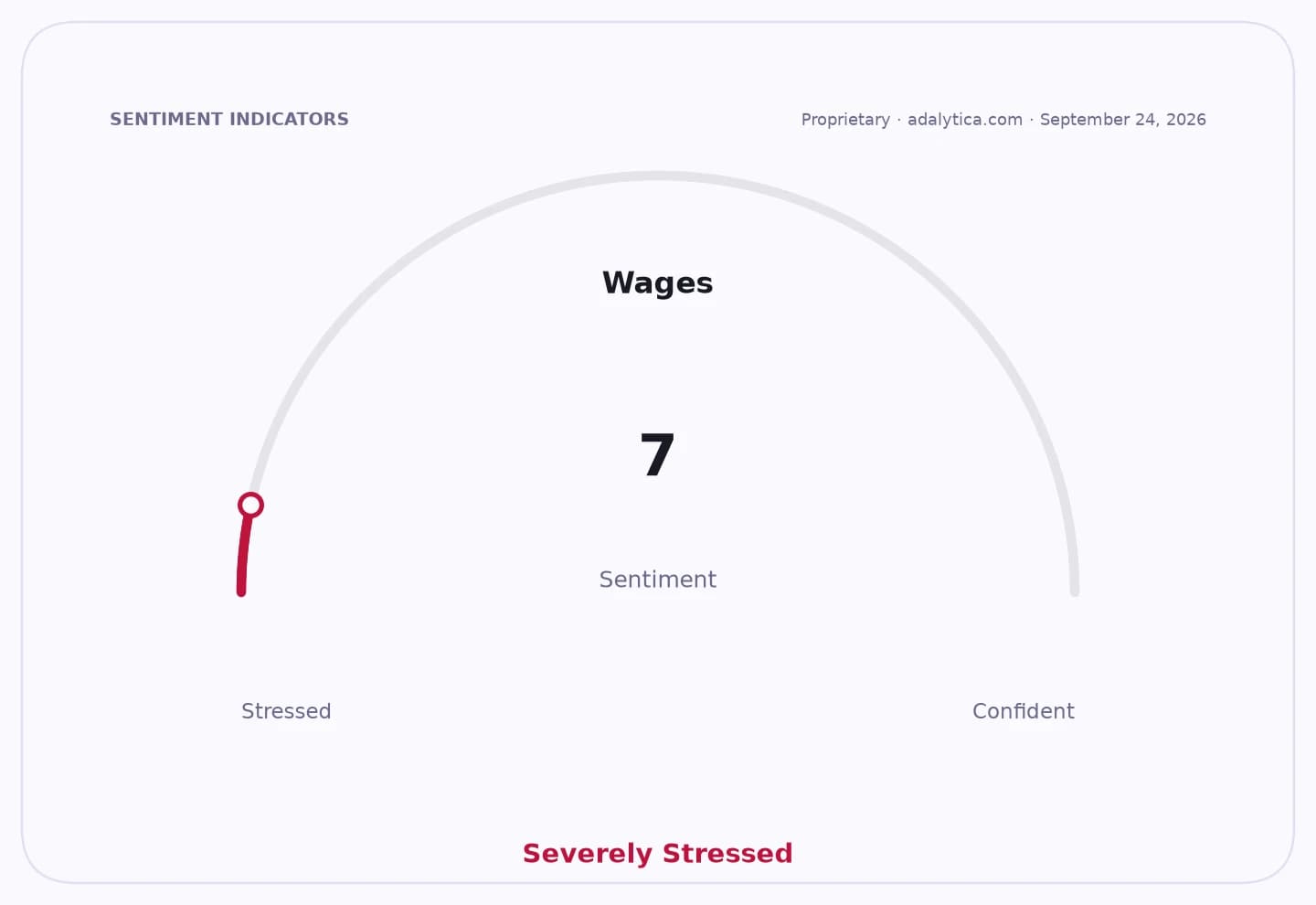
Wages in Poland are losing momentum, and for workers in Kujawsko-Pomorskie the slowdown showed up as a rare month-to-month drop of 185 złoty in take-home pay. That matters because softer pay growth is starting to look less like a one-off and more like a sign that inflation, not wages, is taking the lead in shaping household finances.
Poland wages cool as inflation rises
According to the latest Central Statistical Office data, average gross pay in Poland’s enterprise sector rose 5.6% year on year in August, a deceleration after months of faster gains. The average monthly gross wage stood at 9,259.54 złoty, down from 9,509 złoty in July, while the gap versus the March peak also widened. In practical terms, the pace of wage growth is cooling just as consumer prices, especially fuel, are accelerating again.
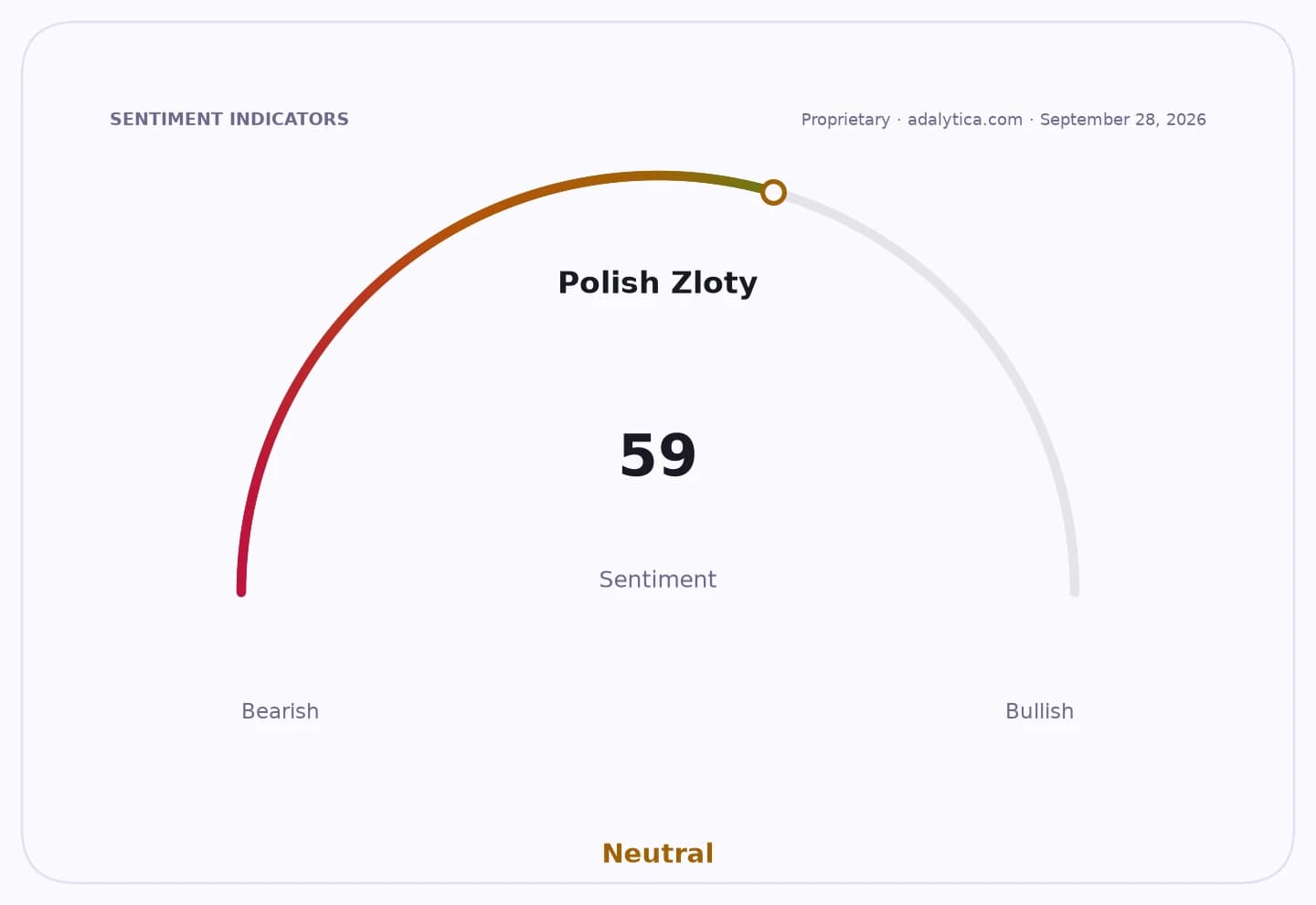
Sentiment IndicatorsⓘProprietary · adalytica.com · September 28, 2026
This is a snapshot — live sentiment, awareness and momentum for 130+ markets update continuously in the dashboard.Open AlphaPulse
That shift matters for the broader economy because household spending has been supported by steady nominal wage gains for much of the year. When pay growth slows while prices firm, real incomes stop improving as quickly. ING Bank Śląski economists said real wages in the enterprise sector rose just 2.1% year on year in August, underscoring how much of the nominal wage increase is being swallowed by inflation. For consumers, that usually means less room for discretionary spending, which can ripple through retail, services and domestic demand.
The regional numbers show how uneven that pressure can be. In Kujawsko-Pomorskie, average gross pay fell to 8,167.82 złoty in August from 8,438.99 złoty in July, a decline of 271 złoty gross and 185 złoty net. Year on year, pay was still higher, but the monthly drop is the kind of change households notice immediately. In Toruń, average gross wages fell by 400 złoty month on month to 8,683.59 złoty, while in Bydgoszcz they slipped 288 złoty to 8,582.45 złoty. The difference between the two cities is now marginal, with Toruń ahead by just 101 złoty gross.
For investors, the message is straightforward: a cooling wage cycle can help limit inflation, but it also points to a less exuberant consumer backdrop. That is important for Polish retailers, banks exposed to household lending, and companies dependent on domestic demand. A softer labor market impulse can also give policymakers more room to ease if growth weakens, though sticky consumer prices could complicate that path.
There is also a lesson in how these numbers should be read. Average wages can mask the experience of many workers, and the monthly declines in the regional data show how quickly a statistical gain can disappear at the household level. For long-term investors, the better takeaway is not to chase a single data point, but to watch whether wage growth keeps fading while inflation stays hot. If that pattern holds, it would support a more cautious view on Polish consumption, even if it improves the odds of lower inflation later on.
| Entity | Gains | Losses |
|---|---|---|
| Employers | ▲Lower wage pressure | ▼Slower consumer demand |
| Workers | ▲Higher annual pay vs. 2025 | ▼Smaller monthly paychecks |
| Polish central bank | ▲Easier inflation outlook | ▼Less support from household spending |
| Consumer-facing companies | ▲Some relief on cost growth | ▼Weaker discretionary sales |