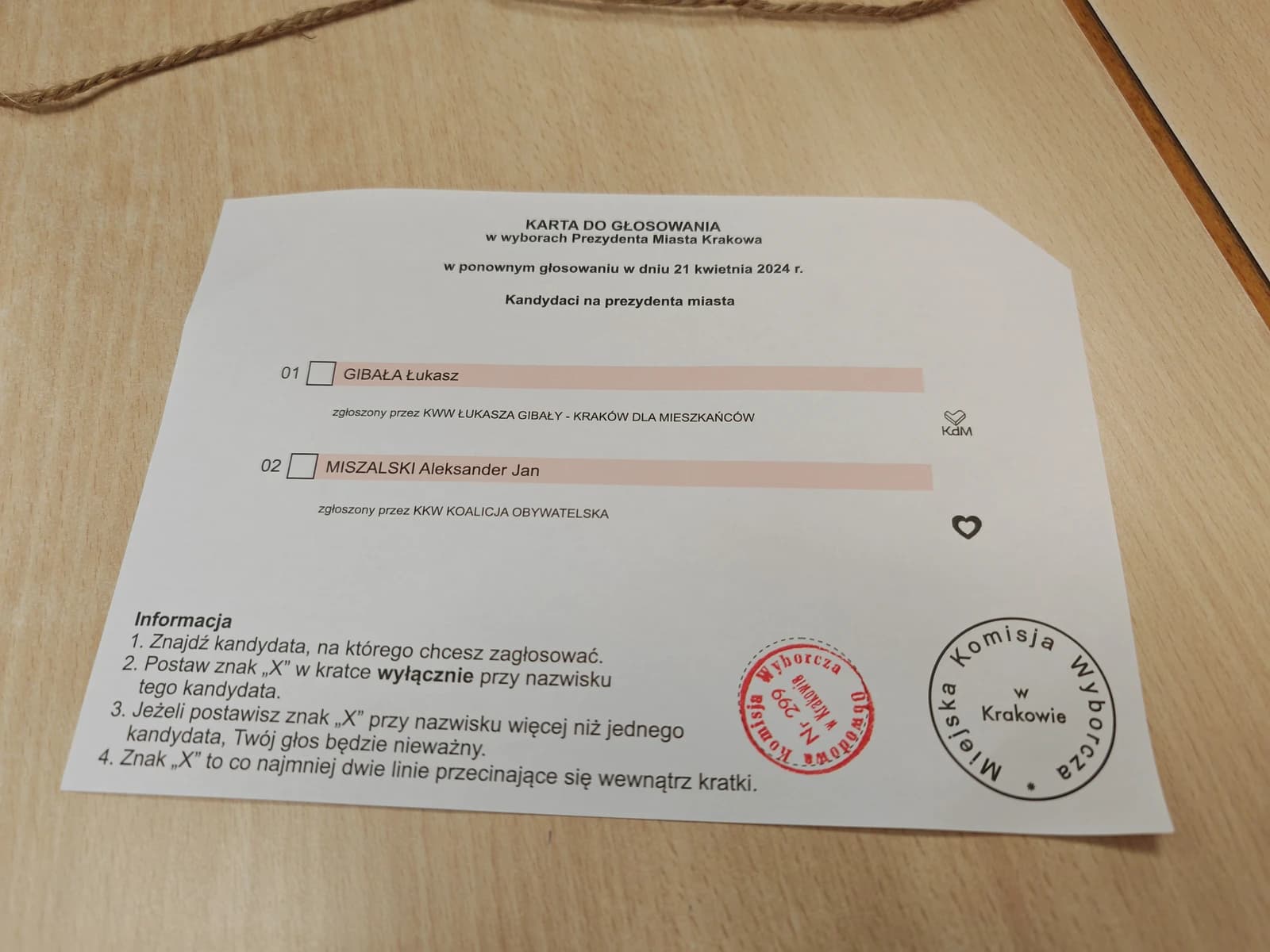
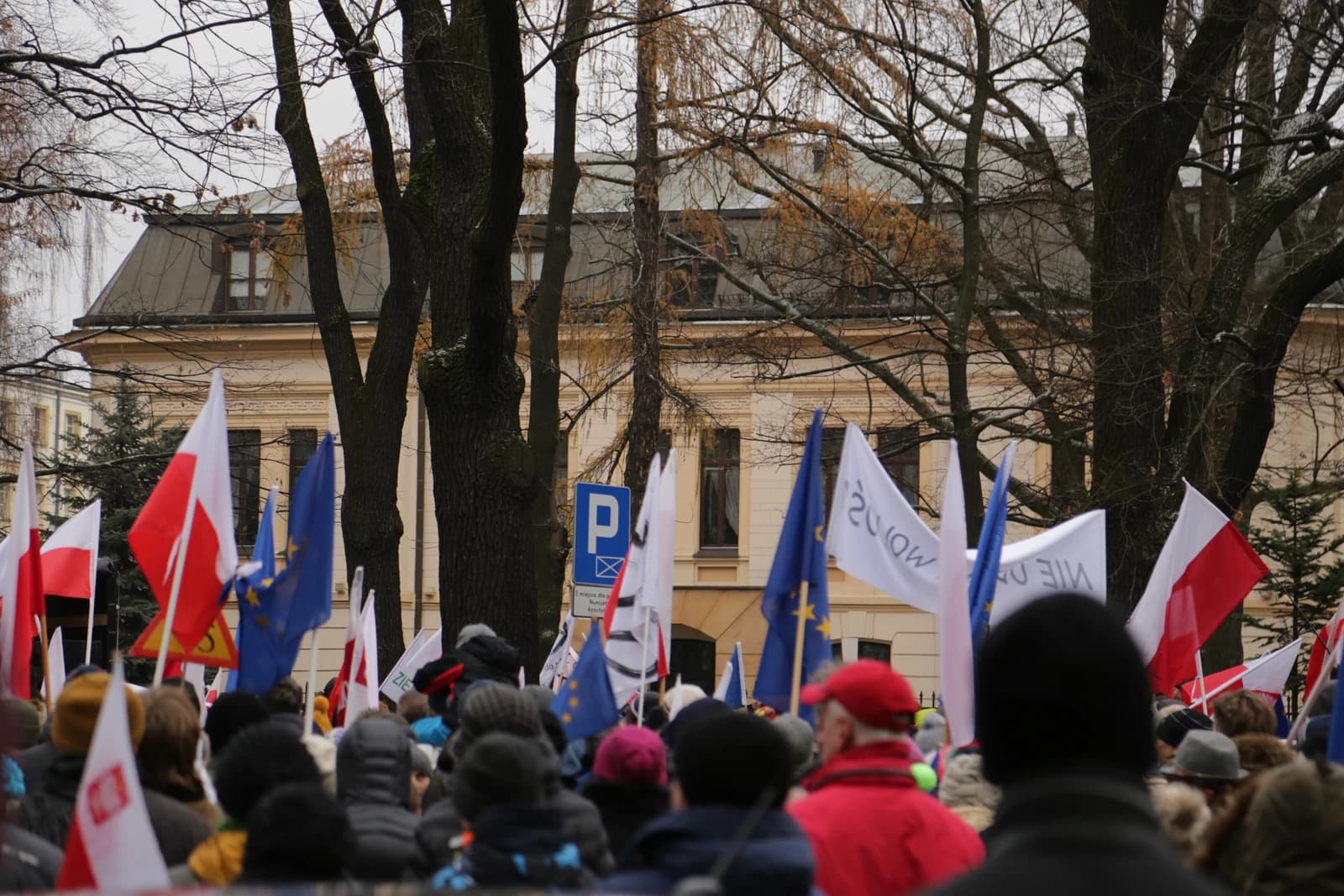
Poland’s president has vetoed a sweeping rewrite of the electoral code, and the market-relevant issue is not the headline dispute over seat apportionment but the risk that the country is left without clear, court-tested rules for running the 2027 parliamentary election.
Poland Vetoes Electoral Code Rewrite

Karol Nawrocki’s decision blocks legislation that would have changed how parliamentary seats are redistributed, who oversees local election administration and who polices political advertising online. That matters because the reforms touched the machinery of elections itself — the kind of institutional plumbing investors watch closely in any emerging-market democracy, where policy continuity and rule-of-law credibility can move capital as much as fiscal arithmetic.
The most immediate concern is legal uncertainty. The veto sends the bill back to parliament as a whole, and the dispute now risks spilling into the gap between the presidential palace, the government and the constitutional system. With election rules supposed to be settled well before a national vote, the prospect of changing the electoral code less than a year before the 2027 parliamentary election is exactly the sort of instability that international investors dislike. In Poland, that risk is amplified by the fact that the broader political battle is already raising questions about institutional independence.
The legislation would have done far more than adjust the number of seats in each district. It would have given the National Electoral Commission broader powers over political advertising, while also reshaping the role and number of election commissioners. Critics say that could have weakened oversight by reducing the number of commissioners from 100 to as few as 32 in the most extreme scenario, a scale that would have made it harder to supervise thousands of local polling stations. The veto argument, according to the published commentary, is that these are not cosmetic changes but structural ones that deserve a fuller legal and procedural review.
That distinction matters to investors because electoral administration is not a side issue in Poland’s current political environment. If the rules for district apportionment, commissioner appointments and ad enforcement are seen as politically malleable, then the credibility of the 2027 contest becomes part of the country risk premium. That can spill into the zloty, domestic equities and foreign direct investment decisions, especially for global funds that already factor governance stability into Central European allocations.
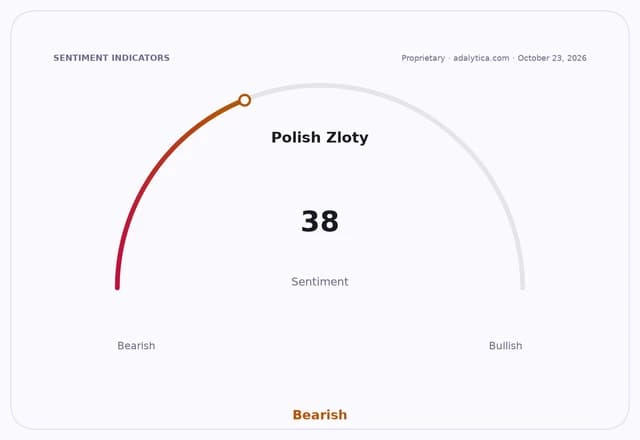
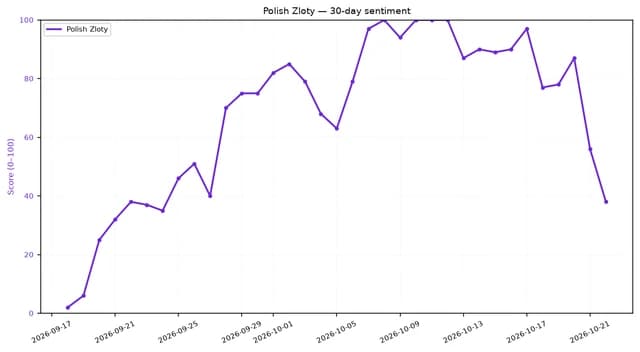
The zloty has already shown how quickly political headlines can shift positioning. Adalytica’s trade signals for PLN showed a sharp deterioration in short-term change, with the 7-day reading down 54% and the 30-day measure down 42%, even as sentiment remained neutral. That does not prove cause and effect, but it underlines how fragile confidence can be when institutional noise rises. Poland’s equities market has also been more sensitive than usual to domestic politics, with the iShares MSCI Poland ETF recently trading above its 200-day moving average but still subject to swings tied to policy and governance risk.
There is also a broader European angle. The same bill would have placed Poland’s election authorities closer to the front line of enforcing new EU rules on political advertising, at a moment when Brussels is trying to tighten transparency around campaign messaging. If Warsaw cannot settle the institutional framework cleanly, the clash between national politics and EU compliance will only intensify.
The investment takeaway is straightforward: the market should not read this as a narrow constitutional spat. It is a reminder that in Poland, political process risk is now part of the macro story. Until the government and president settle the election code — and do so in a way that strengthens, rather than weakens, the independence of electoral institutions — the discount on Polish governance will remain real. For investors, that means staying selective on Poland, favoring exporters and firms less exposed to domestic political turbulence while treating the zloty and local-policy-sensitive names as higher-beta trades.
| Entity | Gains | Losses |
|---|---|---|
| Presidential veto | ▲Institutions get scrutiny | ▼Reform momentum stalls |
| Ruling coalition | ▲Can rewrite bill | ▼Faces political setback |
| Polish opposition | ▲Avoids new ad regime | ▼Faces election-rule uncertainty |
| PLN and local equities | ▲None immediate | ▼Governance risk premium rises |