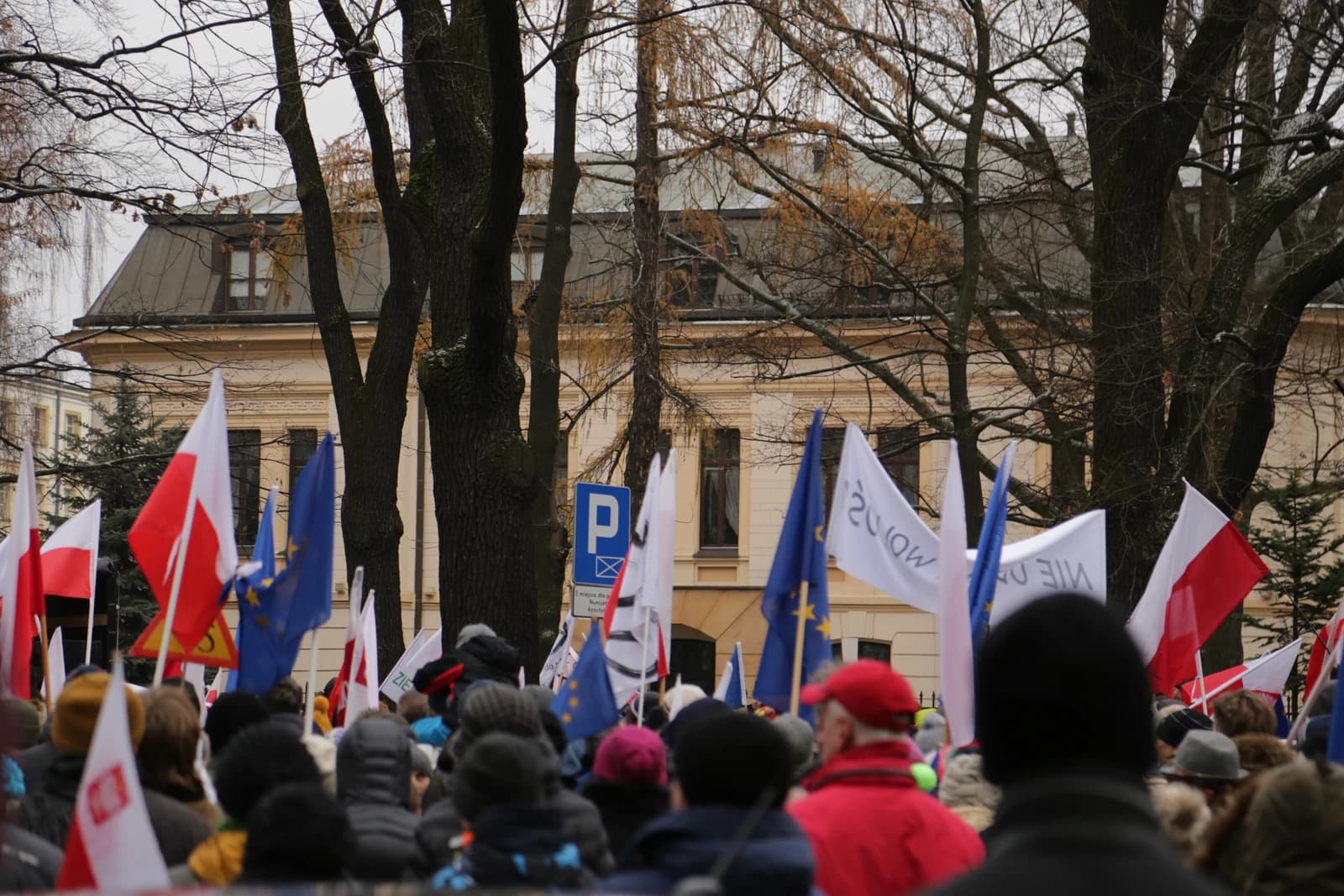
Poland’s 1997 constitution took effect on Oct. 17, cementing the country’s post-communist political order even as the referendum that approved it was marked by a turnout so weak that it left a lingering question over the breadth of public support.
Poland Constitution Took Effect in 1997
That matters because constitutions do more than define institutions. They set the rules that govern fiscal policy, courts, executive power and investor confidence for decades. In Poland’s case, the document locked in a parliamentary-gabinet model that limited presidential power and strengthened the role of the prime minister, a structure that still shapes how power is contested in Warsaw today.
Sentiment IndicatorsⓘProprietary · adalytica.com · October 20, 2026
This is a snapshot — live sentiment, awareness and momentum for 130+ markets update continuously in the dashboard.Open AlphaPulse
The constitution was approved by the National Assembly in April 1997 and then ratified in a May referendum by 53.45% of voters. But only 42.86% of eligible Poles participated, a strikingly low figure for such a foundational vote. The result gave the document legal force, yet the thin turnout meant the new settlement entered into force without the kind of sweeping democratic mandate that typically cushions a major constitutional change.
For investors, that institutional clarity is the important part. A stable constitutional framework is one of the quiet prerequisites for long-term capital formation, helping define the balance between the state, the courts and elected officials. Poland’s move away from the transitional arrangements of the early 1990s helped reduce one source of political uncertainty, even if it did not eliminate the country’s broader governance tensions.
Those tensions are still relevant. The current backdrop of security concerns and political friction, including threats against Prime Minister Donald Tusk, shows why constitutional rules matter far beyond legal theory. When institutions are tested by domestic polarization or external pressure, the durability of the framework becomes an economic issue as much as a political one.
The long-term lesson for investors is simple: Poland’s constitution was a milestone in building a modern state, but the low referendum turnout is a reminder that legitimacy and stability are never identical. The country’s institutional architecture remains a core reason it has been able to attract capital and integrate more deeply with European markets, and it is worth watching as political risk, security threats and the rule of law continue to intersect.
| Entity | Gains | Losses |
|---|---|---|
| Polish state institutions | ▲Clearer constitutional rules | ▼Transitional legal ambiguity |
| Investors | ▲More predictable governance | ▼Risk from political friction |
| Prime minister / cabinet | ▲Stronger executive role | ▼Presidential dominance |
| Referendum mandate | ▲Legal validity | ▼Broad public buy-in |