Poland’s latest push to hold down diesel prices is likely to keep the central bank from raising interest rates, but it also raises the odds of a weaker zloty and renewed pressure on the country’s credit profile.
Poland diesel push pressures zloty and NBP

The tension is straightforward: cheaper fuel can soften inflation at the pump and ease political pressure on households, but repeated intervention in fuel pricing also risks working against monetary policy just as the National Bank of Poland is weighing whether inflation and energy costs warrant tighter policy. The result is a policy mix that may be friendlier to consumers in the short term and less supportive for investors in the currency and sovereign market.
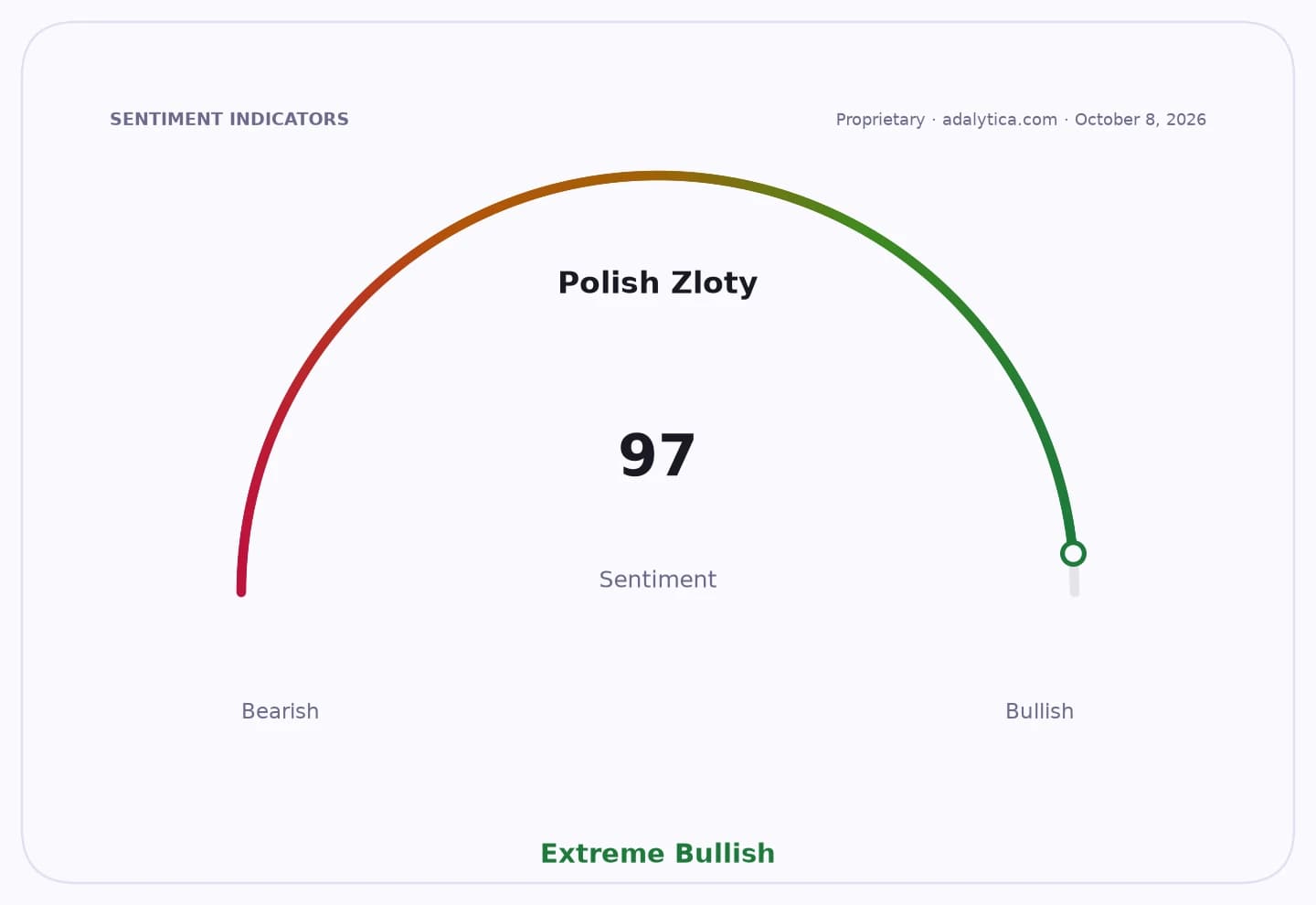
Sentiment IndicatorsⓘProprietary · adalytica.com · October 17, 2026
This is a snapshot — live sentiment, awareness and momentum for 130+ markets update continuously in the dashboard.Open AlphaPulse
The zloty is already vulnerable. It has weakened to around 3.89 against the dollar, after briefly touching 3.93 this week, with the dollar’s strength amplified by higher U.S. rates and firmer oil prices. Against the euro, the currency has been trading around 4.37, above its 50-day average of 4.34 and 200-day average of 4.27, while momentum readings on the euro-zloty pair remain elevated. Adalytica’s zloty trade signal snapshot shows sentiment at 91, labeled “Extreme Greed,” even as awareness remains low at 23 — a combination that often precedes sharper repositioning.
For the NBP, the more immediate issue is credibility. The benchmark rate was left unchanged at 3.75% this month, in line with expectations, but economists in the market now see the central bank leaning toward caution rather than tightening. Germany’s Oberbank said several NBP council members already see room for a move because inflation has climbed back to 4.0%, energy prices remain high and underlying price pressure is still firm. Yet if the government keeps leaning on fuel prices, the central bank may hesitate to validate that with higher borrowing costs.
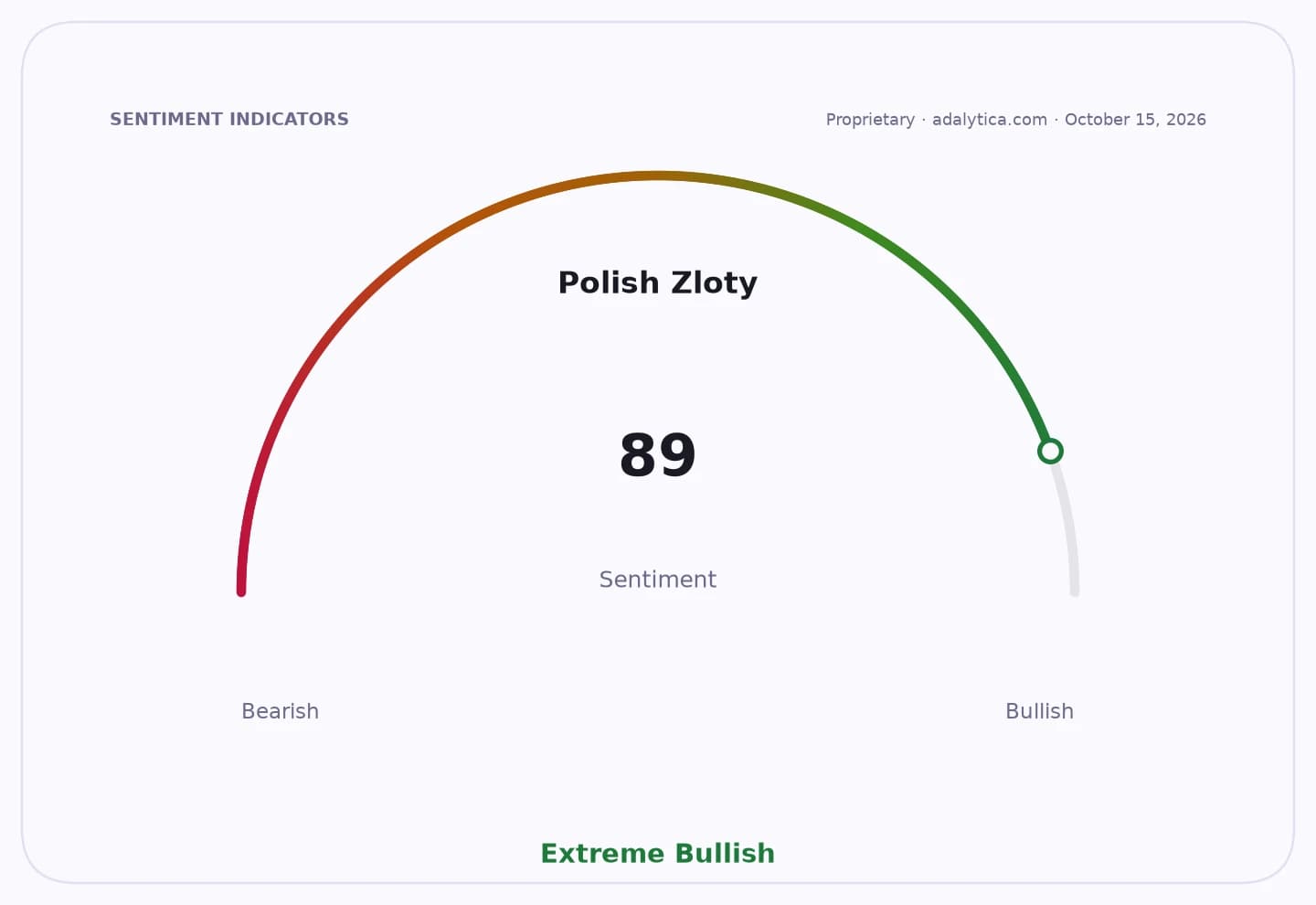
Polish Zloty — 30-day sentimentadalytica.com
Explore this data interactively — full history, time series and cross-market comparisons.Open AlphaPulse
That matters because the foreign-exchange channel can quickly offset the inflation relief from lower gasoline. A weaker zloty raises the local-currency cost of imports, including energy, food and industrial inputs. That would feed back into consumer prices and make it harder for policymakers to claim that cheaper fuel is delivering a durable disinflationary effect. It also leaves Polish bond investors exposed to a steeper risk premium if the market concludes inflation is becoming more persistent or policy coordination is fraying.
Oil adds another layer. Brent has been holding above $100 a barrel in the market context cited, while U.S. crude has pushed above $102 a barrel, keeping pressure on fuel costs globally. That limits how much Poland can rely on administered or politically managed fuel pricing to neutralize inflation, especially if external energy costs keep moving higher. In that environment, any attempt to suppress diesel prices domestically could simply shift the burden from consumers to the currency and, ultimately, to the sovereign balance sheet.
For investors, the key question is not whether cheaper diesel is popular — it is — but whether it is sustainable without undermining the exchange rate and the central bank’s reaction function. If the market decides the NBP will stay on hold to avoid amplifying a politically sensitive fuel issue, Polish assets could see more FX volatility and a higher term premium. If, instead, the central bank pushes back with a more hawkish tone, the zloty may stabilize, but domestic credit conditions would tighten.
Either way, the story is now less about one fuel intervention than about the policy trade-off it creates: lower pump prices today versus a weaker currency, a more cautious central bank and potentially a worse sovereign rating outlook tomorrow.
| Entity | Gains | Losses |
|---|---|---|
| Polish households | ▲Lower diesel prices | ▼Future inflation risk |
| NBP | ▲Short-term policy flexibility | ▼Rate-hike credibility |
| Zloty | ▲None | ▼Weaker exchange rate |
| Poland sovereign debt | ▲None | ▼Higher risk premium |