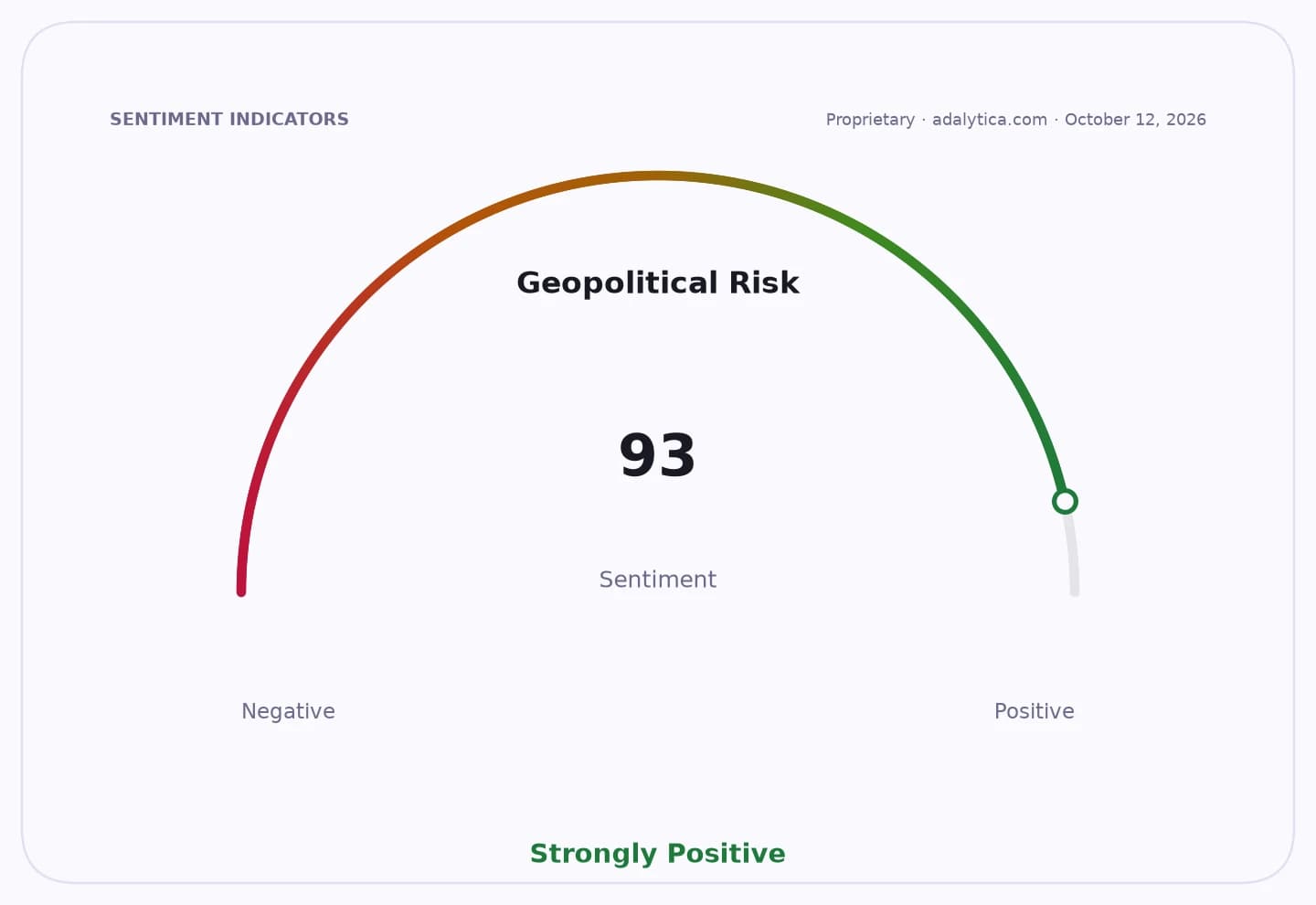
Poland’s economic and geopolitical pitch is getting a fresh public airing in Sopot, where EFNI 2026 opens against a backdrop of deeper defense spending, tighter regional energy links and a Europe that can no longer assume its old relationship with the U.S. will remain intact.
Poland ETFs, zloty, and EFNI 2026 in Sopot
That matters because Poland is not just hosting another policy forum. It is positioning itself as one of Europe’s most strategically important economies at a moment when capital is chasing security, infrastructure and industrial capacity. The conference agenda — from defense financing and Ukraine’s reconstruction to AI, energy, industry and deregulation — maps directly onto the sectors that will attract the next wave of public and private investment across the continent.
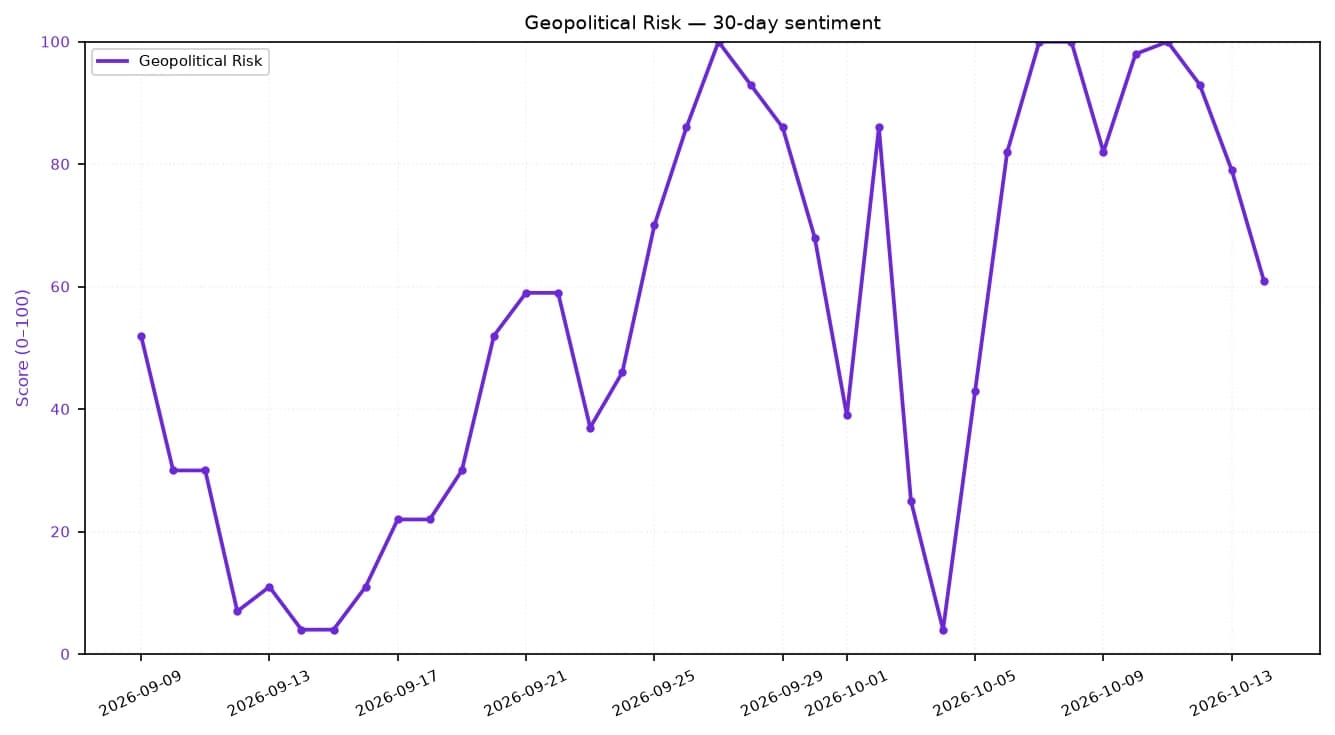
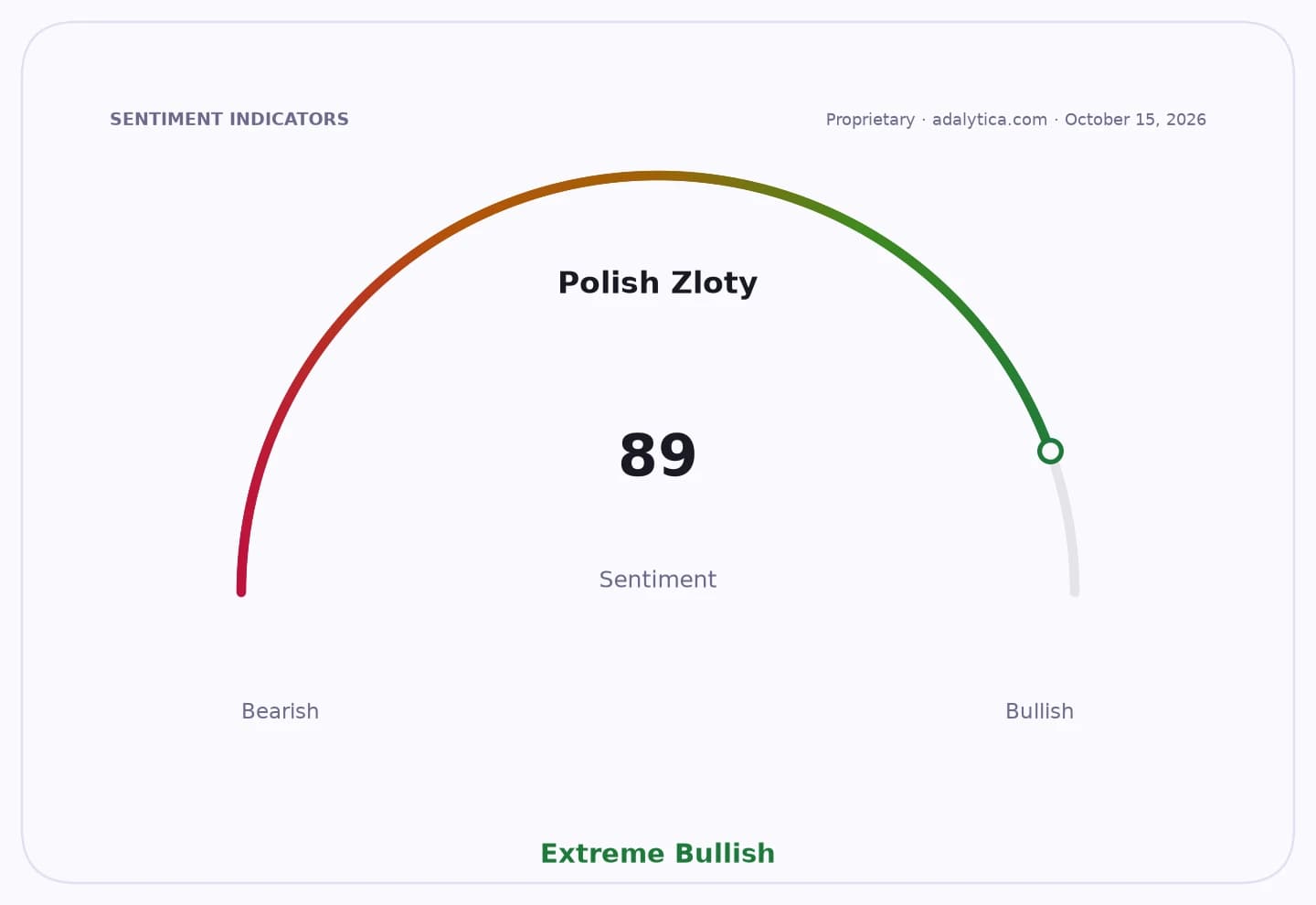
Sentiment IndicatorsⓘProprietary · adalytica.com · October 15, 2026
This is a snapshot — live sentiment, awareness and momentum for 130+ markets update continuously in the dashboard.Open AlphaPulse
The event’s core narrative is a Europe that must adapt to a more fragmented world, with the U.S., China and Russia all shaping the investment landscape at once. EFNI’s emphasis on “our new Europe,” “our new Poland” and “our new man” is not just branding; it reflects a broader shift in which national resilience, technological sovereignty and supply-chain control are becoming marketable assets. For investors, that is where the opportunity lies: in the picks-and-shovels behind reindustrialization, not in old Europe’s low-growth consumer story.
Poland is especially well placed to benefit. Prime Minister Donald Tusk, deputy prime ministers Krzysztof Gawkowski and Władysław Kosiniak-Kamysz, and senior EU officials are all in Sopot, underscoring that Warsaw wants to be seen as a bridge between Brussels, business and security policy. The country is already central to Europe’s response to Russia’s war in Ukraine, and discussions around rebuilding Ukraine, financing defense and speeding up deregulation point to a long runway for industrial contractors, infrastructure suppliers, energy network operators and digital firms.
Polish Zloty — 30-day sentimentadalytica.com
Explore this data interactively — full history, time series and cross-market comparisons.Open AlphaPulse
The market backdrop reinforces that thesis. The EPOL Poland ETF is trading at 44.45, above its 200-day moving average of 39.77, suggesting the broader Poland equity story still has room to rerate if policy momentum translates into actual investment flows. EWP, the larger Poland ETF proxy, closed at 58.36, also comfortably above its 200-day average of 57.3. Both funds have pulled back from earlier highs, which is exactly the kind of setup that can create upside if the market begins to price in structural capital spending rather than cyclical noise.
The zloty is also flashing the kind of signal investors should not ignore. Adalytica.com’s Polish zloty trade signals show sentiment at 89, labeled “Extreme Greed,” even as awareness remains at 0 and the seven-day change is negative. That combination points to a market that is highly sensitive to the Poland narrative but still vulnerable to headline risk. In other words, the opportunity is real, but so is volatility.
Europe’s currency backdrop matters too. Adalytica’s euro snapshot is neutral, with sentiment at 33 and awareness at 54, suggesting the common currency is not driving this story. The real trade is country-specific: Poland is emerging as a beneficiary of reshoring, defense rearmament and energy interconnection, while the rest of the region struggles to define its response to slower growth and strategic dependence.
The biggest takeaway is that EFNI 2026 is not merely a conference about ideas. It is a showcase for the investment themes that will define Poland’s next decade: security, energy, digitization and industrial upgrading. If policymakers turn these themes into faster permitting, more defense procurement, stronger grid buildout and clearer rules for business, the winners will be the companies supplying steel, cables, software, transport, power and protection.
For investors, the message is simple: Poland is moving from a peripheral European market to a strategic one. That is an inflection point. The smartest money should be looking for exposure to the country’s infrastructure and defense stack, its energy modernization and its AI-enabled industrial base before the consensus fully catches up.
| Entity | Gains | Losses |
|---|---|---|
| Polish infrastructure and defense firms | ▲more public spending | ▼weaker policy execution |
| Poland ETFs, led by EPOL and EWP | ▲rerating potential | ▼headline-driven volatility |
| EU and NATO policy agenda | ▲stronger eastern flank | ▼slower, fragmented response |
| Import-dependent old-economy sectors | ▲little | ▼rising costs, strategic neglect |