Poland is preparing to pour more than 440 billion zlotys into power networks by 2040, but the money alone will not be enough to keep the grid stable as wind, solar and future nuclear plants reshape the country’s electricity system.
Poland Plans 440 Billion Zlotys for Power Grids
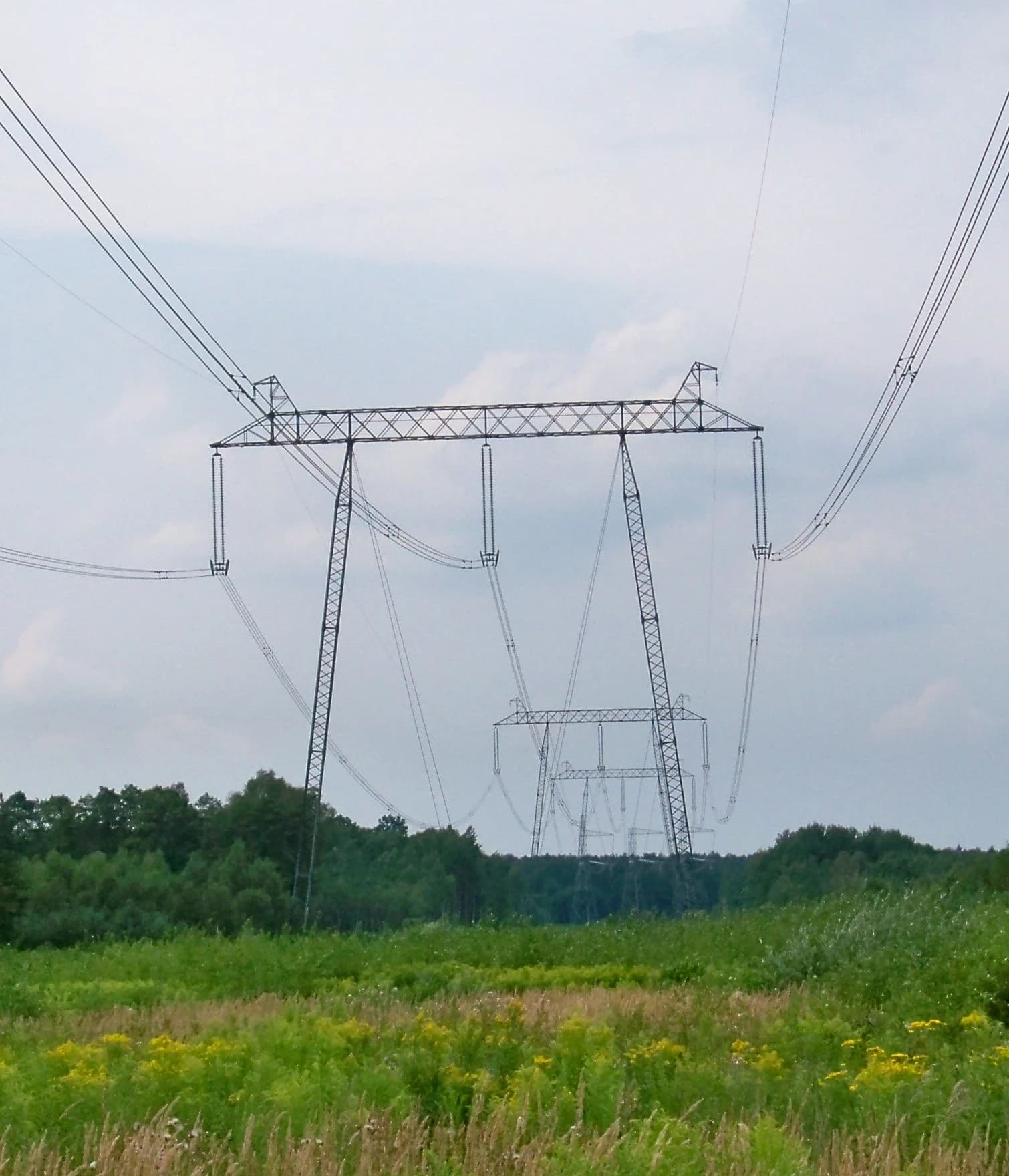
The scale of spending, set out in the latest climate and energy plan, underscores how expensive Poland’s energy transition is becoming. More than 330 billion zlotys is earmarked for distribution grids and over 100 billion zlotys for transmission, as operators try to build infrastructure that can handle far more variable generation, new industrial demand and eventually nuclear output.
Sentiment IndicatorsⓘProprietary · adalytica.com · October 2, 2026
This is a snapshot — live sentiment, awareness and momentum for 130+ markets update continuously in the dashboard.Open AlphaPulse
The problem is no longer just building lines and substations. The system must become far more flexible, with storage, demand response and dispatchable generation doing more of the work that today falls largely on the transmission operator, Polskie Sieci Elektroenergetyczne. Without that, the grid will struggle to absorb rising flows from renewables and to balance them when output falls.
That challenge is already visible at the distribution level, where medium-voltage networks are under the most strain. PGE Dystrybucja says it has about 9 GW of renewable capacity connected to its grid, but only around 300 MW of storage, leaving operators exposed to sharp swings in power flows as prosumers and local sources feed electricity in and out over the course of a day.
Industry participants at Energy Days in Katowice said the traditional “copperplate” model of a centrally managed network no longer fits a system in which distributed generation could reach almost 90 GW by 2030 and close to 100 GW by 2035, according to analyses cited at the event. That shift could force a rethink of where grid assets, storage and stabilising capacity are built, with some pushing for nodal balancing to better reflect local constraints.
For investors, the spending wave is a multi-year demand story for cable makers, transformer producers, automation groups and grid contractors, but it is also a warning that execution risks are rising just as orders accelerate. Agnieszka Rupniewska, head of Fabryka Przewodów Energetycznych, said orders are already growing faster than plant capacity, while outside-Europe suppliers can sometimes undercut domestic manufacturers even after transport costs.
That raises the stakes for Poland’s industrial base and for the share of the investment boom that stays at home. Companies warned that if procurement is decided mainly on price, local expertise could erode, leaving the country more dependent on foreign supply in a crisis.
The investment rush also exposes a second bottleneck: labor, engineering capacity and contracting discipline. Victor Energy Polska said the market still resembles a “Wild West,” with projects delayed by weak preparation, supply-chain problems and overly price-driven tenders. Those risks matter because Poland’s grid buildout is not a discretionary capex cycle but a prerequisite for the country’s broader energy security and industrial competitiveness.
As the transition accelerates, the winning names are likely to be firms that can deliver hardware, software and integration at scale. The losers could be utilities, consumers and domestic suppliers if the grid expands too slowly, storage remains scarce and execution delays push up costs.
| Entity | Gains | Losses |
|---|---|---|
| Polish grid equipment makers | ▲Multi-year order surge | ▼Capacity constraints |
| Utilities and operators | ▲Stronger network, more flexibility | ▼Higher execution complexity |
| Foreign suppliers | ▲Export sales into Poland | ▼None from domestic demand |
| Polish manufacturers | ▲Potential local-content upside | ▼Price pressure, lost contracts |