Poland’s central bank is likely to keep interest rates restrictive even as inflation climbs again, and that makes the zloty the immediate market tell on whether policymakers can defend price stability without choking growth.
Polish zloty stays in focus as inflation rises
For investors, the key issue is not just the next rate decision. It is whether the National Bank of Poland can preserve credibility while inflation re-accelerates, because that determines the currency’s path, local bond yields and the cost of capital for Polish assets. When inflation is rising, any hint of easing too soon risks pressuring the zloty, importing more price stress through a weaker exchange rate and forcing the central bank back into a tighter stance later.
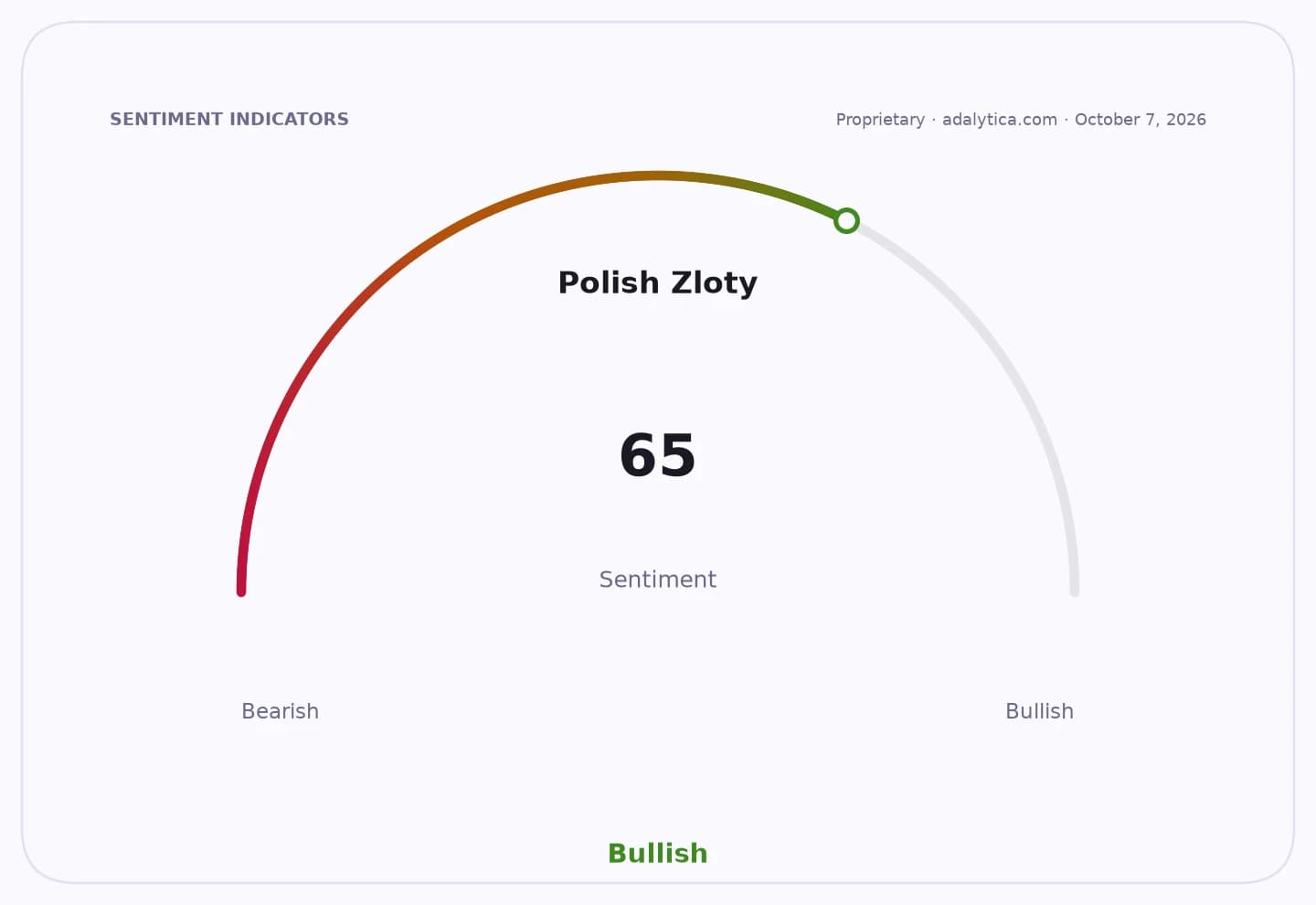
Sentiment IndicatorsⓘProprietary · adalytica.com · October 8, 2026
This is a snapshot — live sentiment, awareness and momentum for 130+ markets update continuously in the dashboard.Open AlphaPulse
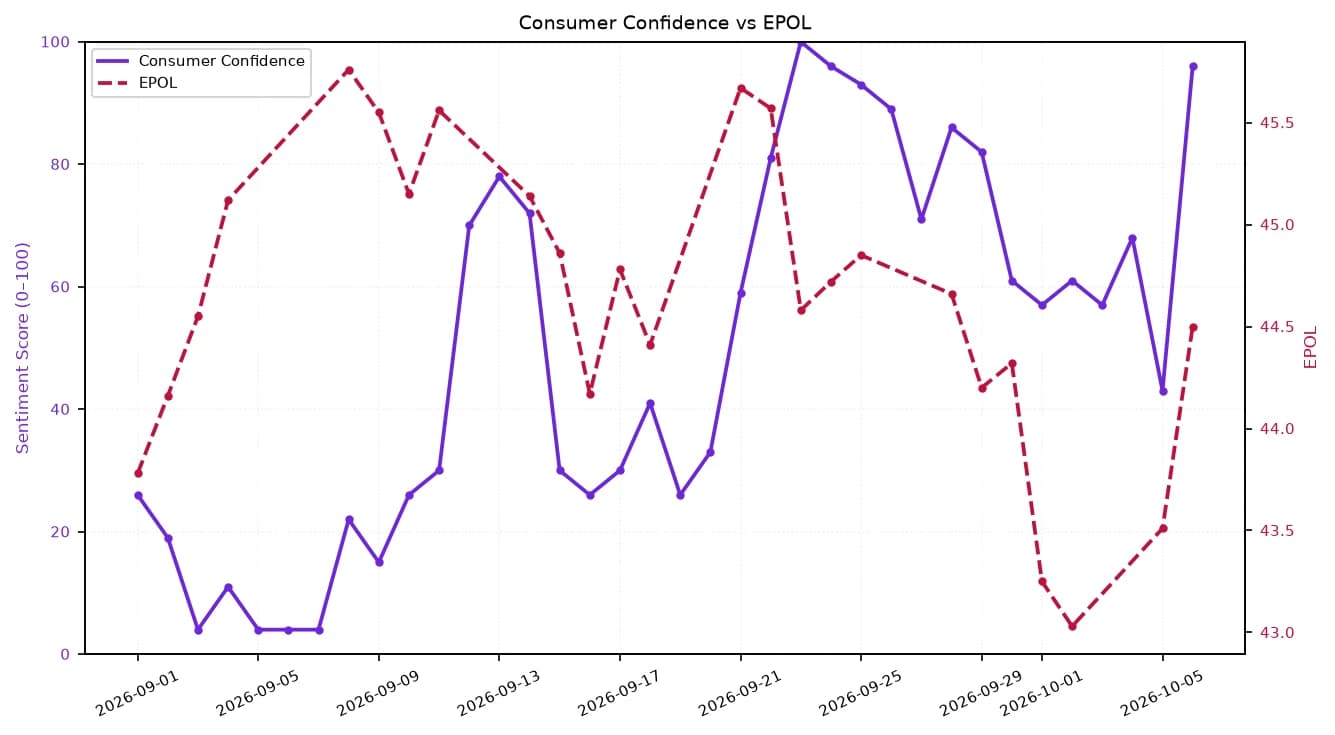
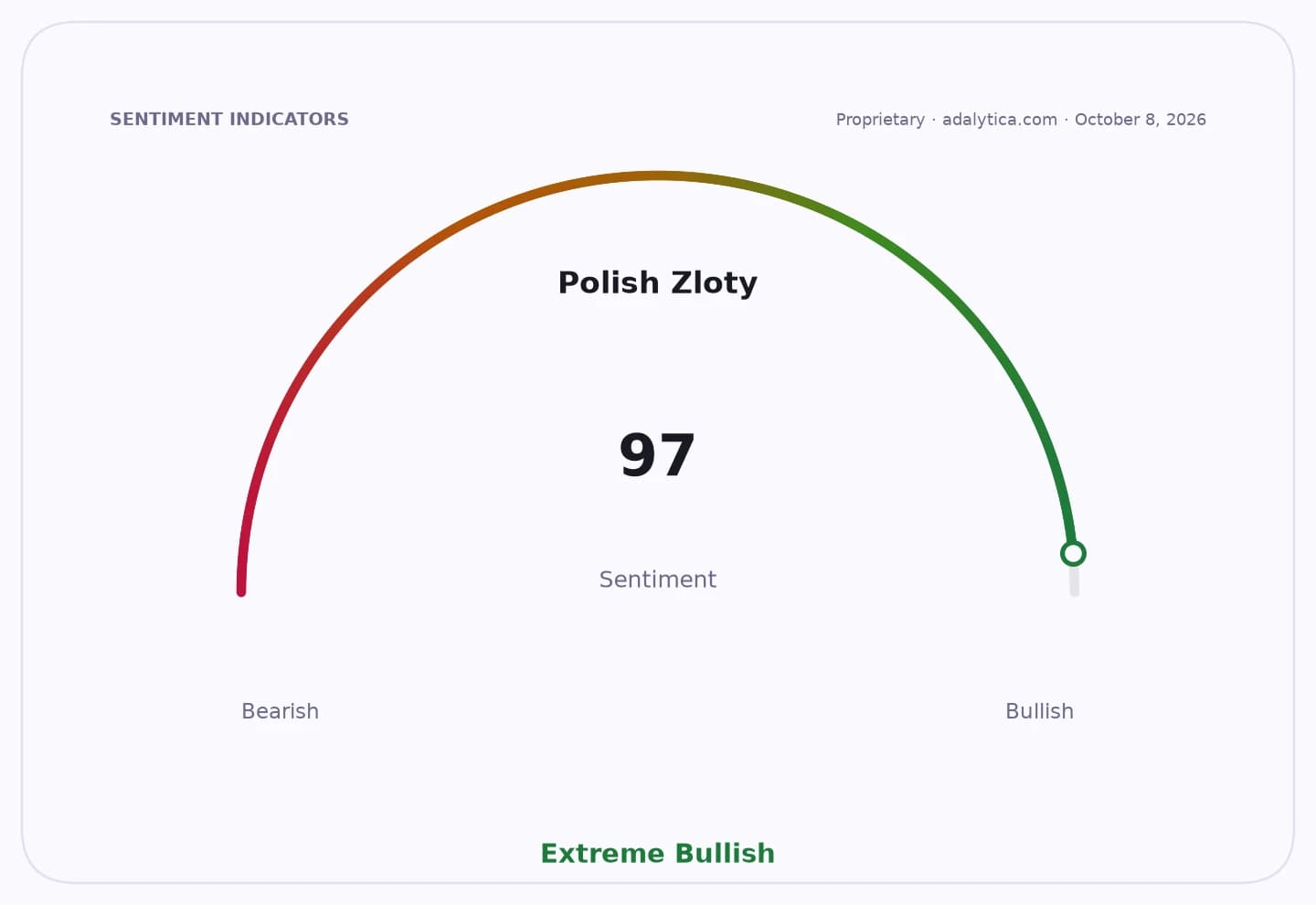
That is why the zloty is at the center of attention now. The currency is the transmission mechanism for Poland’s policy trade-off: a firmer zloty helps contain imported inflation, while a weaker one amplifies the problem. Adalytica.com shows trading sentiment on the zloty at an extreme-greed reading of 97, even as awareness remains in fear territory at 28, suggesting investors are paying up for the currency but still treating the broader setup cautiously. The move has gathered pace over the past week, with sentiment up 19 points, underscoring how quickly macro expectations can reprice around inflation and rates.
The broader macro message matters beyond Poland. Higher-for-longer rates support the currency, but they also keep pressure on domestic demand, credit growth and government financing conditions. That is an uncomfortable mix for policymakers, yet it is often the price of keeping inflation expectations anchored. For global investors, it also means Polish assets are likely to trade more like a high-beta inflation story than a clean growth recovery until the central bank can credibly say price pressures are fading.
Polish Zloty — 30-day sentimentadalytica.com
Explore this data interactively — full history, time series and cross-market comparisons.Open AlphaPulse
The market is therefore likely to keep rewarding duration discipline and punishing premature optimism. If inflation stays elevated, the National Bank of Poland may have little choice but to hold rates steady longer than the market would like. In that environment, the zloty becomes the cleanest way to express the thesis: stable or firmer if policy stays tight, vulnerable if officials blink.
| Entity | Gains | Losses |
|---|---|---|
| Polish zloty | ▲Rate support | ▼Easier-policy hopes |
| National Bank of Poland | ▲Credibility | ▼Growth-sensitive borrowers |
| Polish bondholders | ▲Higher carry | ▼Duration risk |
| Polish consumers and firms | ▲Currency stability | ▼Higher financing costs |