Poland’s households are turning markedly more cautious, with nearly 34% of people now expecting their financial position to deteriorate over the next three months, a sharp rise that matters because consumer confidence is the engine of spending, credit demand and, ultimately, growth.
Poland households turn more cautious in OGB poll
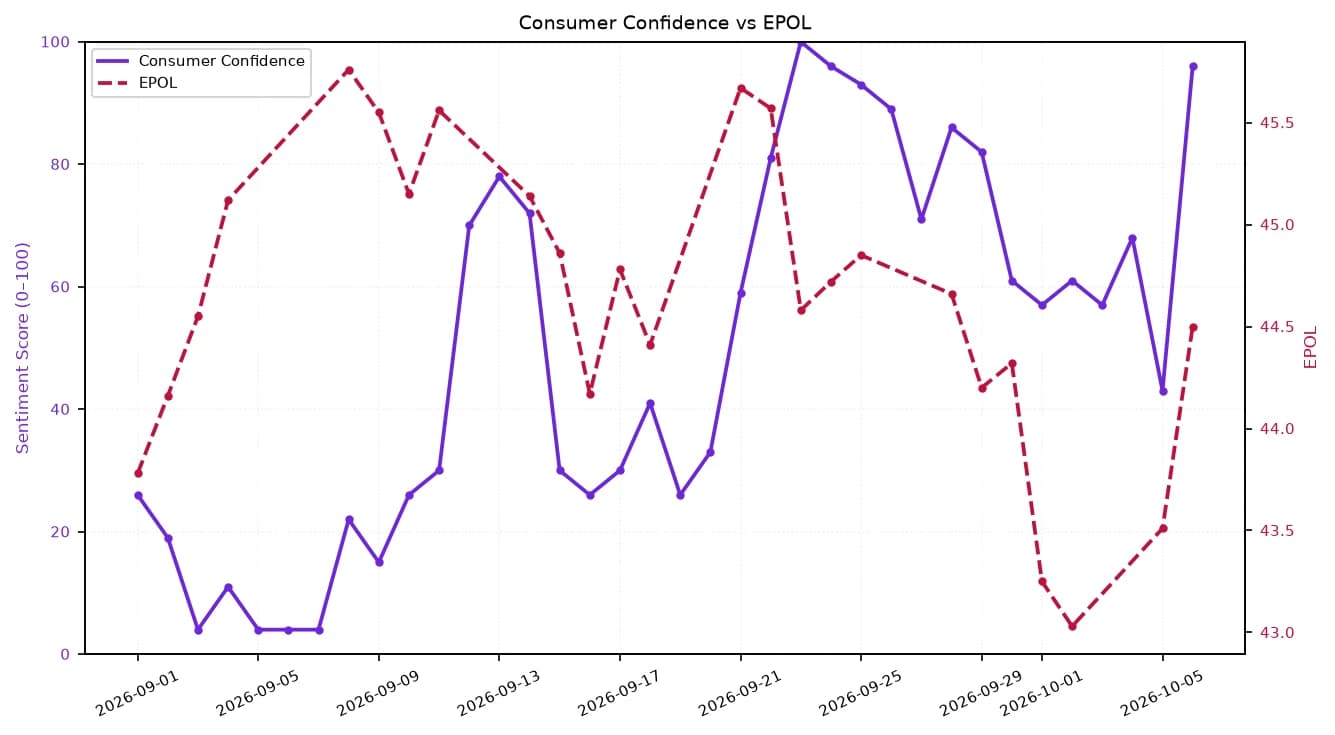
The latest OGB poll shows 33.8% of Poles forecasting a weaker financial position, up 10.5 percentage points from August, while only 14.7% see an improvement. That gap widened to 19.1 points from 8 points a month earlier, a sign that anxiety is spreading faster than optimism can recover.
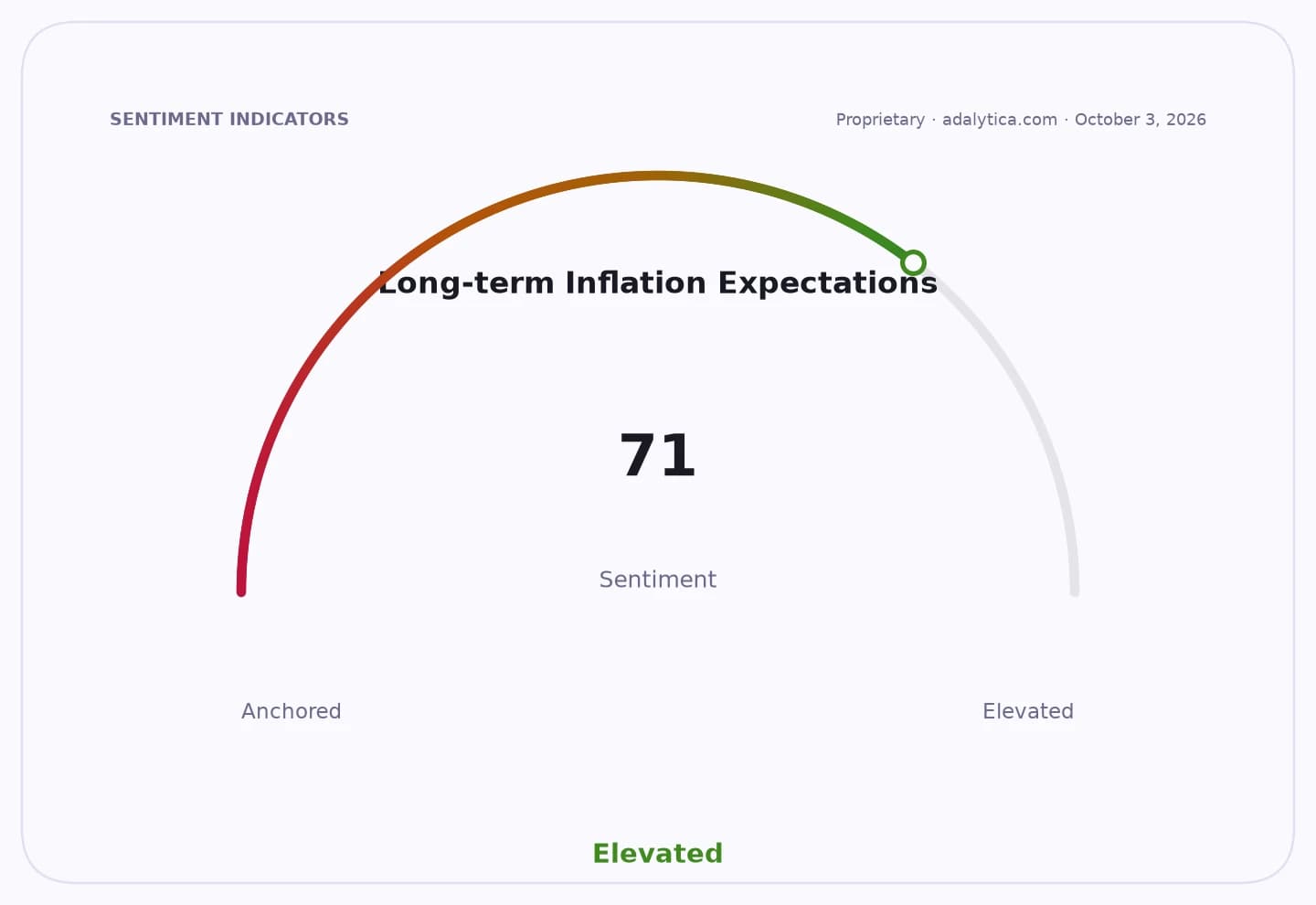
Sentiment IndicatorsⓘProprietary · adalytica.com · October 6, 2026
This is a snapshot — live sentiment, awareness and momentum for 130+ markets update continuously in the dashboard.Open AlphaPulse
That shift matters economically because households that feel poorer or less certain tend to delay discretionary purchases, trade down on groceries and durable goods, and avoid taking on new debt. In a country where domestic demand has helped cushion external shocks, a sustained drop in sentiment could hit retailers, consumer lenders and anything tied to private consumption. Rural Poland looks especially exposed: 40.6% of residents there expect their finances to worsen, a reflection of pressure from autumn price increases in electricity, coal and diesel.
For investors, the message is less about one survey than about the direction of travel. Poland is still a fundamentally resilient economy, but sentiment can become self-reinforcing when households start bracing for higher bills and weaker purchasing power. That is why consumer-facing companies, from banks to retailers, deserve closer attention if the pessimism in this poll starts showing up in spending data, loan growth or margins.
There is also a broader regional backdrop here. Poland is living with higher security anxiety as war-related risks near its border with Ukraine remain elevated, and that can feed into household caution even when the labor market is still relatively firm. The point for long-term investors is not to overreact to a single reading, but to watch whether this becomes a persistent drag on consumption or just a brief burst of fear.
For now, the poll is a reminder that confidence can deteriorate faster than balance sheets. Investors should keep Poland on the watchlist, especially consumer stocks and lenders, while waiting to see whether hard data confirms the gloom.
| Entity | Gains | Losses |
|---|---|---|
| Savers and cautious households | ▲Better protection from uncertainty | ▼Miss short-term spending opportunities |
| Retailers and consumer lenders | ▲None immediately | ▼Softer demand and loan growth |
| Energy and fuel consumers | ▲Incentive to conserve | ▼Higher bill pressure |
| Polish exporters | ▲Weaker domestic demand may not matter much | ▼Currency and confidence spillovers |