Marine Le Pen’s inability to get a bank loan for her next campaign is not a dead end, and that matters because it removes one of the biggest financial constraints on France’s far-right leader as she tries to keep the National Rally’s presidential machine fully funded.
France National Rally Financing Risk Persists
Christian Charpy, who heads France’s campaign-finance regulator, said the commission cannot force a bank to lend to a candidate, but “other solutions” exist — including a loan from the party itself, which receives about 15 million euros a year in public funding, or borrowing by the party from private individuals. That gives Le Pen a legal path to financing even if French banks stay on the sidelines, reducing the chance that a lack of credit alone could sideline one of the country’s most potent political brands.
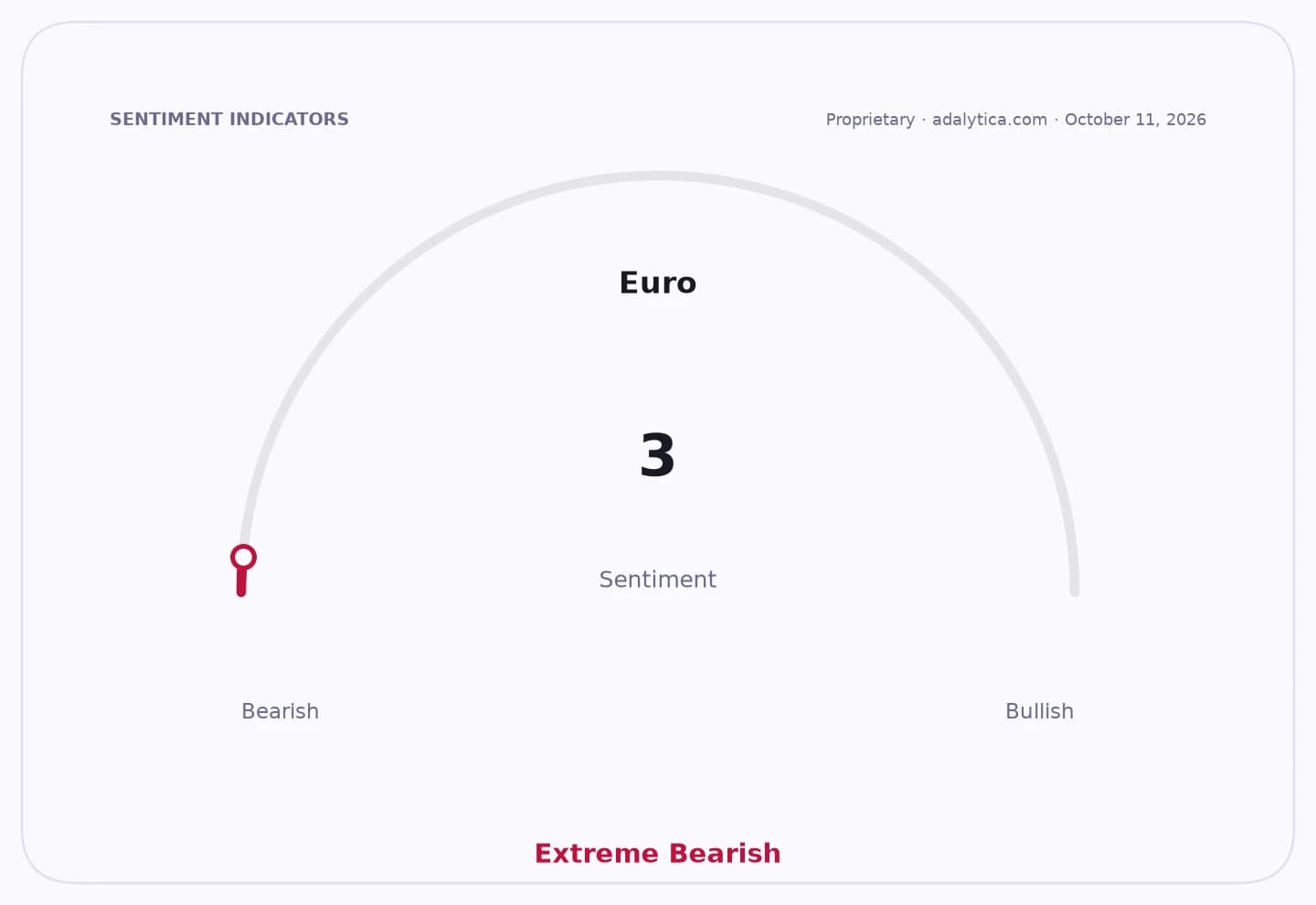
Sentiment IndicatorsⓘProprietary · adalytica.com · October 11, 2026
This is a snapshot — live sentiment, awareness and momentum for 130+ markets update continuously in the dashboard.Open AlphaPulse
For investors, the significance is not the campaign bookkeeping. It is that political risk in France remains tied to a durable anti-establishment bloc that is likely to keep shaping fiscal policy, the euro and domestic asset prices. The National Rally’s access to campaign cash helps preserve Le Pen’s electoral relevance at a time when France is already wrestling with a budget crisis, tighter financing conditions and rising investor sensitivity to sovereign risk. A party that can keep campaigning can keep pressuring the mainstream on taxes, spending and deficit discipline.
That is especially important because France’s political calendar is increasingly crowded, with national and local contests forcing the same pool of supporters and lenders to be tapped repeatedly. Charpy noted that overlapping elections in 2022, 2024, 2026 and 2027 can make the use of the same private lenders “quite complicated,” underscoring how political financing is becoming harder to manage even as the stakes rise.
The watchdog is also adapting to a newer and more volatile campaign landscape, where influencers and social media can blur the line between political advocacy and campaign spending. It said paid promotional content for a candidate is off-limits once the pre-election advertising ban begins, but influencer appearances at rallies or press conferences may need to be booked into campaign accounts. That creates another compliance risk for parties already under pressure to prove every euro was properly spent.
For markets, the bigger takeaway is that France’s political fragmentation is not going away, and neither is the risk premium attached to it. The National Rally remains a credible contender, the financing constraints are manageable, and the probability of continued policy uncertainty stays high. That argues for caution on French sovereigns, on banks exposed to domestic political volatility, and on euro-sensitive assets that can be jolted by any fresh election shock.
My view: investors should not mistake a funding obstacle for a political one. Le Pen appears to have multiple financing routes, and that means the market still has to price in her party’s staying power. In a country where fiscal stress is already front and center, that is the real risk.
| Entity | Gains | Losses |
|---|---|---|
| National Rally | ▲Campaign funding options | ▼Bank-loan dependence |
| Marine Le Pen | ▲Electoral continuity | ▼Financing pressure |
| French banks | ▲Limited political exposure | ▼Reputational scrutiny |
| French sovereign assets | ▲None | ▼Higher political-risk premium |