France’s debt stress is no longer a local budget problem — it is becoming a test of where global capital goes when confidence in Europe’s big sovereign borrowers starts to fray. French bond yields have climbed to nearly 5%, debt service is projected to top €90 billion next year, and Goldman Sachs says Italy could be the next flashpoint if contagion spreads through the euro zone.
France debt stress lifts Treasuries and dollar

That matters because sovereign debt is the plumbing of the financial system. When one major issuer’s borrowing costs jump, it forces investors to reprice everyone else’s risk, from Rome to Washington. It also leaves policymakers with fewer easy options: France is being pushed toward budget cuts at the same time the European Central Bank is under pressure to keep markets orderly. For long-term investors, that combination usually means higher volatility, tighter financial conditions and more demand for the safest liquid assets.
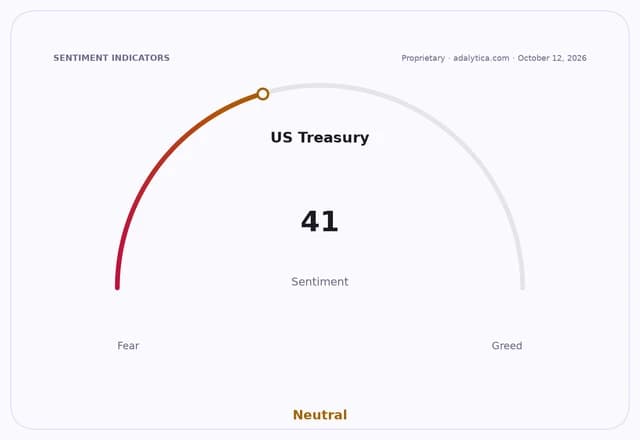
The market response is already showing up in U.S. assets. The 10-year Treasury yield has been hovering around 5.2%, reflecting a world in which government debt is getting more expensive almost everywhere. Yet even with yields elevated, Treasury bonds remain the benchmark refuge. The iShares 20+ Year Treasury Bond ETF, TLT, has fallen to about $78, with its 50-day moving average well above the current price and its RSI readings deep in oversold territory — a sign of heavy selling pressure, not indifference. Still, in a genuine flight to safety, U.S. government debt and the dollar usually remain the first ports of call.
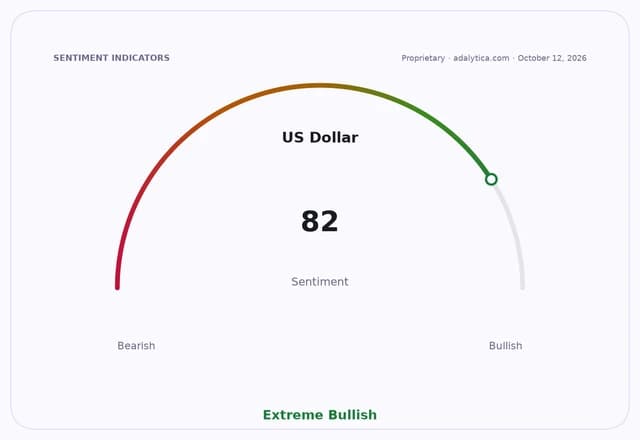
That dynamic helps explain why the dollar is strengthening. The Adalytica.com U.S. Dollar Trade Signals snapshot shows sentiment in “Greed” territory, with awareness still neutral, suggesting investors are leaning into the greenback as stress builds abroad. The ETF that tracks the dollar, UUP, has climbed to about $29.13 and sits above both its 50-day and 200-day moving averages. In plain English: money is seeking the deepest, most liquid market on the planet.
The bigger story is that France is exposing a structural problem in global debt markets. Years of large deficits and rising borrowing costs are colliding with slower growth and tighter monetary conditions. If France is forced into meaningful spending cuts, that could drag on European growth. If the ECB steps in too aggressively, it risks encouraging more fiscal complacency elsewhere. And if investors start treating Italy as the next weak link, Europe’s bond market could face another round of fragmentation fears just as global yields are already elevated.
For investors, the lesson is not to chase the drama — it is to respect the hierarchy of safety. When sovereign risk rises in Europe, U.S. Treasuries, the dollar and highly liquid reserve assets tend to benefit, even if only temporarily. That does not mean Treasury prices are set for a straight-line rebound, especially with yields still near cyclical highs, but it does mean the U.S. remains the market’s cleanest fallback.
The next few weeks will show whether France can stabilize its budget without setting off a wider repricing across Europe. If it cannot, the case for the dollar and Treasuries as global backstops gets stronger. For patient investors, that makes both worth watching closely — not as trades, but as core defensive holdings when the world’s debt map starts shifting underfoot.
| Entity | Gains | Losses |
|---|---|---|
| U.S. Treasuries | ▲Safe-haven demand | ▼Price pressure from high yields |
| U.S. dollar | ▲Flight-to-safety inflows | ▼Export competitiveness |
| France | ▲Less likely to be shut out of markets | ▼Higher debt-service costs |
| Italy / Eurozone periphery | ▲Lower borrowing costs if contagion contained | ▼Contagion risk, wider spreads |