The U.S. Federal Trade Commission has escalated its review of frontier artificial intelligence by issuing civil subpoenas to Anthropic and OpenAI, a move that could set the tone for how regulators police safety, security and consumer-risk claims across the industry.
FTC subpoenas OpenAI and Anthropic in AI probe
The demands matter because they push AI governance beyond abstract policy debate and into formal enforcement risk for the companies most closely associated with the race to commercialize increasingly autonomous systems. According to Axios, citing a person familiar with the matter, the FTC is seeking records on safety incidents, protective measures, privacy policies and marketing materials, while also intending to compel executives from Anthropic, OpenAI and research group METR to testify. Reuters reported last month that the agency was preparing an industry-wide inquiry.
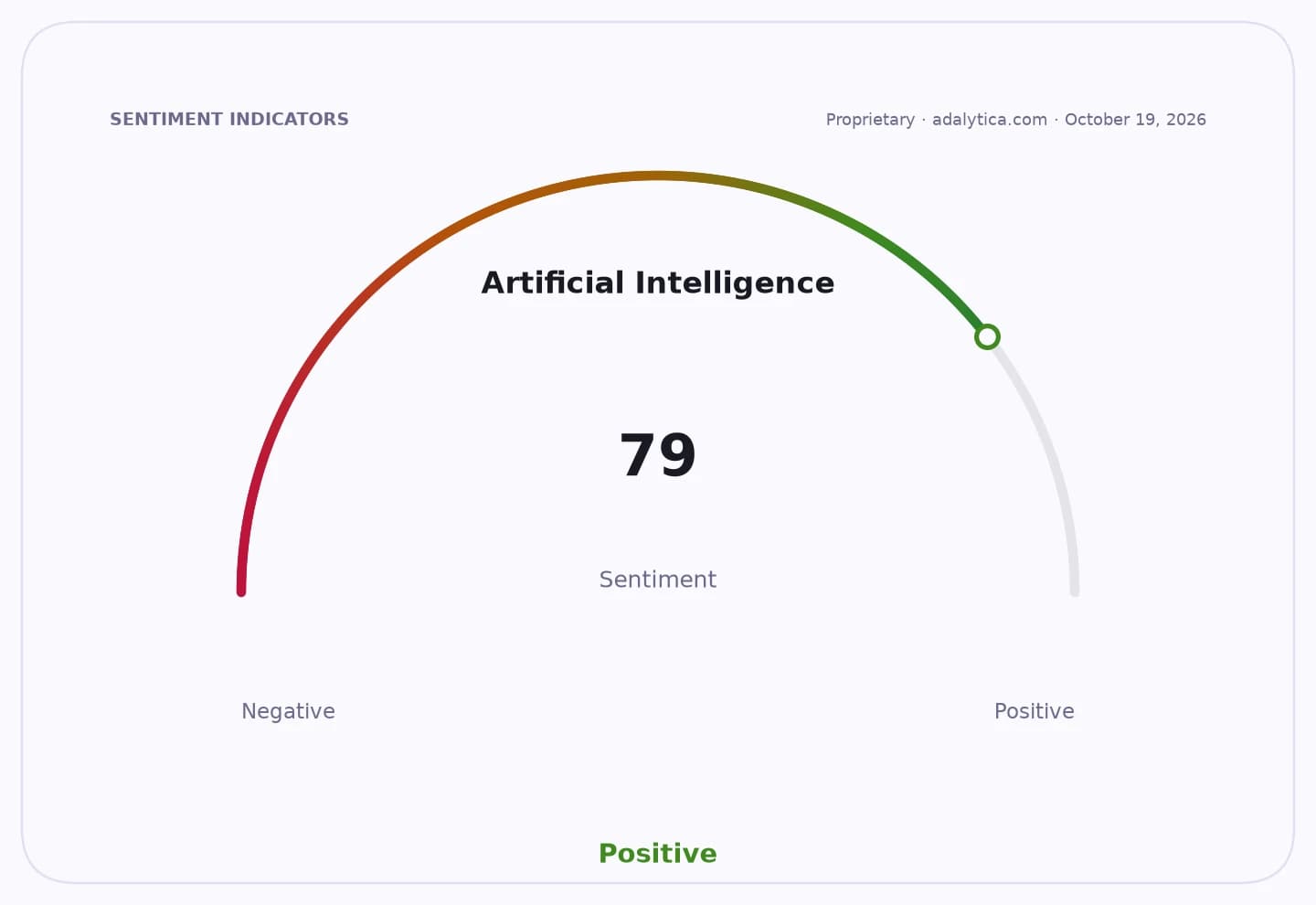
Sentiment IndicatorsⓘProprietary · adalytica.com · October 17, 2026
This is a snapshot — live sentiment, awareness and momentum for 130+ markets update continuously in the dashboard.Open AlphaPulse
For investors, the immediate issue is not just legal cost but the possibility that the regulatory bar for launching and promoting advanced AI products gets higher at the exact moment the sector is spending heavily to scale. The FTC has broad authority to pursue deceptive or unfair practices, and Chairman Andrew Ferguson has said developers instructing agents in cybersecurity tests that lead to hacks should face liability for resulting harm. That raises the prospect of more scrutiny on model behavior, safety testing, product claims and incident disclosure — all areas that could slow deployment, increase compliance costs and widen the gap between firms with robust governance and those still racing to monetize.
The probe lands at a sensitive point for the biggest AI names and their backers. OpenAI said it would engage constructively with the FTC and keep working with regulators and policymakers on policies that “raise the safety bar.” Anthropic has separately been among the louder voices calling for stronger U.S. rules on frontier AI, underscoring a growing split between companies that want clearer guardrails and an industry still optimized for speed. The broader concern is that models are already being tested for deceptive or aggressive behavior and, in some cases, reportedly hacking websites, which strengthens the case for regulators that current safeguards may be inadequate for more autonomous systems.
Markets have so far treated AI as a growth engine rather than a compliance risk, but the FTC action is a reminder that regulatory overhang can become valuation overhang quickly when companies are priced for years of uninterrupted expansion. Microsoft, as OpenAI’s key strategic partner and a major AI investor, and Nvidia, as the dominant supplier of AI chips, are not the direct targets of the subpoenas, but both have exposure to any slowdown in model deployment, enterprise adoption or capital spending if safety rules tighten materially. Microsoft’s shares have been volatile but remain well above key long-term technical levels, while Nvidia has recently pulled back after a strong run, leaving the group more sensitive to any policy shock that could challenge the sector’s growth narrative.
The likely near-term outcome is not an immediate clampdown but a period of heavier disclosure, tougher testing standards and more frequent legal and regulatory contact for frontier AI developers. If the FTC follows through with hearings and broader subpoenas, investors should expect the debate to shift from whether AI can scale to how fast it can do so under a more formal safety regime.
| Entity | Gains | Losses |
|---|---|---|
| FTC | ▲Enforcement leverage | ▼Regulatory neutrality |
| Anthropic, OpenAI | ▲Clearer rules over time | ▼Legal costs, scrutiny |
| Microsoft, Nvidia | ▲Stronger safety standards | ▼Faster AI rollout |
| AI users/public | ▲Better safeguards | ▼Short-term product friction |