New York’s utility regulator has put the state’s power companies on notice: if they are using artificial intelligence anywhere in their operations, they now have to say exactly where, how and under what controls within 60 days.
New York PSC asks utilities to disclose AI use
That matters because utilities are among the most sensitive adopters of AI in the economy. These companies run critical infrastructure, manage customer billing, inspect facilities and maintain grid reliability. If AI is being used to automate routine work, support predictive maintenance or flag safety issues, the state wants to know whether the technology is improving resilience or quietly introducing new operational and cyber risk into systems that millions of customers depend on.
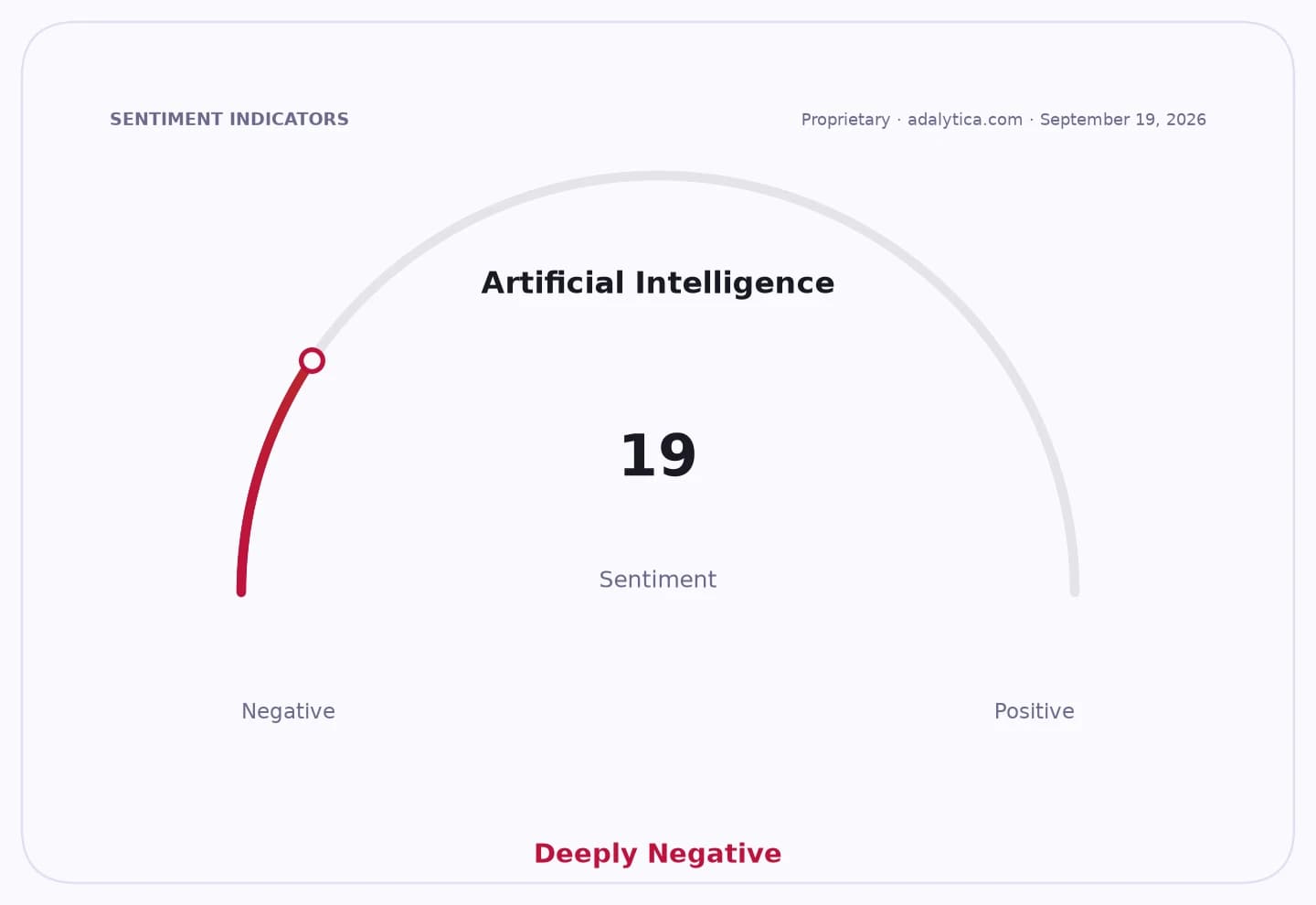
Sentiment IndicatorsⓘProprietary · adalytica.com · September 19, 2026
This is a snapshot — live sentiment, awareness and momentum for 130+ markets update continuously in the dashboard.Open AlphaPulse
The Public Service Commission’s inquiry is a direct response to the same issues rattling the broader AI market: hallucinations, algorithmic bias, privacy exposure, misconfiguration errors and vulnerability to cyberattacks. In a sector where small mistakes can cascade into outages, regulatory penalties or public-safety incidents, the bar for AI deployment is much higher than in consumer software. The commission is not just asking utilities to list tools; it is demanding their policies, procedures and protocols, signaling that disclosure could be the first step toward a tougher compliance regime.
For investors, the story is bigger than one state questionnaire. It is another sign that AI adoption is moving from the hype phase into the governance phase, and that utilities will increasingly face scrutiny over whether they are using the technology to cut costs without weakening reliability. That raises the stakes for regulated names such as National Grid and Duke Energy, along with Southern Co., where the promise of operational efficiency has to be weighed against the possibility of slower approvals, added compliance expense and higher reputational risk if something goes wrong.
The market also needs to think beyond the utilities themselves. If regulators begin asking for detailed AI inventories, the same framework could spread to other critical-infrastructure sectors, including water, transportation and telecom. That would create a second-order opportunity for vendors selling AI risk management, cybersecurity, model monitoring and compliance software — the picks-and-shovels layer of the AI boom that benefits even if enterprise enthusiasm for raw deployment cools.
National Grid’s own filings show the company already flags AI as both a threat and an opportunity, a reminder that utilities are trying to modernize while regulators are moving to box in the risk. The next catalyst is whether the PSC uses the disclosures to impose formal protections or operating limits. If it does, this will not be a one-off transparency exercise. It will be a blueprint for how the next wave of AI regulation reaches the real economy.
For investors, the takeaway is clear: the winners are the firms that make AI safer, auditable and easier to govern, not just the ones that deploy it fastest. That is where the asymmetric opportunity sits now.
| Entity | Gains | Losses |
|---|---|---|
| AI governance and cybersecurity vendors | ▲Higher demand for monitoring tools | ▼Slower rollout if budgets tighten |
| Regulated utilities | ▲Clearer rules, lower blind risk | ▼More compliance burden |
| National Grid, Duke Energy, Southern Co. | ▲Chance to prove disciplined AI use | ▼Regulatory scrutiny, disclosure costs |
| Consumers and regulators | ▲Better visibility into critical infrastructure | ▼None if compliance adds delay |