London stocks ended higher on Friday after softer-than-expected US employment data cooled expectations for another near-term Federal Reserve rate increase, helping markets steady after a bruising week of rising bond yields and currency volatility.
FTSE 100 Rises as US Jobs Data Eases Rate Fears
The FTSE 100 rose 0.32% to 10,461.95, but still fell 2.2% over the week, its worst weekly drop since April, as investors grappled with a sharp selloff in government bonds that pushed yields higher and tightened financial conditions across markets. The catalyst for Friday’s rebound was US labour data that came in below forecasts, reinforcing the view that the Fed may have less urgency to tighten again in the immediate term.
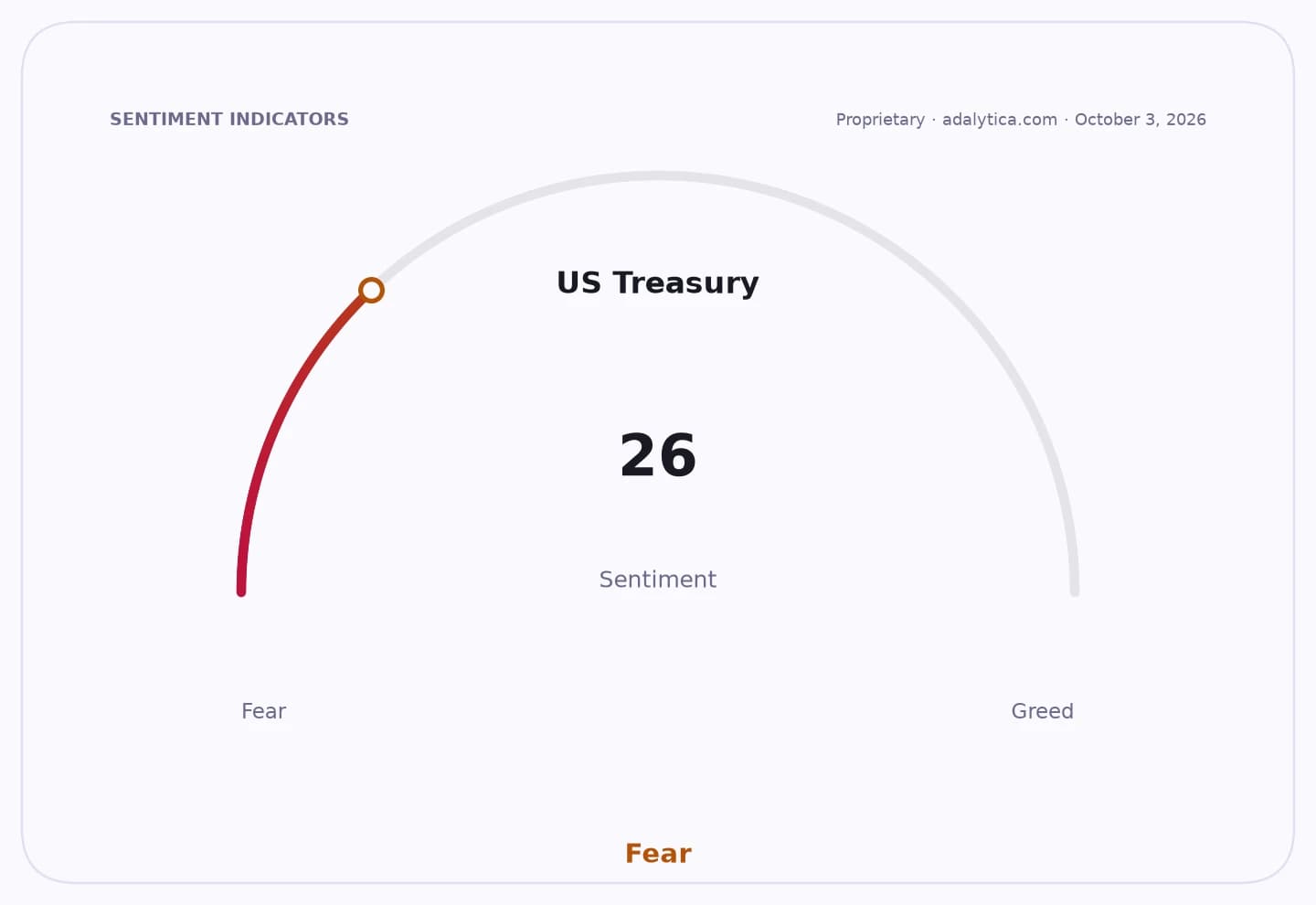
Sentiment IndicatorsⓘProprietary · adalytica.com · October 3, 2026
This is a snapshot — live sentiment, awareness and momentum for 130+ markets update continuously in the dashboard.Open AlphaPulse
That matters well beyond London. Higher-for-longer rate expectations have been the main pressure point for global risk assets this week, lifting Treasury yields, steepening the discount rate on future earnings and hitting rate-sensitive sectors hardest. The 10-year UK gilt yield, which touched its highest since 2007 on Thursday, eased to 5.3624%, offering some relief to equities that had been caught in the bond-market rout. In the US, Treasury yields also backed off, with the 10-year yield slipping to 5.24% in the latest trading data, a sign that investors were trimming the odds of an aggressive Fed move.
The relief in rates supported housebuilders, which are among the most sensitive parts of the market to borrowing costs, after the group had fallen about 5% on Thursday. But the banking sector remained under pressure, with the UK bank index recording its steepest weekly fall since April as investors weighed the damage from higher yields, tighter credit conditions and the possibility that central banks will still need to keep policy restrictive for longer than hoped.
The FTSE’s late-week gain also obscured a broader shift in market leadership. Defensive and commodity-linked names held up better than domestic financials and consumer-credit plays, showing that investors continue to favour companies with stronger pricing power, overseas earnings or exposure to elevated commodity prices. Glencore rose 3% after flagging 2026 marketing earnings above $5 billion, while J D Wetherspoon jumped 12.5% on stronger sales since July, though it warned that rising costs could still force some pub closures. On the downside, online trading group IG Group sank 22.6% after cutting its 2026 revenue growth outlook, with Plus500 and CMC Markets also lower, underscoring how sensitive leveraged retail activity remains to weaker market conditions.
For investors, the key takeaway is that Friday’s bounce was less a sign of renewed confidence than a reprieve from an abrupt repricing of global interest-rate expectations. If incoming US data continue to soften, equity markets may get more room to stabilise, especially in rate-sensitive sectors. But if inflation stays sticky or bond yields resume rising, the week’s pattern — a small equity rebound against a still-hostile rates backdrop — is likely to persist.
| Entity | Gains | Losses |
|---|---|---|
| FTSE 100 / UK equities | ▲Relief from Fed hike fears | ▼Weekly drawdown from bond volatility |
| Housebuilders | ▲Lower yield pressure | ▼Higher mortgage-rate sensitivity |
| Banks | ▲Wider-rate environment in theory | ▼Weekly underperformance, credit-risk concerns |
| IG Group / leveraged trading peers | ▲None from the session | ▼Weaker revenue outlook, softer trading conditions |