A further Federal Reserve rate increase in December would tighten financial conditions at the margin, but UBS says the bigger risk for investors is not an imminent recession — it is a market that has to absorb higher borrowing costs even as Treasury yields stay elevated.
UBS Says One More Fed Hike Could Lift Borrowing Costs
The wealth manager’s call for one more hike lands after a sharp jump in bond yields and a policy backdrop that has turned more hawkish again. The 10-year Treasury yield recently touched 5.34%, its highest intraday level since 2002, reflecting stronger economic data, higher energy prices and the market’s renewed belief that the Fed is not done yet. Fed funds now sit in the 3.75% to 4.0% range after September’s quarter-point increase, and UBS said resilient growth and corporate earnings should be enough to keep equities standing even if policy tightens modestly further.
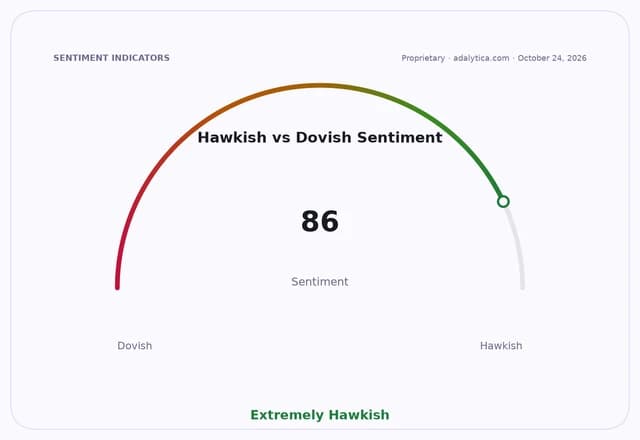
Sentiment IndicatorsⓘProprietary · adalytica.com · October 24, 2026
This is a snapshot — live sentiment, awareness and momentum for 130+ markets update continuously in the dashboard.Open AlphaPulse
That is the key investor question: whether the latest move in rates marks the start of a broader rerating in risk assets or simply a higher terminal level that markets can digest. UBS argues the latter. It points to the three-month annualized core personal consumption expenditures measure falling to 2.05% in August, its lowest level since July 2024, and to September payroll growth of just 29,000, a sign that labor demand is cooling. Those data support the case for a limited final hike rather than an aggressive new tightening cycle.
The bond market, however, is already doing much of the work for the Fed. Treasury yields near multi-decade highs are pushing up discount rates across equities, pressure that is most visible in longer-duration assets such as growth stocks and rate-sensitive sectors including real estate and utilities. The 10-year yield above 5% also raises financing costs for companies rolling over debt and for consumers facing higher mortgage and credit-card rates, even if the policy rate itself rises only slightly more.
UBS said the historical record suggests U.S. downturns typically begin at least two years after the Fed starts raising rates, a reminder that the lag from monetary tightening to recession is long and uneven. That gives the equity bull case some room: if growth holds and inflation cools without a sharp demand shock, higher rates can be absorbed. UBS also forecasts S&P 500 earnings growth of 25% in 2026 and 14% in 2027, a profit backdrop that would cushion valuations if borrowing costs edge higher again.
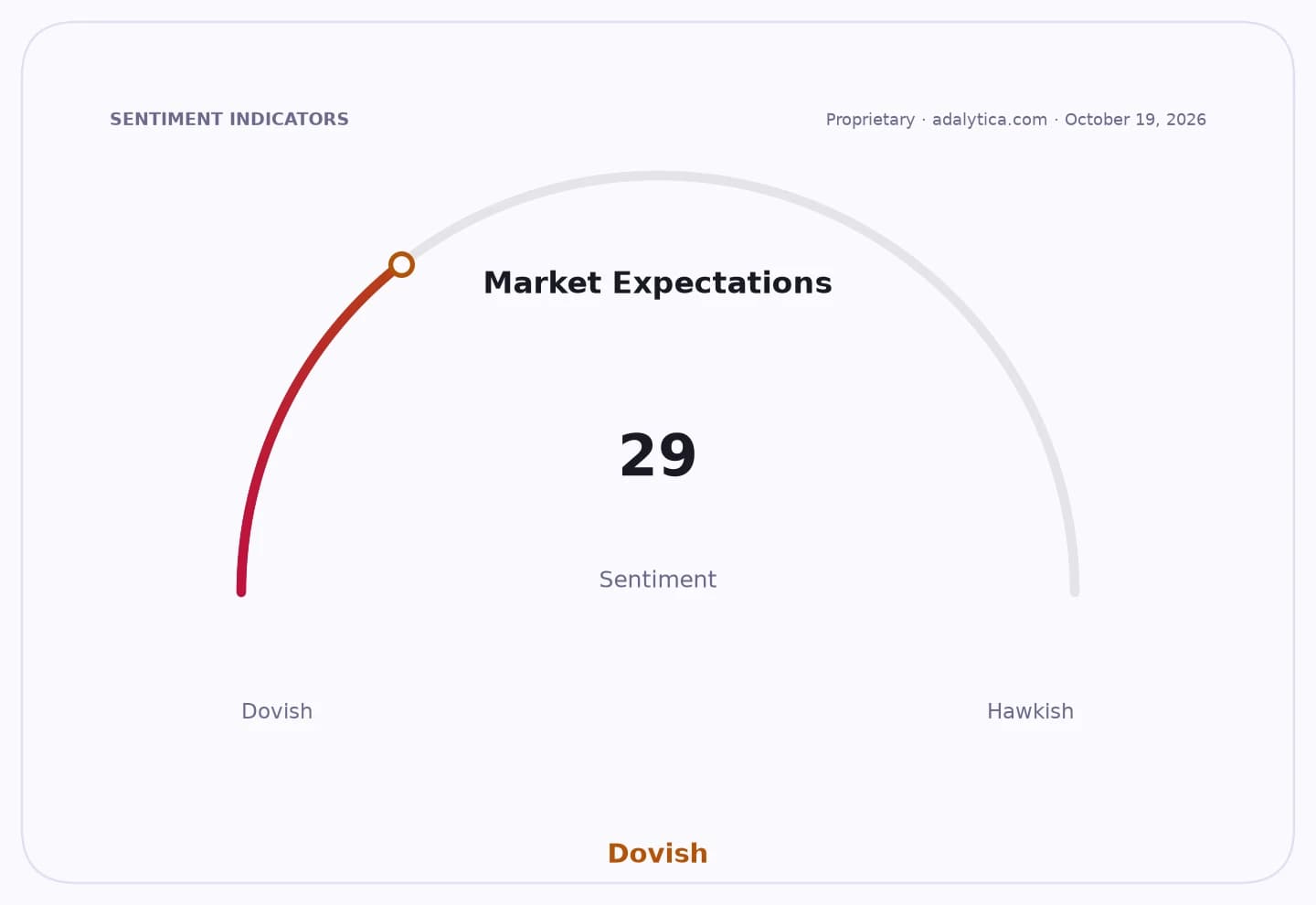
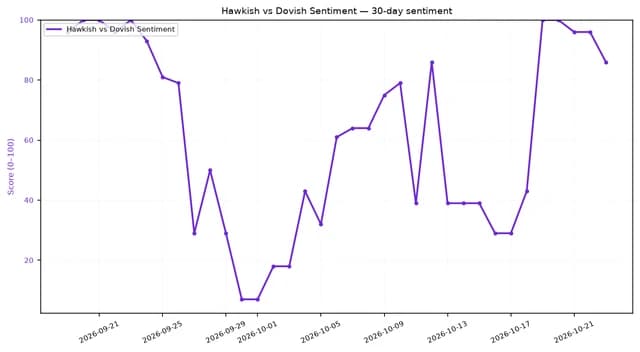
Still, the bear case is straightforward. If inflation proves sticky, the Fed may be forced to hold rates higher for longer, leaving bonds vulnerable and equity multiples under pressure. The latest move in rates has already revived concern in markets, with one gauge of hawkish-vs-dovish Fed sentiment from Adalytica showing extreme hawkish positioning, while Treasury-bond signals point to strong conviction but limited awareness — a sign investors are increasingly focused on policy risk, even if the macro path is still unclear.
For portfolios, the implication is less about a dramatic regime change than about selectivity. Companies with strong pricing power, low refinancing needs and durable earnings growth are better positioned than long-duration assets dependent on low rates. Investors will now watch the next inflation and labor reports closely for confirmation that December can be the last hike — or the start of a more persistent tightening bias.
| Entity | Gains | Losses |
|---|---|---|
| Banks and cash-rich lenders | ▲Higher net interest income | ▼Borrowers facing dearer credit |
| Large-cap equities with strong earnings | ▲Profit growth cushions valuations | ▼Long-duration growth stocks |
| Treasury bondholders | ▲Higher carry if rates stay elevated | ▼Price risk from rising yields |
| Fed hawks | ▲Inflation credibility | ▼Rate-sensitive sectors |