The U.S. government’s debt burden is again in focus as national borrowing surges to a record, with the market now pricing that strain through a 10-year Treasury yield hovering just above 5%.
U.S. debt surge lifts Treasury yields and volatility

That matters because higher debt levels raise the government’s financing needs at the same time it is paying more to borrow. The combination can crowd out other spending, keep deficits elevated and force investors to demand a bigger premium to hold U.S. debt.
Sentiment IndicatorsⓘProprietary · adalytica.com · October 24, 2026
This is a snapshot — live sentiment, awareness and momentum for 130+ markets update continuously in the dashboard.Open AlphaPulse

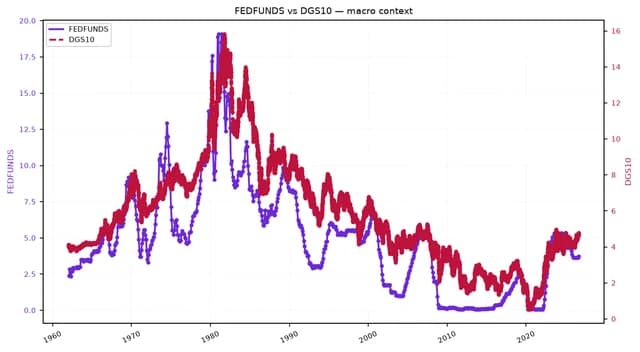
Recent market action shows the pressure is already visible. The 10-year Treasury yield ended the latest session at 4.96% before a forecast for 5.006%, while the federal funds rate is projected at 3.726% next month, leaving short-term policy still restrictive and long-term funding costs elevated.
Bond funds have responded. The iShares 20+ Year Treasury Bond ETF, TLT, has bounced to 81.34 after hitting 79.46 on Oct. 19, but it remains below its 200-day moving average of 83.31 and its recent strength has pushed its RSI above 80, a level traders often read as stretched. The iShares 7-10 Year Treasury Bond ETF, IEF, closed at 91.05, above its 50-day average of 90.78 but still under its 200-day average of 92.57.
Credit markets are also flashing caution. The high-yield spread widened to 3.40 percentage points on Oct. 22 from 2.95 percentage points two weeks earlier, a sign investors are still demanding more compensation for risk even as they stay selective on lower-rated borrowers.
The broader equity market is feeling the strain, too. The SPDR S&P 500 ETF Trust, SPY, fell to 759.97 on Oct. 23 from 773.09 two days earlier, while Adalytica’s S&P 500 trade signals snapshot showed “Extreme Fear” with sentiment at 0.0 and a 30-day drop of 90 points. That points to investors reassessing risk as higher rates and heavier debt issuance collide.
For viewers weighing the poll question, the issue is not just abstract fiscal alarm. The debt load matters because it can keep Treasury supply heavy, borrowing costs sticky and market volatility elevated, especially if Washington does not slow the pace of deficit growth.
The next catalyst is whether policymakers offer any credible deficit-reduction path before Treasury issuance and rates move even higher.
| Entity | Gains | Losses |
|---|---|---|
| U.S. Treasury | ▲More financing flexibility | ▼Higher interest expense |
| Bond investors | ▲Higher yields | ▼Price volatility |
| Taxpayers | ▲— | ▼Bigger long-term debt service burden |
| U.S. equities | ▲— | ▼Risk from sticky rates |