U.S. financial shares have fallen to their weakest level in three months as hotter inflation data and sticky Fed tightening expectations force investors to rethink the outlook for bank earnings, credit demand and bond-market volatility.
U.S. Financial Stocks Hit 3-Month Low

The sector slump is showing up in exchange-traded funds and bank stocks alike. The Financial Select Sector SPDR Fund, XLF, slipped to 56.04 on Oct. 21, its lowest close in three months, while the SPDR S&P Regional Banking ETF, KRE, and the SPDR S&P Bank ETF, KBE, both traded below recent highs as traders priced in a longer period of elevated borrowing costs.
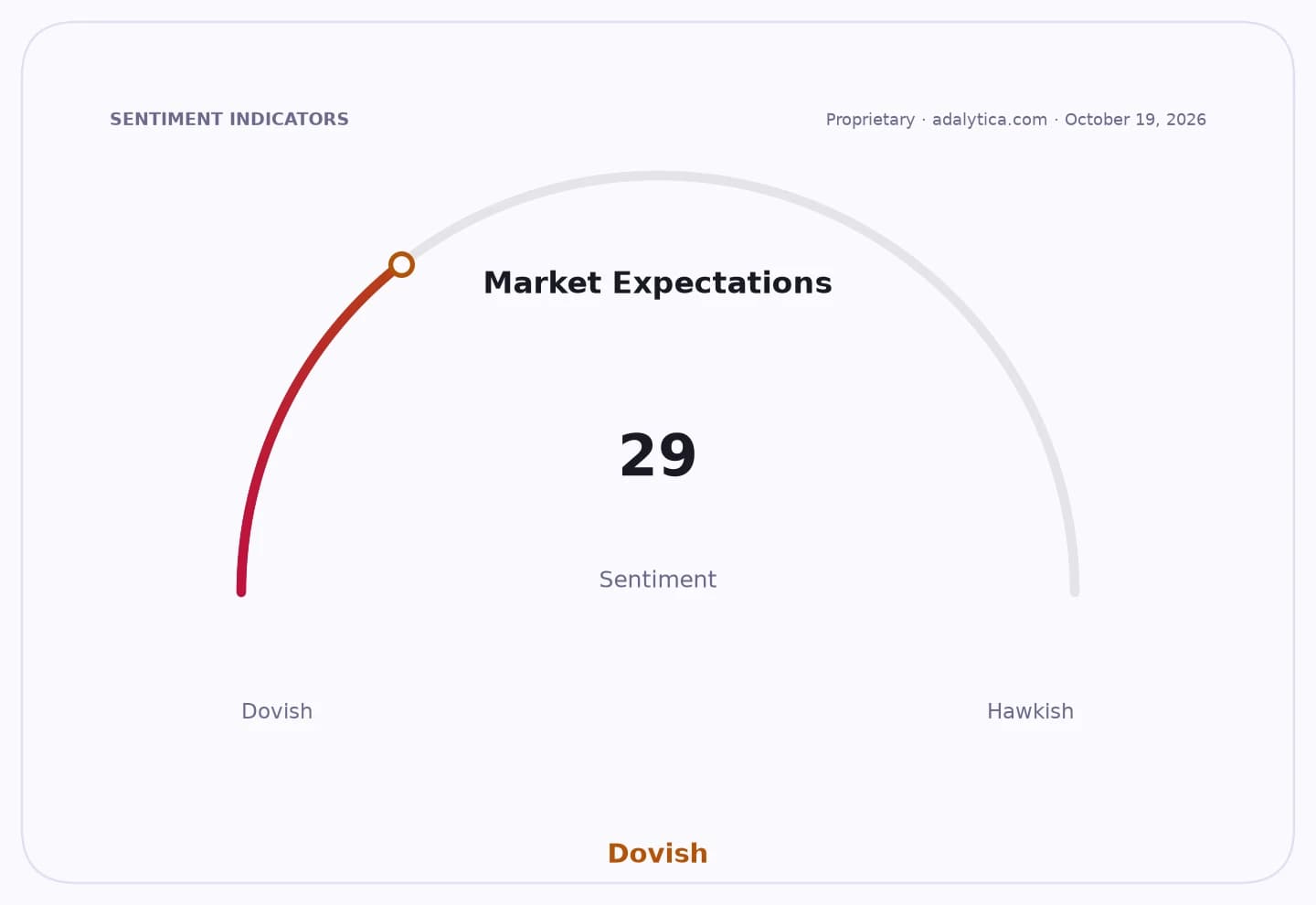
Sentiment IndicatorsⓘProprietary · adalytica.com · October 22, 2026
This is a snapshot — live sentiment, awareness and momentum for 130+ markets update continuously in the dashboard.Open AlphaPulse
The move reflects a classic squeeze on financials: higher-for-longer rates can support net interest income in the near term, but they also raise the risk of weaker loan demand, more expensive deposits and slower economic activity. That matters especially now, as U.S. inflation rose to 3.7% in September and some market participants are looking for more Fed tightening in 2026, including calls for as many as two additional rate hikes.
Technical indicators also show the pressure is not just macro-driven. XLF’s 50-day moving average sits at 56.04, right around the latest close, while its MACD remains below the signal line. KRE’s RSI is 53.8, but the fund is still below its 50-day average of 72.34, underscoring how regional banks have failed to fully recover from the recent drawdown.
Adalytica’s Hawkish vs Dovish Fed Policy Sentiment gauge is flashing 96, or “Extreme Greed,” while its U.S. Treasury bond trade signal reads 85, suggesting the market is positioned for a more hawkish policy path even as the broader S&P 500 signal sits in “Extreme Fear.”
For investors, the immediate issue is that the Fed narrative is now colliding with earnings sensitivity. Bank of America and Citigroup have both flagged rate risk in recent filings, with long-end rates and deposit costs able to move net interest income and capital in either direction. If the Fed stays tighter for longer, larger banks may benefit from wider spreads, but regional lenders remain more exposed to funding pressure, slower loan growth and any deterioration in credit quality.
The next catalyst is the Fed’s communication path and the next round of inflation data, which will determine whether rate-hike expectations intensify further or begin to unwind.
| Entity | Gains | Losses |
|---|---|---|
| Large banks | ▲Wider lending spreads | ▼Slower loan growth risk |
| Regional banks | ▲Higher asset yields | ▼Deposit-cost pressure |
| Fed hawks | ▲Tighter policy case | ▼Dovish easing hopes |
| Borrowers | ▲— | ▼Higher financing costs |