AI shares led a rebound on Wall Street on Monday, even as European markets fell on concerns that weekend protests could force governments to spend more and strain already fragile bond markets.
Nvidia, Nasdaq Rise as Yields Pressure AI Stocks
The recovery mattered because the market’s most powerful growth trade is still carrying the broader index tape. The S&P 500 rose 0.9% and the Nasdaq composite gained 1.7%, while the Dow edged up just 0.2%, underscoring that the bounce was concentrated in technology and AI names rather than the average U.S. stock. Outside those groups, many shares were lower.
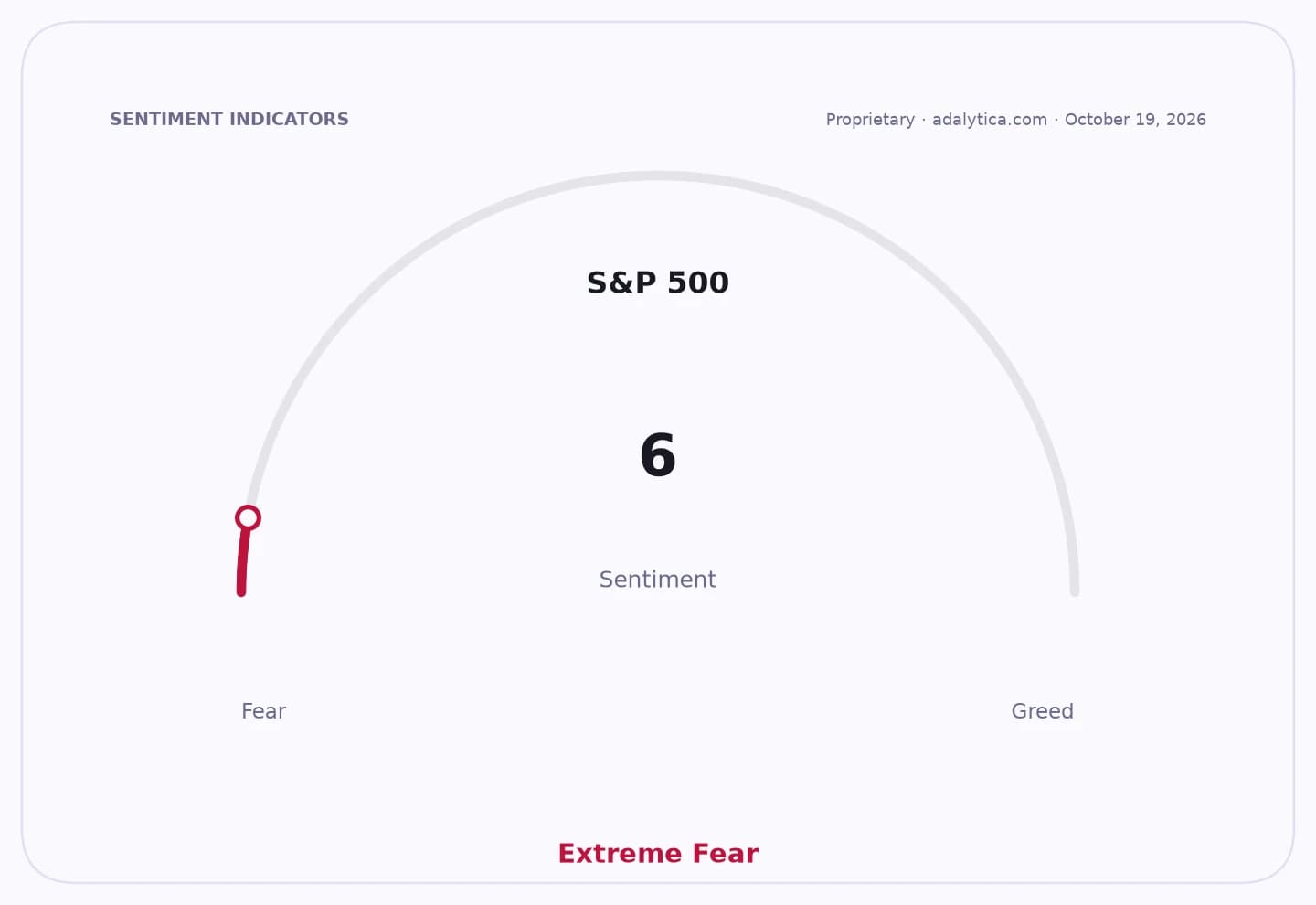
Sentiment IndicatorsⓘProprietary · adalytica.com · October 23, 2026
This is a snapshot — live sentiment, awareness and momentum for 130+ markets update continuously in the dashboard.Open AlphaPulse

The move also showed how tightly investors are now linking equity performance to financing conditions. Last week’s selloff in AI stocks came as borrowing costs climbed, feeding concern that the sector’s capital-intensive buildout in chips and data centers could become harder to fund. Much of that spending has been debt-financed, making elevated Treasury yields a direct threat to valuations and growth assumptions. The 10-year Treasury yield rose to 5.12% on Monday, from 5.09% late Friday, after earlier touching its highest level since 2002 this month.
Nvidia, the market’s biggest stock by value and a key barometer for AI demand, rose 2.1% and was one of the biggest supports for the S&P 500. CoreWeave, which borrows to buy AI chips it rents to customers, climbed 2.9% after plunging 25.2% last week, highlighting how violently the market is repricing leveraged AI infrastructure bets. Microsoft added to the tone, while AMD and other chip names remained central to the sector’s direction.
The technical backdrop suggests the rebound is still fragile. Nvidia’s latest close sits below its 50-day moving average, and its relative strength index has dropped into oversold territory, while AMD is also well below its 50-day average and near the lower end of its recent trading range. That points to a market trying to stabilize after a sharp reset, not one that has fully shaken off the pressure from higher discount rates.
Europe was weaker because the story there is less about AI enthusiasm and more about fiscal risk. Stocks in Paris fell about 1.5% and broader European indexes dropped more than 1% after mass protests over the cost of living and school conditions raised the prospect of higher public spending. That in turn pushed bond yields higher, especially in France, where investors are already uneasy about budget strain. The pattern matters for global assets because stronger sovereign borrowing needs can tighten financial conditions just as corporate funding costs are already elevated.
Oil prices offered some relief, with Brent crude falling 1.4% to $108.35 a barrel, but that was not enough to offset the bond-market pressure. The divergence between falling oil and rising yields is especially telling: normally cheaper energy would ease inflation and support bonds, but political and fiscal risk is overriding that effect in Europe.
For investors, the key takeaway is that the AI trade still dominates market leadership, but it is becoming more sensitive to rates, financing and earnings delivery. Companies set to report this week, including Meta Platforms and Lam Research, will be watched for evidence that AI spending remains intact and that the capital cycle is still supporting demand rather than choking it. If those results confirm the buildout is continuing, AI shares could extend their rebound. If they disappoint, the market’s dependence on a narrow group of expensive growth names will be harder to ignore.
| Entity | Gains | Losses |
|---|---|---|
| Nvidia, AMD, CoreWeave | ▲AI rebound; valuation support | ▼Rate-sensitive bear case eases |
| S&P 500, Nasdaq | ▲Index lift from tech leadership | ▼Broader market breadth remains weak |
| European equities | ▲— | ▼Protest risk and higher bond yields |
| U.S. bondholders | ▲Higher yields and carry | ▼Equity valuations and borrowers |