US stocks sold off sharply on Friday as investors dumped AI and semiconductor names, dragging the Nasdaq Composite down 2.15% and leaving the benchmark on course for its worst week since June.
US Stocks Sell Off as Semiconductors Weigh on Nasdaq

The move matters because it goes beyond a routine rotation. It suggests the market is re-pricing one of this year’s dominant trades: the assumption that heavy capital spending on artificial intelligence will keep translating into rising chip demand, margin expansion and durable earnings growth. When that premise wobbles, richly valued technology shares tend to absorb the most pain first, and that is what happened here.
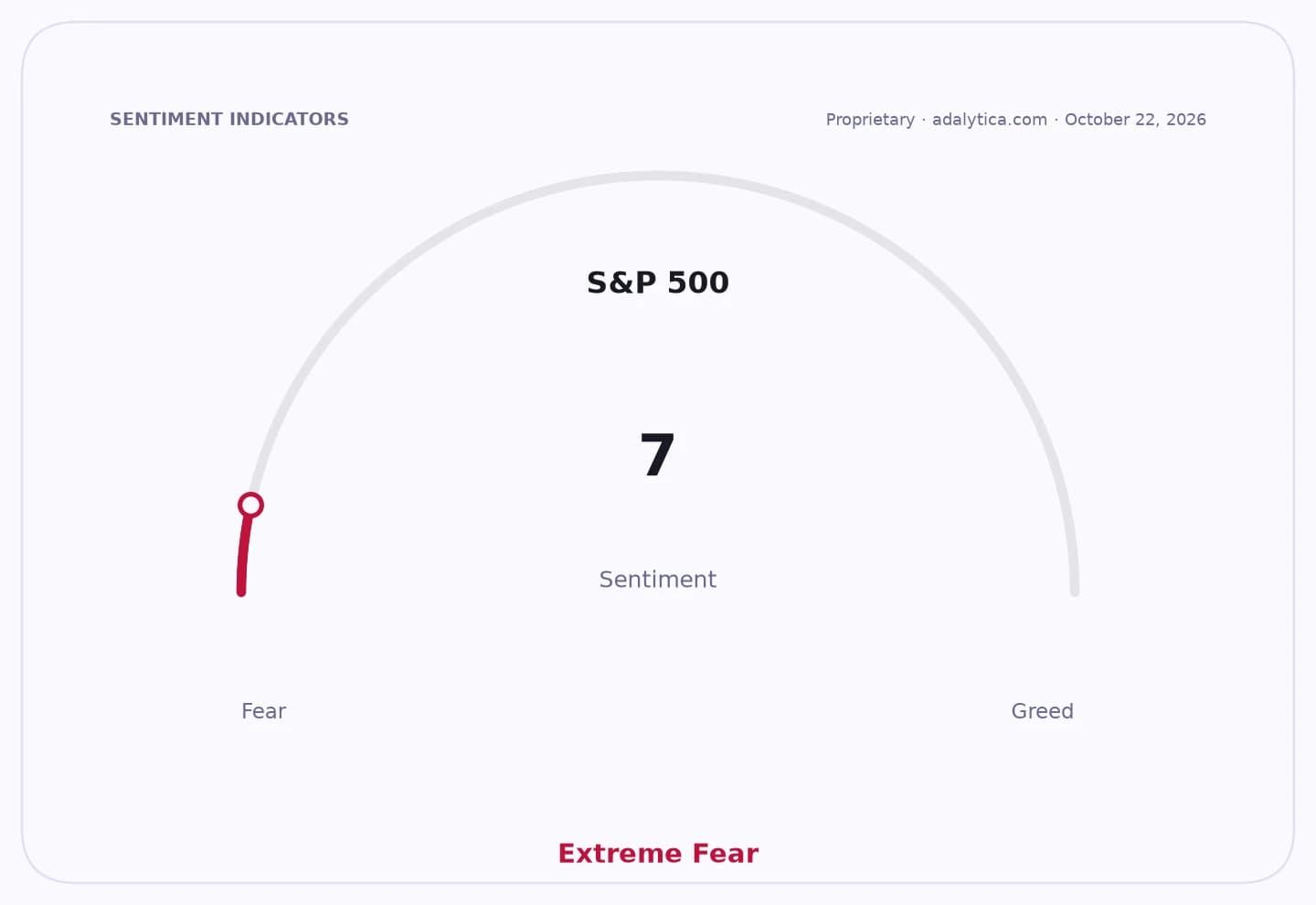
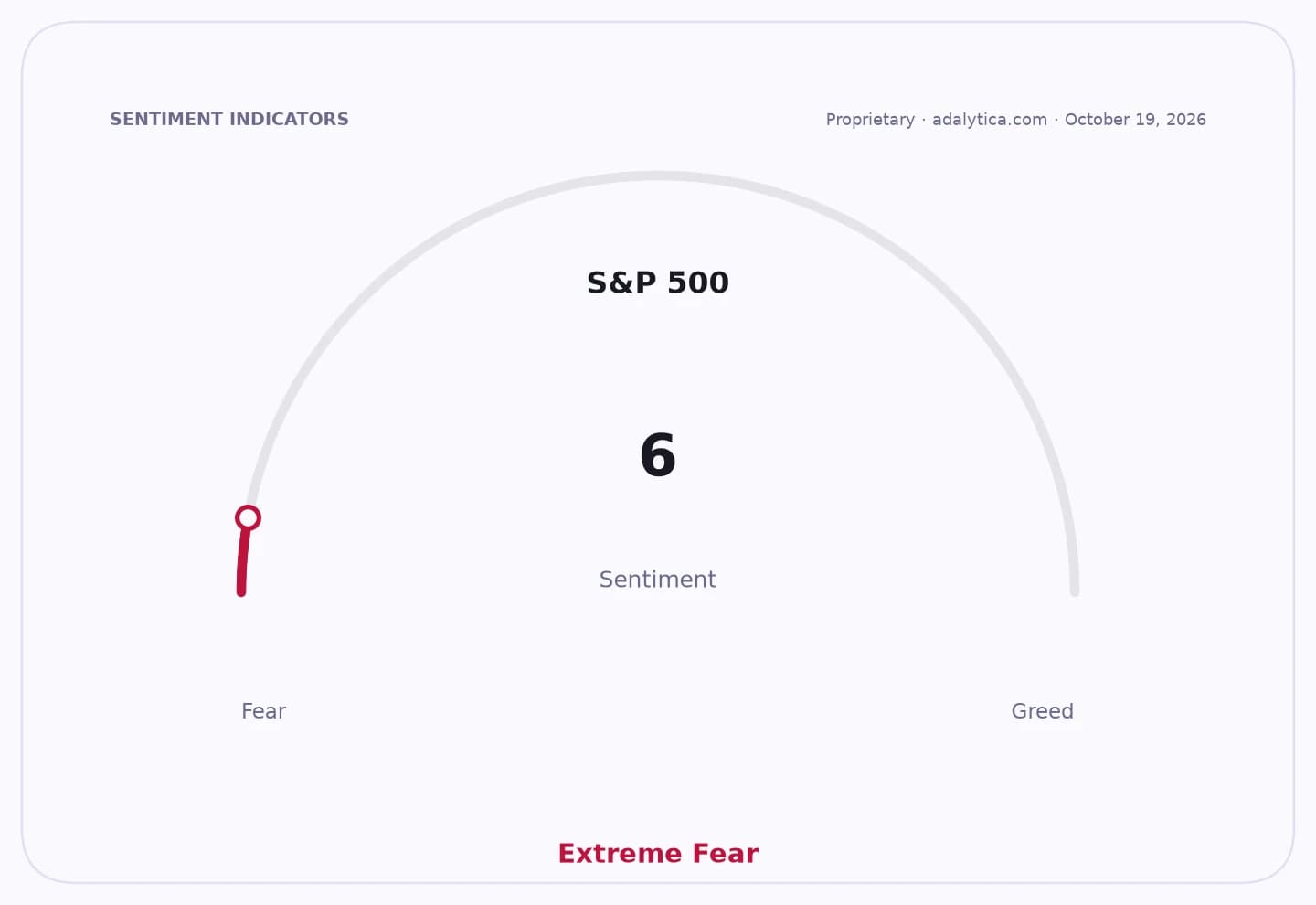
Sentiment IndicatorsⓘProprietary · adalytica.com · October 22, 2026
This is a snapshot — live sentiment, awareness and momentum for 130+ markets update continuously in the dashboard.Open AlphaPulse
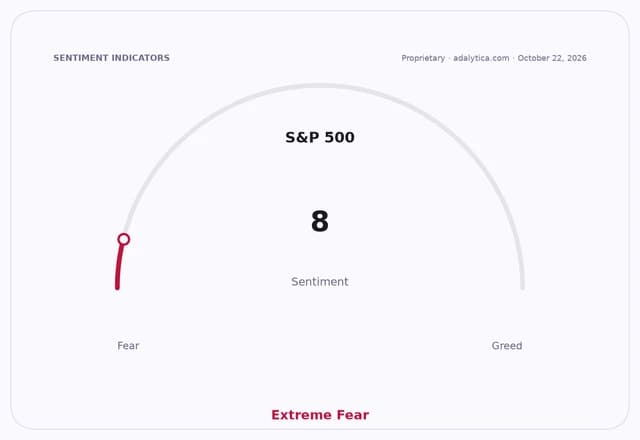
The Nasdaq fell more than 4% over the week, while the S&P 500 also closed below its 50-day moving average, a sign the selling pressure has broadened beyond a few isolated names. The Cboe Volatility Index climbed above 22 for the first time in four months, underscoring how quickly risk appetite has deteriorated. Adalytica’s SPY trade signal snapshot showed “Extreme Fear,” while FX volatility signals also pointed to stress across markets.
Semiconductor stocks were the center of the move. The VanEck Semiconductor ETF dropped about 3% on Friday and roughly 10% for the week, as investors sold Micron, AMD and Sandisk amid worries about competition, pricing pressure and the debt burden some companies may take on to fund AI infrastructure. CoreWeave fell nearly 12% on the day and 25% on the week, reinforcing the market’s concern that the economics of the AI buildout may not be as clean as the narrative suggests.
S&P 500 vs SOXXadalytica.com
Explore this data interactively — full history, time series and cross-market comparisons.Open AlphaPulse
The technical backdrop added to the damage. SOXX, the semiconductor ETF, closed well below its 50-day moving average and its relative strength index sank to 13.1, a deeply oversold reading by conventional technical measures. QQQ also lost ground, with its RSI at 29.2, while SMH’s RSI fell to 15.0. Those indicators do not cause the selloff, but they show how quickly momentum has turned against the sector.
The broader market did not escape the risk-off shift, even as energy shares rose with oil prices. Brent briefly touched $110 a barrel after escalating Middle East tensions raised concern about supply routes through the Strait of Hormuz, offering some support to the Dow. Still, the leadership breakdown in megacap technology was enough to dominate the session.
The backdrop for rates and currencies is not helping. The 10-year Treasury yield was still above 5%, keeping pressure on long-duration growth stocks by raising discount rates on future earnings. Meanwhile, the dollar weakened as traders pared expectations for another Federal Reserve hike, with Fed funds futures implying a higher chance the central bank holds steady later this month than a month ago.
For investors, the key question is whether this is a healthy reset after an extended run in AI-linked shares or the start of a deeper reassessment of earnings quality and capital intensity. Bulls can argue the structural AI spending cycle remains intact, with strong current demand still visible across the supply chain. Bears will counter that the market has become too reliant on a narrow group of names and too tolerant of expensive valuations in businesses still proving their return on AI investment.
Friday’s action suggests the burden of proof has shifted. Until investors see clearer evidence that AI capex can be converted into cash flow without excess leverage or margin compression, the semiconductor trade may remain vulnerable to further de-rating, especially if rates stay high and volatility remains elevated.
| Entity | Gains | Losses |
|---|---|---|
| Energy stocks | ▲Benefit from higher oil prices | ▼Face inflation-linked demand risk |
| Semiconductor stocks | ▲— | ▼Hit by valuation and AI spending doubts |
| Mega-cap tech longs | ▲Potentially cheaper entry points | ▼Suffer from de-risking and multiple compression |
| Bond/dollar bears | ▲Softer dollar and rate-cut hopes help | ▼Higher yields still pressure growth assets |