US equities are flashing the kind of valuation and financing stress that has often preceded major market reversals, with Pulitzer Prize-winning historian Liaquat Ahamed warning that foreign inflows, higher real rates and an AI-fueled capital boom now resemble previous late-cycle peaks.
US stocks face valuation stress and higher real rates
Ahamed’s central claim is not simply that American stocks are expensive. It is that the machinery behind the rally is becoming self-defeating. He says roughly $1 trillion has flowed into US equities from foreign investors over the past year, helping push the market value of US stocks to about 250% of GDP, a level he says has historically been associated with market breakdowns. The point matters because when capital rushes into one asset class, it can lift prices far beyond what earnings and cash flow can justify, only to choke off the very financing conditions that made the boom possible.
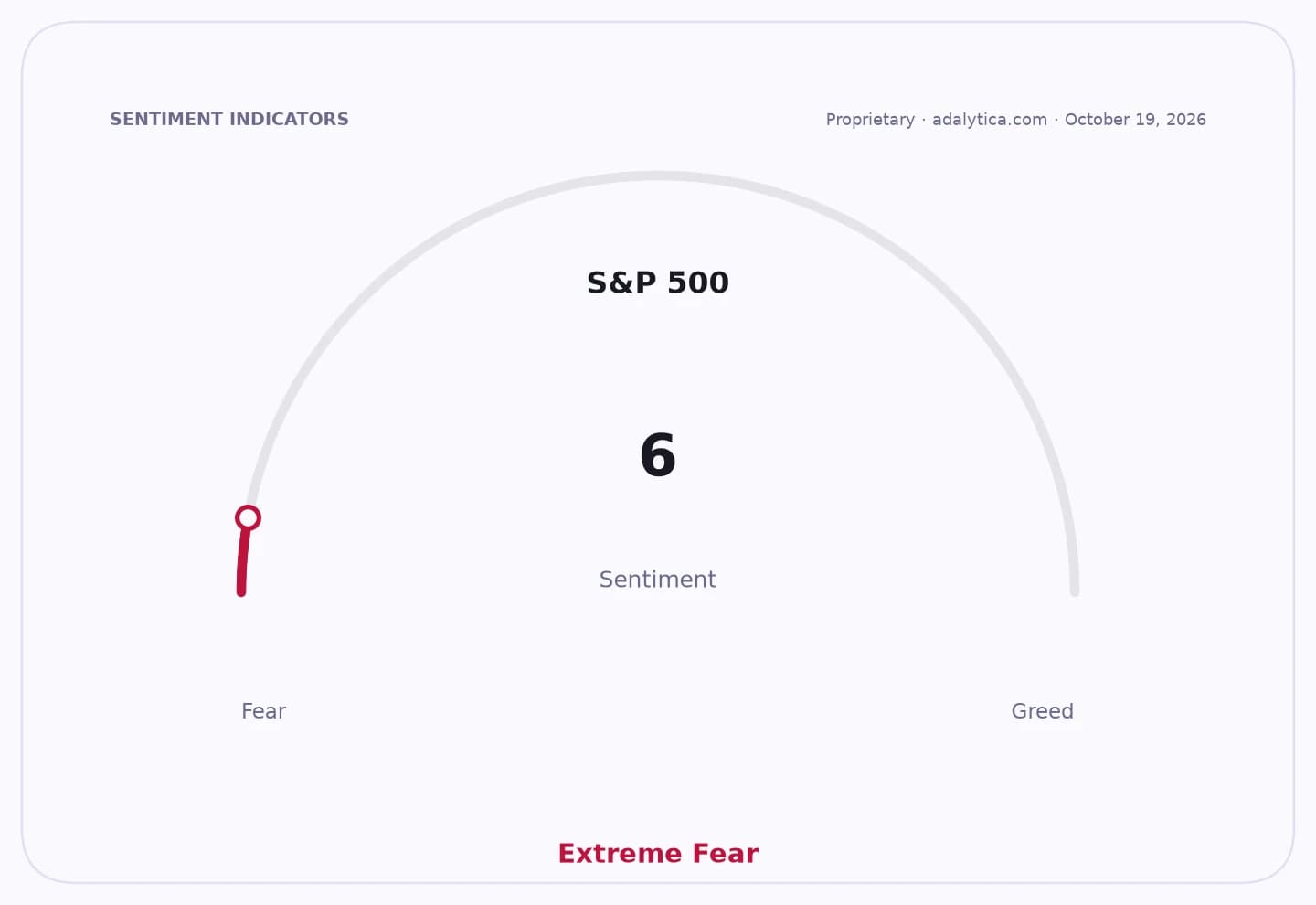
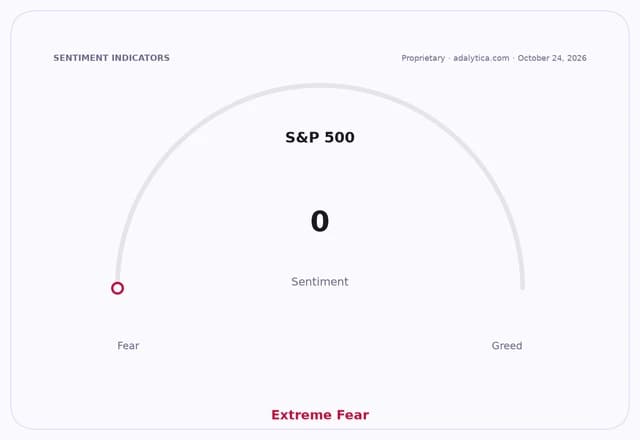
Sentiment IndicatorsⓘProprietary · adalytica.com · October 24, 2026
This is a snapshot — live sentiment, awareness and momentum for 130+ markets update continuously in the dashboard.Open AlphaPulse
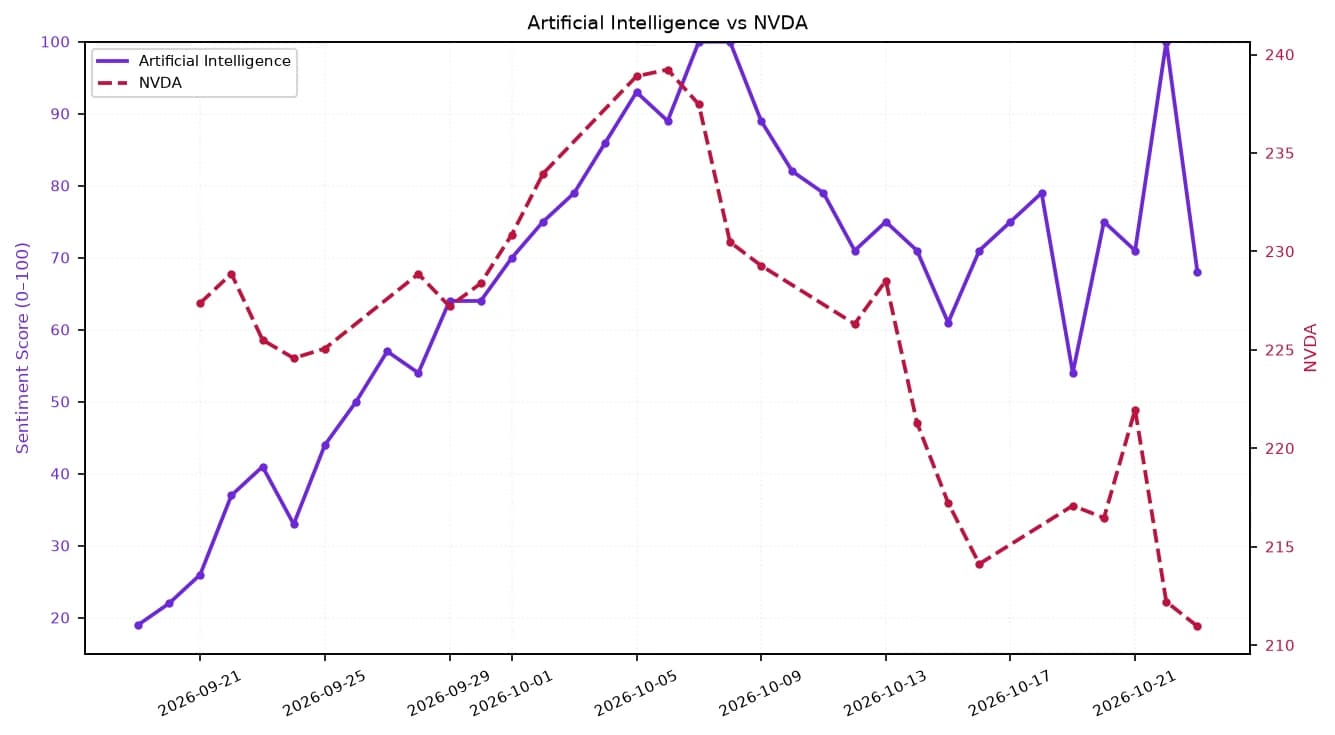
That framing lands at a sensitive moment for investors. The 10-year Treasury yield touched 5.19% on Oct. 14, with the real yield at 2.84%, underscoring that the cost of money is no longer benign. Even after a modest pullback, the 10-year remained near 5.09% and the 10-year TIPS real yield at 2.74%, while the 30-year real yield stood at 3.16%. For growth stocks priced on distant cash flows, those levels are a direct challenge. Ahamed pointed to NVIDIA, whose 2.32% earnings yield sits well below the 5.09% risk-free Treasury, a gap that highlights how much future profit growth is already embedded in the stock.
The broader market backdrop reinforces that tension. SPY has climbed well above its 200-day moving average, but recent trading shows the rally losing momentum, with the ETF closing at 759.97 on Oct. 23 after sliding from 773.09 two days earlier. Its relative strength index fell to 36.9, and the MACD turned negative, suggesting that the market’s advance is vulnerable even before any macro shock. In the Nasdaq-heavy QQQ, the picture is weaker still: the ETF finished at 704.40 on Oct. 23, below its 50-day average of 725.44 and with an RSI of 23.7, a sign of oversold conditions but also of sharp recent de-risking. NVIDIA, the emblem of the AI trade, dropped to 210.96, with its RSI at 22.0 and price below the 50-day average, indicating that even the market’s strongest AI bellwether is now being repriced.
Ahamed’s historical comparison to the 1870s railroad boom is meant to sharpen that warning. Then, as now, vast sums poured into a transformative technology, but the economics proved disappointing for many participants. He argues that only a minority of railroads paid dividends before the boom collapsed, a reminder that large-scale infrastructure and technology buildouts can generate extraordinary headline growth while destroying capital for investors who pay too much for the story.
The AI parallel is what makes the argument economically relevant now. The current buildout, estimated at roughly $1.3 trillion, is being funded in an environment of higher borrowing costs and tighter real rates, which raises the hurdle for returns. The bull case is that AI spending will produce durable productivity gains and a new earnings cycle for the largest technology platforms. The bear case is that the investment phase is running ahead of monetization, leaving markets exposed if revenue growth fails to keep pace with capital outlays and financing costs stay elevated.
That is why Ahamed’s warning resonates beyond a simple valuation call. If foreign demand for US assets begins to slow, or if real rates remain high, the market could be forced to adjust on two fronts at once: lower multiples and a higher discount rate. In that scenario, the most vulnerable assets are the long-duration growth names that have powered the rally, while the relative winners are likely to be companies with near-term cash generation, stronger balance sheets and less dependence on cheap capital.
For investors, the key question is no longer whether the AI boom is real, but whether the price paid for it has become unsustainable. History does not repeat exactly, but in the episodes Ahamed cites, the mechanism has been the same: abundant capital, rising rates, and the eventual realization that many of the biggest winners were priced for perfection.
| Entity | Gains | Losses |
|---|---|---|
| Long-duration growth stocks | ▲Lower rates and easier funding | ▼Higher discount rates and multiple compression |
| Treasuries | ▲Attractive real yields | ▼Equity risk appetite |
| AI infrastructure leaders | ▲Capital spending and demand growth | ▼Slower monetization or tighter financing |
| Foreign equity buyers | ▲Access to US mega-cap exposure | ▼If valuations correct after inflows peak |