Galicia will cut regional income tax for most households next year, with the biggest direct impact landing on workers, self-employed people and pensioners earning less than €60,000 a year as the autonomous government pairs the measure with a record €15.158 billion budget for 2027.
Galicia cuts income tax for households under 60,000
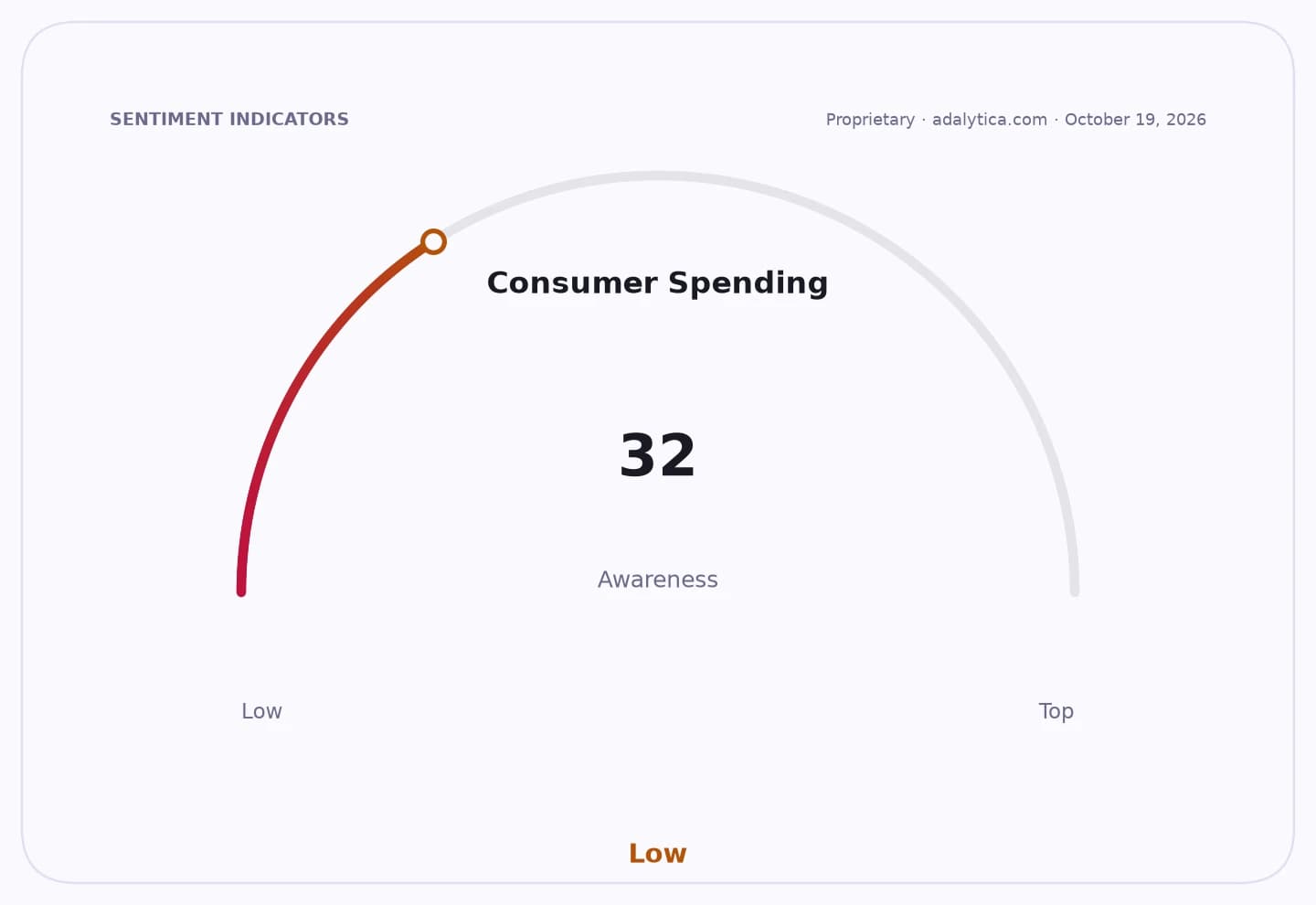
The move matters because it puts more disposable income into a region where policymakers are trying to cushion the erosion of purchasing power from inflation while still expanding public spending by 6.4% from the current budget. In a weak consumer backdrop, even modest tax relief can help support spending, especially for lower- and middle-income earners who make up the bulk of the tax base.
Sentiment IndicatorsⓘProprietary · adalytica.com · October 19, 2026
This is a snapshot — live sentiment, awareness and momentum for 130+ markets update continuously in the dashboard.Open AlphaPulse
Under the plan, the Xunta will trim the autonomous IRPF rate by 0.25 percentage points across the first four brackets, which is where most Galician taxpayers sit. Higher earners above €60,000 are excluded from the reduction, making the measure targeted rather than broad-based.
For a typical worker in the region, the savings are limited but tangible. On a case cited by the regional government based on an average gross salary of about €26,000, the annual benefit comes to roughly €42 for a single person under 65, with a couple on similar wages keeping close to €100 combined.
The tax cut is retroactive to Jan. 1, 2026, meaning the benefit will show up first in payroll withholding adjustments and then be fully settled when residents file their 2026 income tax returns. That timing gives households an immediate if small cash-flow boost while also deferring the full fiscal effect until the next tax filing cycle.
The budget package also includes property and inheritance tax changes that could affect housing and family-business transactions. The tax on legal documents tied to first-time new-home purchases falls from 1.5% to 1.2%, and it drops to zero for protected housing, while the 99% inheritance and gift tax relief is extended to relatives up to the third degree of affinity and to qualifying employees.
For investors and businesses, the story is less about market-moving fiscal stimulus than about how regional governments are using tax policy to compete for households, homebuyers and succession planning. The immediate beneficiaries are Galician taxpayers and property buyers; the losers are regional tax receipts, though the larger budget suggests the government is betting on spending growth and broader activity to offset part of the cost.
| Entity | Gains | Losses |
|---|---|---|
| Galician households under €60,000 | ▲Lower IRPF bills | ▼Smaller regional tax take |
| First-time homebuyers | ▲Lower transaction taxes | ▼Public revenue from property deals |
| Family businesses and heirs | ▲Easier succession transfers | ▼Fiscal receipts from inheritance tax |
| Higher earners above €60,000 | ▲No direct change | ▼Miss out on tax relief |