Artificial intelligence is moving from a diagnostic novelty to a purchasing requirement in hospital imaging, and GE HealthCare is one of the clearest beneficiaries.
GE HealthCare at $68.02 on AI imaging demand
That matters because the next wave of medtech spending is likely to favor companies that can turn AI into workflow and throughput gains, not just better pictures. In a system strained by staffing shortages, rising procedure volumes and pressure to cut costs, “every patient” becomes the economic unit that counts: if AI can help clinicians spot the rare “zebra” faster, hospitals can justify higher utilization, faster turnaround and better margins.
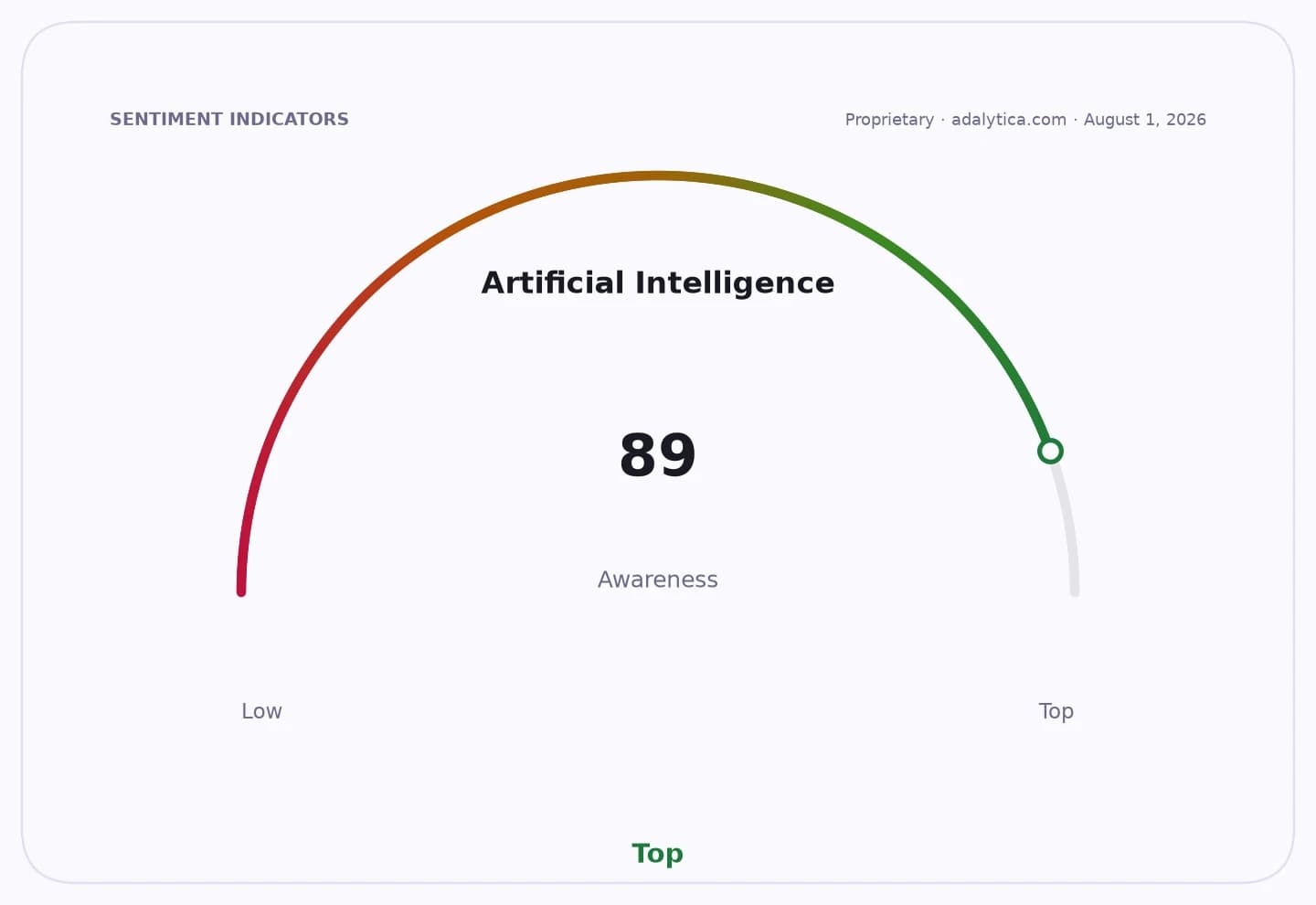
Sentiment IndicatorsⓘProprietary · adalytica.com · August 1, 2026
This is a snapshot — live sentiment, awareness and momentum for 130+ markets update continuously in the dashboard.Open AlphaPulse
GE HealthCare’s latest filing underscores that strategy. The company says its systems combine high image quality with clinical tools that include measurement quantification, workflow automation and cross-site connectivity — precisely the kind of software layer that makes AI sticky in hospital budgets. That is the investable story here: AI is no longer an optional add-on, but a feature that can lift equipment replacement cycles and support premium pricing across ultrasound and other imaging platforms.
The stock has already begun to reflect that shift. GE HealthCare has climbed from a low near $59.45 in late April to $68.02 at the end of July, while its 50-day moving average sits at $64.01. The recent move came with heavy volume and the shares remain well above the short-term trend, though the 200-day average at $73.01 shows the market is still working through whether this is a durable re-rating or just an AI-fueled burst of enthusiasm. RSI readings in the mid-50s suggest momentum has cooled from overbought levels but not broken down.
Artificial Intelligence vs GEHCadalytica.com
Explore this data interactively — full history, time series and cross-market comparisons.Open AlphaPulse
This is where the second-order opportunity is hiding. If AI-assisted imaging becomes standard practice, the winners are not just the software names. Hardware vendors with installed bases, service contracts and hospital relationships can monetize the transition far more efficiently than start-up model providers. GE HealthCare, along with imaging peers and ecosystem suppliers, stands to benefit from a capex cycle in which buyers are paying for productivity, not just equipment.
The broader market is still underestimating how quickly that adoption can compound. Hospitals do not buy AI because it sounds innovative; they buy it when it shortens scans, reduces missed findings and helps stretched radiology departments handle more patients without adding headcount. That is why the “zebra scan” theme matters: rare-disease detection is a compelling headline, but the economic engine is throughput across every scan.
For investors, the takeaway is clear. GE HealthCare looks like one of the cleaner ways to own the AI-in-medical-imaging trade before it becomes fully consensus. If the company can keep converting software-enabled efficiency into sales growth and margin support, the stock has room to re-rate as the market recognizes that AI in healthcare is not just a science story — it is a cash-flow story.
| Entity | Gains | Losses |
|---|---|---|
| GE HealthCare | ▲AI-led imaging demand | ▼Pure-play hardware peers |
| Hospitals | ▲Faster scans, higher throughput | ▼Staffing-constrained workflows |
| Patients | ▲Quicker diagnosis | ▼Delayed rare-disease detection |
| AI software vendors | ▲Broader adoption | ▼Overhyped standalone models |